


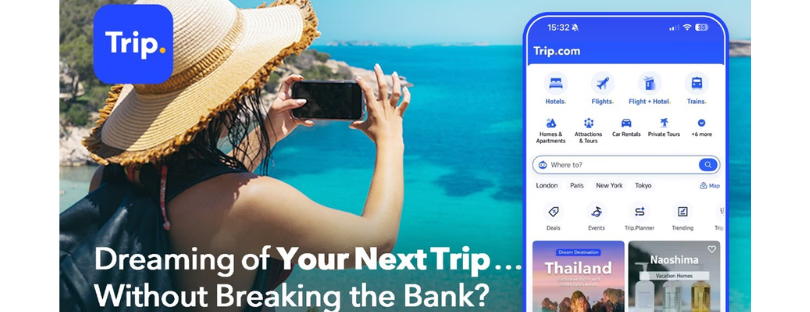
Trip.com App Tips for Cheaper, Smarter Travel
Everyone loves a holiday. But right now, travellers love a good deal even more.
With flight prices still unpredictable, hotel rates moving by season, and every extra service trying to squeeze a little more from the trip budget, the smartest travellers are no longer just searching for “cheap flights”. They are using platforms more strategically.
Trip.com is leaning directly into that behaviour with a set of app features built around one simple idea: spend less without making the trip feel smaller. The company’s own flight pages promote tools such as price alerts, flight deals, app-only savings and Trip Coins, which can be redeemed on future bookings.
That matters because travel savings are no longer only about grabbing the lowest fare. They are about timing, flexibility, loyalty value and knowing where the hidden discounts sit inside the booking journey.
Flexible search is the new travel hack
The first smart move is flexibility.
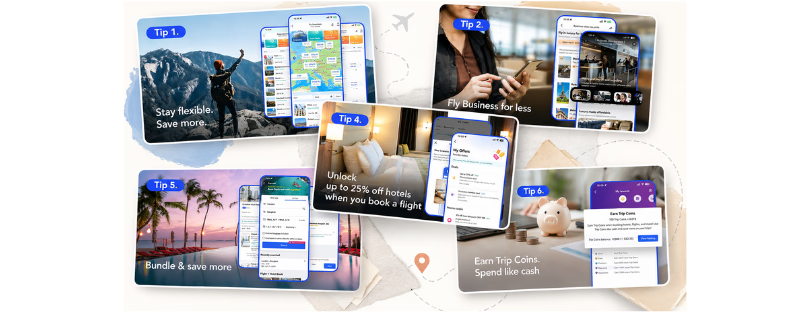
Trip.com’s “Anywhere”, “Cheap Flights” and “Best Deals” style discovery tools are designed for travellers who know they want to go somewhere, but are open on the exact destination or date. That is often where real savings appear.
Instead of starting with a fixed city and fixed weekend, travellers can browse where the value is. Maybe Rome is expensive, but Valencia is not. Maybe Friday to Sunday is painful, but Thursday to Monday suddenly looks sensible. This is the part of travel planning where being a little less rigid can save a lot.
Price alerts add another layer. Trip.com says users can sign up for alerts that notify them when flight prices drop, removing the need to manually check fares every few hours. In practice, this is one of the most useful tools for travellers who are not ready to book immediately but also do not want to miss a fare drop.
Premium seats, smarter prices
Business Class is usually treated like a luxury category, but the gap between Economy and premium cabins is not always as dramatic as travellers expect.
Trip.com’s “Business Class Top Picks” section is aimed at travellers who want to compare routes, dates and airline combinations to find premium seats at better prices. The value is especially clear on long-haul flights, where extra comfort, priority check-in and a proper seat can change the entire journey.
READ MORE: Trip.com Group Unveils Taste of China: A Multi-Sensory Dining Journey Through Culture and Cuisine
This does not mean Business Class suddenly becomes cheap. It means it becomes searchable in a smarter way. For business travellers, remote workers, older travellers or anyone taking a long overnight route, the question is not only “what is the lowest fare?” It is “what is the best value for the experience I actually need?”
That is where travel platforms are becoming more useful. They are not just listing options. They are packaging choices around traveller intent.
Hotels are where the savings continue
One of the more interesting parts of Trip.com’s strategy is that the savings do not stop after the flight booking.
Travellers who book flights through Trip.com can access “Flyer Exclusive” hotel discounts, with the original campaign messaging pointing to discounts of up to 25% when accommodation is booked within 90 days. This is clever because it turns the flight booking into the beginning of a longer value journey, not a one-off transaction.
The same logic applies to “Flight + Hotel” bundles. Package booking is not new, but it is still one of the simplest ways to reduce total trip cost. For many travellers, the convenience is just as important as the savings: one search, one checkout flow, and a clearer view of the overall trip price.
This is where Trip.com competes with other large online travel platforms such as Booking.com, Expedia and Skyscanner. The battle is no longer just who has the biggest inventory. It is who can make the booking journey feel easier, more connected and more rewarding.

Loyalty that feels usable
Loyalty programmes often sound good but feel vague. Trip.com’s Trip Coins are more tangible because they can be used like cash against future purchases. Trip.com’s loyalty programme also offers member-only deals, extra Trip Coins and tier-based perks.
The bigger perks sit higher up the loyalty ladder. Trip.com lists benefits such as extra Trip Coins, VIP airport lounge access, free global eSIM data packages and airport transfer upgrades depending on membership tier. Recent Trip.com materials also state that Platinum members and above may receive complimentary VIP lounge access in over 700 airports worldwide, with conditions such as completing at least one hotel stay in the past year and filling out the member profile.
READ MORE: Experience as the New Destination: How Trip.com Is Shaping the Future of Travel
That last detail matters. These perks are useful, but travellers should always check the terms before assuming they apply. Lounge visits, car upgrades and other premium benefits are usually tied to membership level, booking history, availability and local conditions.
Still, this is exactly where modern travel apps are heading. They want to own more than the booking. They want to own the journey.
Final boarding call Trip.com travel hacks
Trip.com’s eight saving tips are useful, but the bigger story is not simply “download the app and save money”. The real shift is that travel platforms are becoming value engines.
Skyscanner is strong for comparison. Booking.com is powerful in accommodation. Expedia has long pushed packages. Trip.com is trying to combine flights, hotels, loyalty perks, airport benefits and in-app savings into one connected travel flow.
For travellers, that is good news, but only if they use these tools actively. The cheapest trip is not always the best trip. The best deal is the one where the fare, hotel, airport experience, rewards and flexibility all work together.
So yes, use “Anywhere”. Set price alerts. Check “Business Class Top Picks”. Look for “Flyer Exclusive” rates. Apply Trip Coins before checkout.
But the smartest move is simpler than any single feature: stop treating travel booking as a one-click transaction. Treat it like a small strategy. That is where the real savings are.


