The Revolut Card: Still the Smartest Travel Money Tool?
If you travel even semi-regularly, chances are you already have a Revolut card in your wallet. Or at least, you’ve thought about it. And there’s a reason for that. What started as a “cheap FX card” has quietly turned into something much bigger: a full-stack financial product trying to replace your bank, your travel card, and increasingly… even your telecom provider.
But here’s the real question for 2026: is the Revolut card still the smartest option for travelers, or is it just riding on early hype?
Let’s break it down properly.
More than just a card
Calling Revolut a “card” is almost misleading at this point.
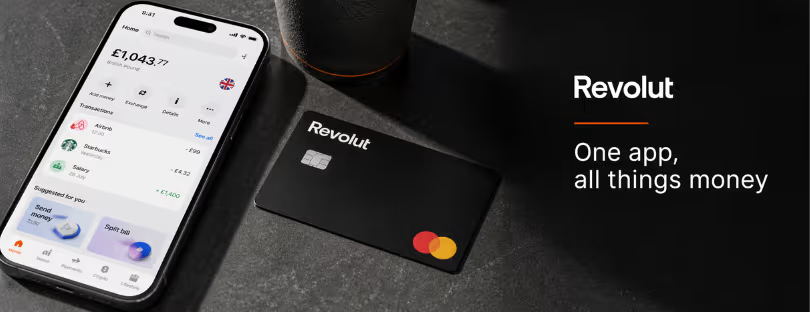
Yes, you get a physical or virtual debit card. But what you’re really using is a financial operating system. The card is just the interface.
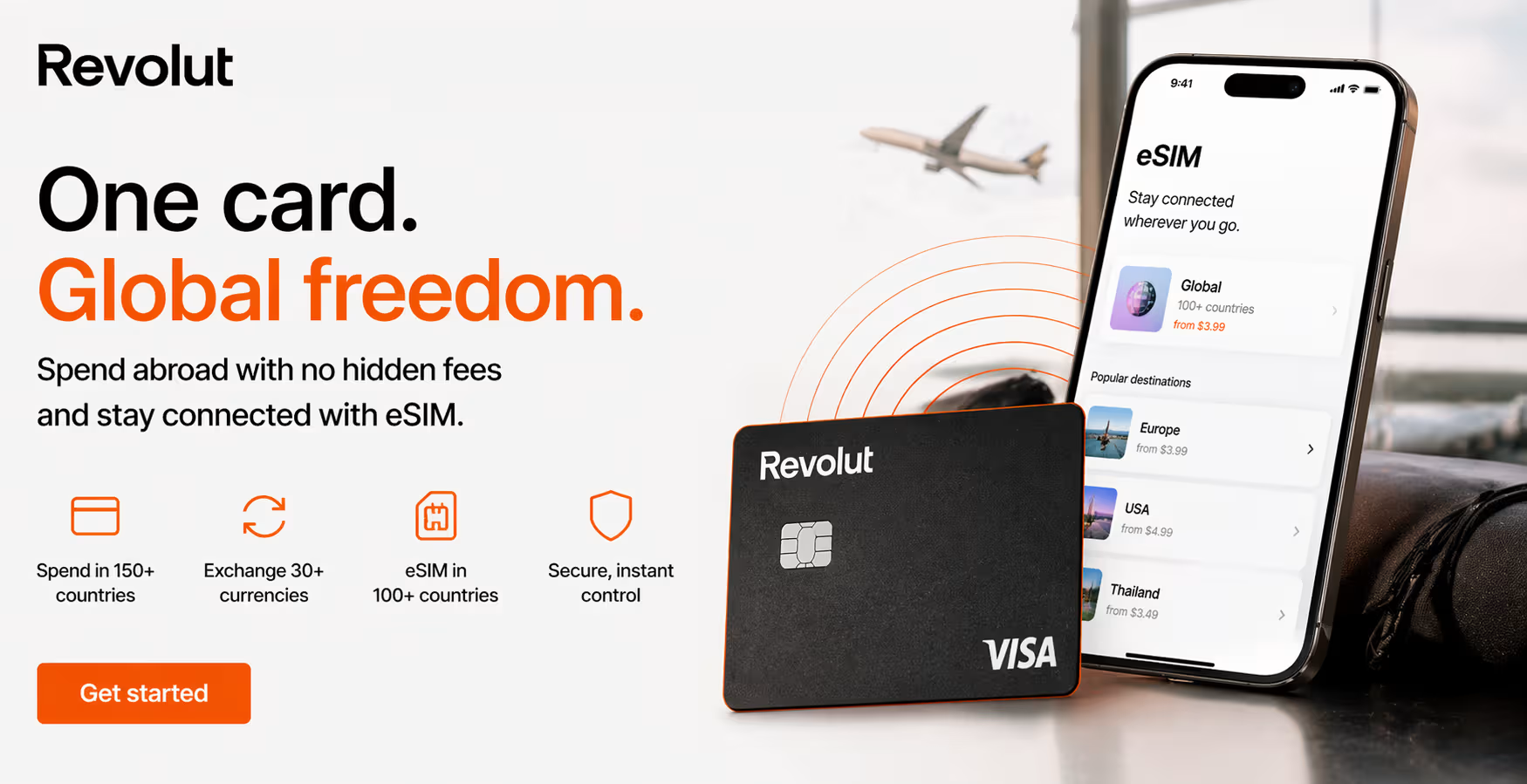
You can hold and exchange over 30 currencies directly in the app, spend globally, and track everything in real time.
And unlike traditional banks, the pricing logic is actually visible. You see the exchange rate before you confirm. No guessing, no hidden spread buried in the transaction.
That transparency matters more than most people realize. Because in travel finance, the real cost isn’t always the fee. It’s the exchange rate.
Where it actually wins for travelers
This is where Revolut still dominates.
For everyday travel use, the value proposition is simple:
- Competitive exchange rates during weekdays
- Multi-currency accounts
- Global card acceptance via Visa/Mastercard networks
- App-first control over spending and limits
You can use the card in 150+ countries, just like a local payment method.
And importantly, there’s no classic “foreign transaction fee” in the way legacy banks apply it. Instead, Revolut uses a fair usage model. Spend within your plan limits, and you’re fine. Go beyond it, and fees kick in.
That’s a very different philosophy compared to banks that charge you just for existing abroad.
The catch: limits and behavioral pricing
This is where things get a bit more nuanced.
Revolut isn’t “free” in the way many users think. It’s conditional.
On the standard plan:
- Free ATM withdrawals are capped (around €200 or 5 withdrawals monthly)
- Currency exchange is free up to a limit (around €1,000/month equivalent)
- Weekend exchanges include a markup (around 1%)
So what you actually have is a behavior-based pricing model.
|
If you:
→ Revolut feels almost free. |
If you:
→ You’ll start hitting limits fast. |
This is intentional. It’s how Revolut nudges users toward paid plans.
Paid plans: where it becomes a lifestyle product
This is where things get interesting.
Revolut isn’t just monetizing through fees anymore. It’s a bundling lifestyle.
Higher-tier plans (Premium, Metal, Ultra) include:
- Higher or unlimited FX limits
- Travel insurance
- Airport lounge access
- Subscription bundles (Spotify, NordVPN, etc.)
- Even global data or eSIM perks in some cases
At the top end, benefits can reach thousands of euros in perceived value annually.
But here’s the subtle shift: this isn’t about saving money anymore. It’s about packaging convenience.
You’re not buying a card. You’re buying a travel stack.
Quiet move into telecom (and why it matters)
This part is still under the radar, but it shouldn’t be.
Revolut has already:
- Launched eSIM data products inside the app (3GB a month, included with Ultra plan)
- Started bundling global data into premium plans
- Even announced its own mobile network in some markets
For Alertify readers, this is the real story.
Revolut is moving into connectivity. Not aggressively yet, but strategically.
And that changes the game.
Because if your bank:
- Handles your payments
- Manages your travel budget
- Provides your mobile data
You’re no longer switching between services. You’re locked into an ecosystem.
How it compares to competitors
Revolut still sits in a very specific position.
|
Monzo / Starling Bank
|
Traditional banks
|
Revolut sits somewhere in between:
- More complex than Wise
- More global than Monzo
- Far more flexible than traditional banks
But also more… strategic in how it monetizes you.
What users don’t always notice
There’s a psychological layer to all of this.
Revolut reduces “payment anxiety” when traveling. You feel in control. You see everything in the app. You get instant notifications.
That’s powerful.
But it also encourages more spending. Because when costs feel transparent, they feel smaller.
And that’s exactly where fintech products outperform traditional banks. Not just on pricing, but on user behavior design.
The bigger trend: banking becomes infrastructure
Revolut’s growth tells a bigger story.
The company now has tens of millions of users globally and is actively expanding into full banking services, including loans and credit products.
This is the direction:
- Banking becomes embedded
- Payments become invisible
- Travel services become bundled
And cards like Revolut are just the front layer.
Conclusion: still the best travel card, but no longer “just” a card
Revolut is still one of the smartest tools you can carry when you travel. That hasn’t changed.
But the reason why it’s good has shifted.
It’s not just about avoiding fees anymore. It’s about:
- Control
- Integration
- Ecosystem convenience
Compared to players like Wise, Revolut is less “pure” financially but more powerful as a platform. Compared to banks, it’s still miles ahead.
The real question isn’t whether Revolut is worth it. It’s how much of your travel stack you’re comfortable centralizing in one app.
Because that’s where this is going.
And quietly, without much noise, Revolut is positioning itself not as your travel card… but as your travel infrastructure.