


Shanghai Disneyland Guide: What Travelers Should Know
Shanghai Disneyland is often misunderstood by international travelers. Some treat it as the “extra” Disney park, the one to visit only if they are already passing through Shanghai. That view feels outdated.
The resort has matured into a Disney park built for a Chinese audience, shaped by local travel habits, and important enough to influence Disney’s global thinking. It is not a copy of Anaheim, Orlando, Tokyo, Paris, or Hong Kong. It is bigger in scale, more digital in daily operation, and more intense in crowd rhythm.
For visitors, that makes Shanghai Disneyland exciting, but not always effortless. It rewards planning. It also punishes the romantic idea that you can just turn up and let the magic handle the logistics.
Why it matters now
Theme parks in China are no longer just family day trips. They are short-break anchors, hotel drivers, social content machines and retail ecosystems. Disney is not alone here. Universal Beijing Resort, Chimelong, Fantawild and regional Chinese park groups are all fighting for attention with rides, hotels, food and mobile-first guest journeys.
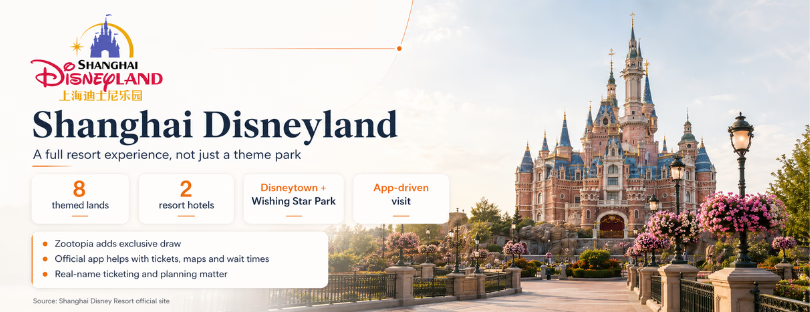
Shanghai Disneyland’s edge is that it combines Disney’s storytelling machine with a resort model built around Chinese consumer behavior. The official app, digital ticketing, Premier Access, wait-time planning and real-name ticketing visit feel closer to a managed platform than an old-school theme park day. The park is not only selling rides. It is selling a controlled travel experience where mobile connectivity, payments, reservations and crowd management become part of the product.
That is convenient when everything works. It is frustrating when your battery is low, roaming is weak, or you are trying to understand app features in a crowded afternoon. Shanghai Disneyland is a reminder that modern attractions increasingly assume you are connected all day.
Zootopia changed the conversation
The biggest recent shift is Zootopia. Opened as the world’s first Zootopia-themed land, it gives Shanghai Disneyland a piece of Disney IP that feels unusually well matched to the local market. Zootopia has strong recognition in China, and the new land is not just a decorative add-on. Its main attraction, Zootopia: Hot Pursuit, uses trackless ride technology and a dense city-world design that fits the film’s urban energy.
This matters because Disney parks are no longer competing only on castle photos and nostalgia. They compete on exclusivity. Tokyo DisneySea has Fantasy Springs. Universal parks have Nintendo and Harry Potter. Hong Kong Disneyland has World of Frozen. Shanghai Disneyland now has Zootopia, and that gives travelers a reason to choose this park specifically.
Still, Zootopia’s popularity also means crowd pressure. First-time visitors who hate queue strategy, app checking and timed decisions may find the day less relaxed than expected.
What works well
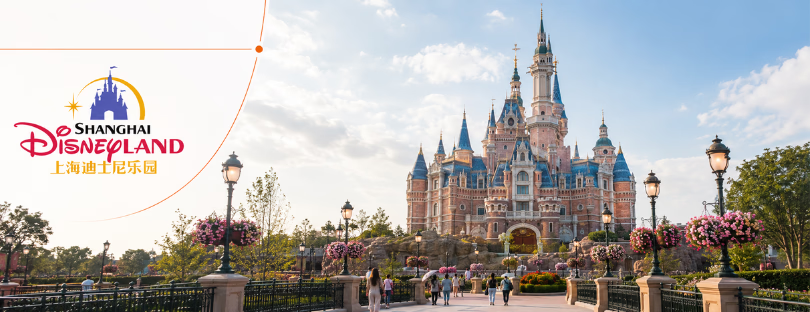
Shanghai Disneyland is at its best when it leans into scale. The Enchanted Storybook Castle is enormous, Treasure Cove feels more ambitious than the classic pirate formula, and TRON Lightcycle Power Run remains one of the resort’s signature modern thrills. The park works well for travelers who like a full-day itinerary: arrive early, use the app seriously, book key experiences carefully, and treat dining and transport as part of the plan.
Adults should not dismiss it as a children’s park. The design is cinematic in places, especially around Pirates of the Caribbean: Battle for the Sunken Treasure and the newer Zootopia area. The food and merchandise mix also reflects a localized Disney strategy. You are not in Florida with Mandarin signs. You are in Shanghai’s version of Disney.
The friction point
The main weakness is practical friction. International visitors may need more time to understand ticket rules, app features, identity requirements, payment methods and transport choices. During holidays and weekends, the resort itself advises public transport because parking can reach capacity. That tells you a lot about demand.
Shanghai Disneyland is probably not ideal for travelers who want a spontaneous, low-planning day or those visiting Shanghai for only a short stopover. In that case, the Bund, Yu Garden, a food tour, or a quieter cultural stop may deliver more Shanghai for the time spent. For Disney fans, however, skipping the park would be a missed opportunity.
READ MORE: Shanghai Disneyland Tickets
Alternatives depend on the trip. Hong Kong Disneyland is easier and more compact. Tokyo Disney Resort is still the benchmark for service culture and emotional polish. Universal Beijing offers a stronger blockbuster-franchise feel. Shanghai Disneyland sits somewhere else: bigger, newer, sometimes less soft around the edges, but strategically fascinating.
Final take
Shanghai Disneyland shows where the theme park business is heading. The winning parks are not just building more rides. They are building ecosystems: exclusive IP, hotels, apps, paid access layers, transport planning, retail, food, and a reason to stay inside the brand world for longer.
That is why Shanghai Disneyland matters beyond Disney fans. It is a travel technology story, a tourism story and a consumer behavior story at once. It proves that the future of major attractions will be less about “do they have a good ride?” and more about “can they manage the whole guest journey without losing trust?”
Compared with Tokyo, Shanghai is less polished. Compared with Hong Kong, it is more ambitious. Compared with Universal Beijing, it has broader family and fantasy appeal. Its biggest opportunity now is not simply adding more attractions. It is making the international visitor experience smoother and less dependent on real-time guesswork.


