
Things to Do in Istria.
Roman amphitheatres, Venetian seaside towns, medieval hilltop villages and some of Croatia's most distinctive food and wine. Istria offers far more than a summer beach holiday.
Eight places and experiences worth your time
These highlights combine the peninsula's major heritage sites, characterful towns and natural attractions. You don't need to visit all eight on one trip.
Rovinj
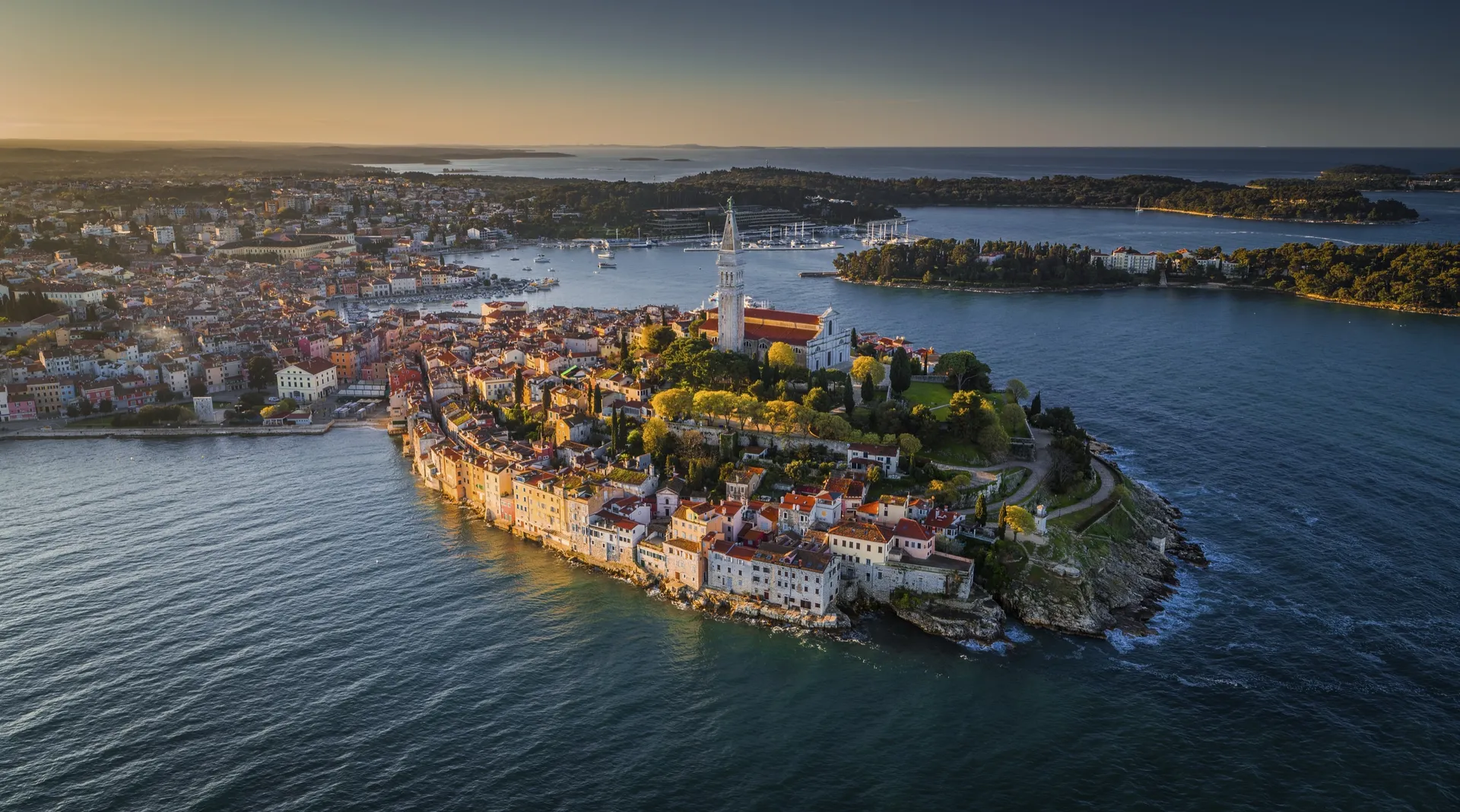
Wander the old town's narrow streets, climb toward St. Euphemia's Church and explore the waterfront. Nearby Golden Cape Forest Park offers a quieter contrast to the busy historic center.
Explore Rovinj →Pula
Visit the remarkably preserved Roman Arena, then discover the Temple of Augustus, Forum and Arch of the Sergii. Pula is the peninsula's strongest destination for Roman history.
Explore Pula →Poreč
The Euphrasian Basilica complex is Istria's outstanding UNESCO-listed landmark, celebrated for its early Christian architecture and mosaics. The surrounding old town is equally pleasant to explore.
Explore the Basilica →Motovun
A beautifully situated medieval town overlooking the Mirna Valley. Explore stone streets, historic fortifications and local restaurants serving Istrian specialties, including seasonal truffles.
Explore Motovun →Grožnjan
This small hilltop town is known for galleries, artistic traditions and stone-built streets. It's especially rewarding when paired with another stop in northern Istria.
Explore Istrian Towns →Brijuni Islands
A protected island archipelago with scenic landscapes, archaeological remains and distinctive cultural history. Official visitor excursions depart from Fažana; advance booking is advisable.
Official Brijuni Guide →Cape Kamenjak
At Istria's southern tip, discover rugged coastline, rocky coves and clear water. Ideal for swimming and outdoor exploration in suitable weather. Check access rules and seasonal vehicle charges.
Discover Natural Attractions →Olive Oil, Wine & Truffles
Visit an olive-oil producer, taste local Malvazija and Teran wines, or explore traditional food in the countryside. Book tastings directly and confirm seasonal availability.
Discover Istria →Where Roman history meets the Adriatic
From coastal architecture to ancient monuments and green inland valleys, Istria changes character dramatically within relatively short distances.


Three days in Istria: a balanced introduction
With only three days, avoid attempting to see the entire peninsula. These routes group destinations logically; a rental car is particularly helpful for the countryside.
Rovinj & Poreč
- Morning: Explore Rovinj's old town and waterfront.
- Midday: Lunch near Rovinj or along the western coast.
- Afternoon: Visit the Euphrasian Basilica in Poreč.
- Evening: Dinner and a relaxed coastal walk.
Pula & Southern Istria
- Morning: Visit Pula Arena and the historic center.
- Midday: Lunch in Pula or nearby Fažana.
- Afternoon: Choose Cape Kamenjak for coastal nature.
- Alternative: Allocate most of the day to Brijuni instead.
Green Istria
- Morning: Visit Motovun and enjoy the valley views.
- Midday: Try regional dishes in a countryside konoba.
- Afternoon: Explore Grožnjan or a local producer.
- Evening: Return to your base without rushing.
Where to stay in Istria
Your choice of base matters more than the number of places you try to visit in one day.
Rovinj — for atmosphere
Best for a romantic coastal stay, restaurants, walkable evenings and a historic seaside setting. Central parking can be restrictive.
Poreč — for convenience
A practical option for families, beach holidays and exploring western Istria.
Pula — for culture and southern Istria
Good for Roman heritage, regional transport, nearby beaches and trips toward Cape Kamenjak.
Central Istria — for slower travel
Choose rural accommodation around Motovun, Bale or the surrounding villages for a quieter experience, especially if you have a car.
Getting around Istria
- Driving The most flexible option for inland villages, wineries and multi-stop itineraries. Check parking restrictions.
- Buses Useful between several major towns, but rural connections can be limited. Check departures before planning day trips.
- Airports Pula Airport serves the region. Flight frequency and routes vary seasonally.
- Best seasons May–June and September–October are appealing for sightseeing. July–August is busier, especially along the coast.
- Travel costs Croatia uses the euro. Attraction fees, parking and seasonal accommodation prices vary.
What makes Istria special?
A food culture worth traveling for
Istria's identity is closely tied to olive oil, wine, seafood, pasta and truffles. Look for local producers and traditional konobas rather than choosing restaurants solely by their waterfront location.
Two very different landscapes
The western and southern coasts attract beachgoers, while the interior offers quieter villages, agricultural landscapes and scenic roads. The eastern coast around Labin and Rabac provides another worthwhile alternative.
There's no need to rush
Three days give you a good introduction. With a week, you can add swimming, cycling, Brijuni, wine tastings or more of central Istria without turning every day into a driving marathon.
Mobile internet in Istria
Reliable data is useful for rural navigation, restaurant reservations, parking, transport and digital tickets.
Check roaming before buying
Eligible EU/EEA mobile customers may already have regulated roaming access in Croatia, subject to fair-use rules and plan conditions. Other travelers should compare their home operator's rates with local SIM or travel eSIM options.
Coverage matters outside towns
Croatia's major mobile networks include Hrvatski Telekom, A1 Hrvatska and Telemach. Coverage can vary in rural areas, coves and less populated locations, so check the underlying network when selecting a travel eSIM.
If Istria is part of a trip through Croatia, Slovenia or Italy, compare a regional Europe eSIM with a Croatia-only package.
Read the Croatia eSIM Guide →Planning your Istria trip
Is Istria worth visiting?
Yes. It combines Roman and medieval heritage, Adriatic beaches, countryside, wine and gastronomy within one relatively compact peninsula.
How many days should you spend in Istria?
Three days cover a few highlights. Four to seven days allow a more relaxed mix of towns, nature, beaches and local food.
Do you need a car in Istria?
Not necessarily for a single coastal town. A car is helpful for visiting inland villages, rural restaurants and multiple destinations.
Where is the best place to stay in Istria?
Rovinj suits atmospheric coastal stays; Poreč works well for beach holidays; Pula is convenient for southern Istria; the countryside is ideal for slower travel.
What is the best time to visit Istria?
Late spring and early autumn are attractive for sightseeing and outdoor activities. Summer is ideal for swimming but often busier.
Can you visit Brijuni without booking?
Check official availability first. The national park recommends advance purchase for excursions to Veliki Brijun, particularly when you want a specific departure or tour language.
Plan more of your Croatia trip
Istria Tourist Board · UNESCO — Euphrasian Basilica · Brijuni National Park · Croatian National Tourist Board
Editorial update: November 2026. Check current prices, transport timetables, opening hours and seasonal access before traveling. Photographs are externally hosted; ensure appropriate image licenses and permissions before publication.