Refurbished Phones: The Smart Tech Buy
A refurbished phone used to sound like a compromise. Something you bought because the new model was out of reach, or because you needed a quick replacement after a screen met the floor. That image is fading fast. Refurbished smartphones are no longer sitting quietly in the bargain corner. They are becoming part of a bigger shift in how people buy technology, how long devices stay useful, and how much value consumers expect from a phone.
For Alertify readers, this matters because phones are not just phones anymore. They are travel wallets, boarding passes, hotel keys, roaming tools, eSIM managers, translation devices, camera kits and emergency lifelines. The idea that every traveller needs the newest flagship every year is starting to look less convincing.
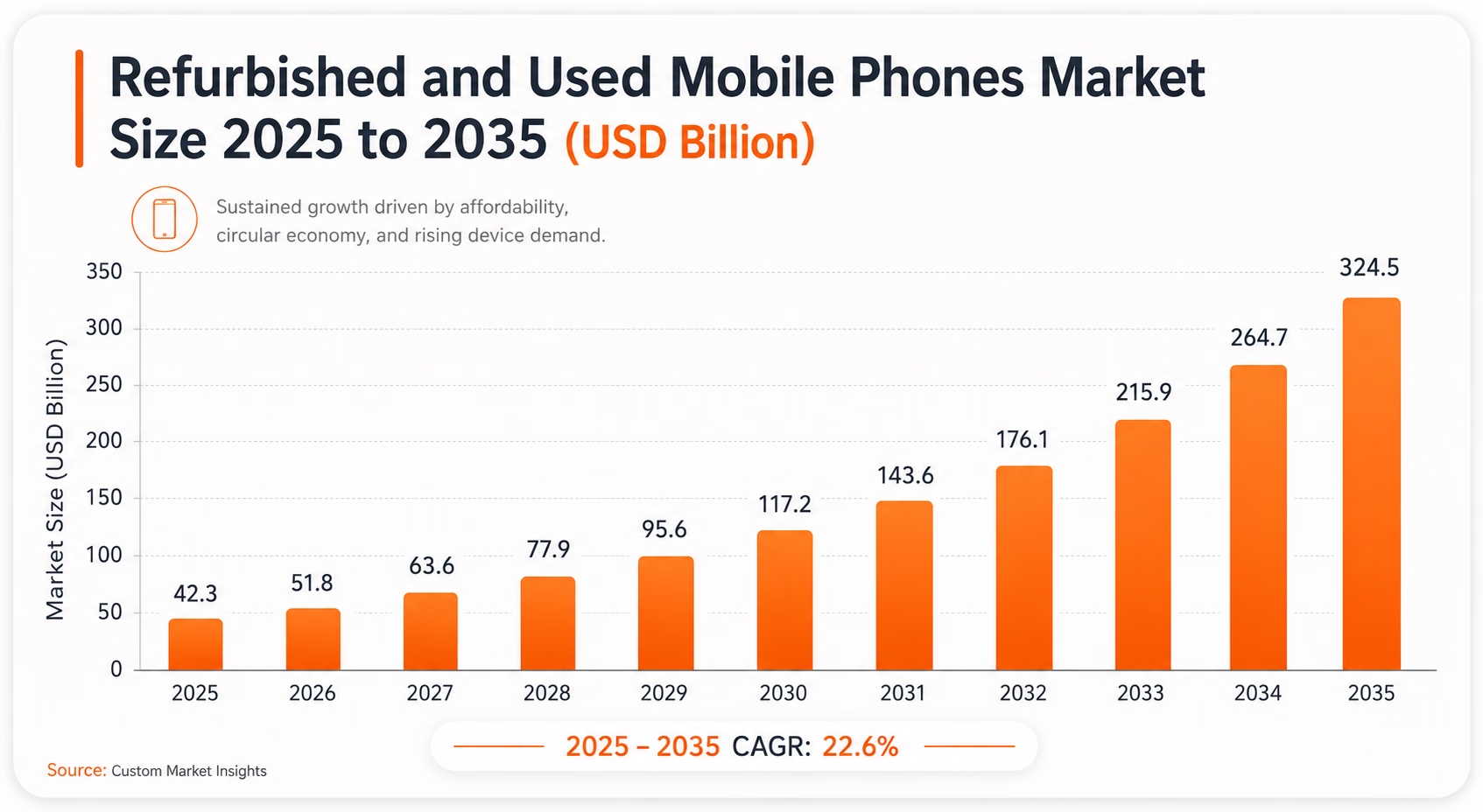
The used and refurbished smartphone market has been growing faster than the new smartphone market in several regions. IDC has pointed to affordability, sustainability and trade-in programmes as key reasons why second-hand devices are becoming a mainstream choice rather than a niche purchase.
What refurbished really means
A refurbished phone is not simply a “used phone” with a nicer label. At least, it should not be.
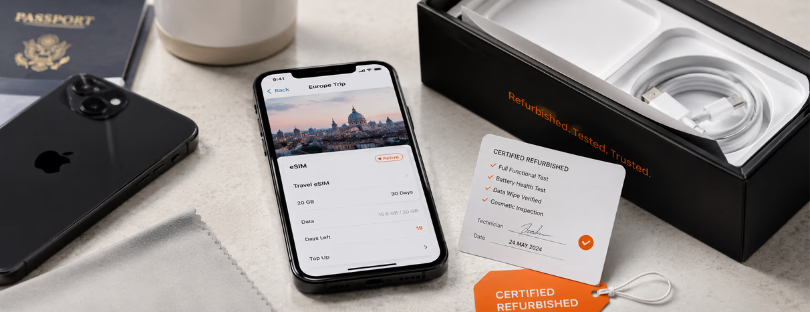
A properly refurbished device has usually been inspected, tested, cleaned, repaired where needed, graded by condition and resold with some form of warranty. That warranty is important. It is the difference between buying a device from a trusted refurbisher and taking a gamble on a random marketplace listing.
Apple, for example, sells certified refurbished products with a one-year warranty, and this gives buyers a level of confidence that feels much closer to buying new than buying second-hand from an individual seller. Back Market, one of the most visible refurbished tech marketplaces, has also helped normalise the category by making refurbished devices feel like a structured retail experience rather than a risky classified ad purchase.
The terminology still needs care. “Used,” “pre-owned,” “renewed,” “refurbished” and “certified refurbished” are not always the same thing. Some devices are lightly used and barely touched. Others may have had a battery or screen replaced. Some are graded clearly. Some are not. The best sellers are transparent about battery health, cosmetic condition, warranty length, return windows and whether parts are original or replacement-grade.
For travellers, that transparency matters even more. A phone that looks good but has weak battery health, poor antenna performance or limited eSIM compatibility can become a very expensive problem in an airport.
Why travellers should care
The travel angle is simple. A good refurbished phone can be one of the smartest travel tech purchases someone makes.
Many travellers now carry a secondary device. Sometimes it is a backup phone. Sometimes it is a work phone. Sometimes it is the phone used for local apps, banking, maps, rideshare, eSIM profiles or content creation. Buying a new flagship only to use it as a backup feels excessive. A refurbished iPhone, Samsung Galaxy or Google Pixel from the last two or three generations can often do the job perfectly well.
This is especially relevant for eSIM users. Many older budget phones still lack eSIM support, while many recent premium models support it properly. A refurbished flagship can therefore be a better travel connectivity device than a brand-new low-end model. That is the part many buyers miss. New does not always mean more useful. Sometimes a refurbished premium phone gives you a stronger camera, better modem, better screen, longer software support and eSIM capability at a more sensible price.
There is also a practical security angle. Travellers increasingly rely on mobile banking, identity apps, airline apps and work accounts. Buying an old, unsupported phone is not smart. Buying a recent refurbished phone that still receives security updates is a very different story.
 The sustainability story is becoming commercial
 The sustainability story is becoming commercial
The environmental case for refurbished phones is obvious, but it is no longer just a feel-good message. It is becoming part of policy, regulation and brand strategy.
The GSMA has been pushing the mobile industry toward a more circular model, arguing that phones need to move away from the old “make, sell, discard” pattern. Its 2025 work on mobile phone circularity frames reuse, refurbishment and recycling as a business case, not just a sustainability slogan. The GSMA has also reported that a large majority of consumers are willing to pay more for environmentally friendly phones, which shows that sustainability is starting to influence buying behaviour, even if price still matters enormously.
Europe is also nudging the market in the same direction. New EU rules on smartphones and tablets started applying in 2025, covering durability, repairability and energy efficiency. The European Commission has also introduced repairability information through energy labelling, giving consumers clearer signals about how repairable devices are.
This is important because the refurbished market depends on good devices entering the second-life economy. If phones are harder to repair, if parts are expensive, or if batteries are difficult to replace, refurbishment becomes less attractive. If phones are designed to last longer and be repaired more easily, the second-hand market becomes stronger.
The market is not perfect
There is one uncomfortable truth: refurbished phones are only as good as the supply chain behind them.
Some markets are already seeing supply pressure. Reports from India, for example, have pointed to organised refurbished smartphone sales being affected by shortages of traded-in devices, even while demand for premium refurbished models remains strong. That tells us something important. Demand is not the only issue. Collection, grading, trust, logistics and trade-in behaviour all shape the market.
There is also a gap between professional refurbishers and informal resale. The informal market can be cheaper, but it is also messier. Battery quality, stolen-device checks, hidden locks, unofficial repairs and missing warranty protection can all turn a bargain into a headache.
For buyers, the checklist should be boring but strict: warranty, return policy, battery health, eSIM support, software update status, network compatibility and seller reputation. For travel use, add one more: make sure the phone is unlocked. A locked refurbished phone is a bad surprise when you are trying to install a travel eSIM in another country.
 Conclusion
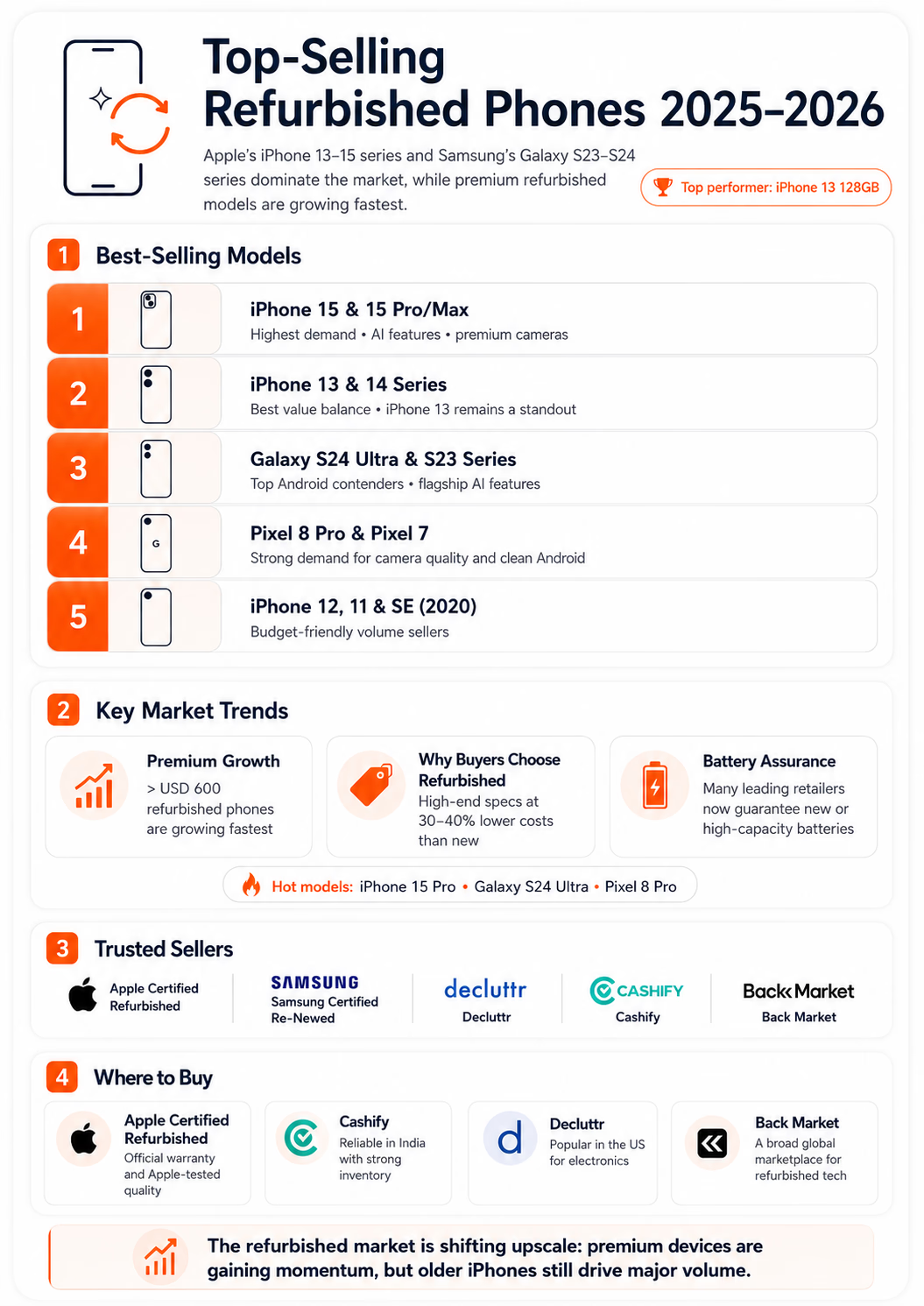
The refurbished phone market is not just about cheaper devices. It is about a more mature smartphone economy.
Apple, Samsung, Google and the major refurbishment platforms are all circling the same reality: phones now last longer than the upgrade cycle suggests. The performance gap between a two-year-old flagship and a new mid-range phone is often smaller than marketing wants us to believe. For many travellers, the smarter purchase may not be the latest device. It may be the right previous-generation device, properly refurbished, unlocked, eSIM-ready and still supported.
That is where the category gets interesting. Refurbished phones are no longer a poor cousin of new phones. They are becoming a practical middle layer between premium ownership, sustainability and travel utility. The winners will not be the sellers shouting “cheap iPhone” the loudest. They will be the platforms that can prove trust, battery quality, repair standards, update life and connectivity readiness.
For travellers, the question is no longer “Should I risk a refurbished phone?” It is more precise than that: “Is this refurbished phone reliable enough to become part of my travel infrastructure?” When the answer is yes, refurbished stops looking second-best. It starts looking like one of the smartest buys in travel tech.