One NZ Expands Satellite Service With Apps and WhatsApp Calls
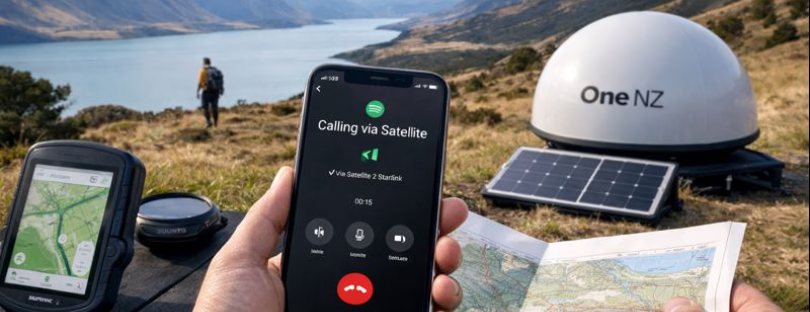
When One New Zealand first launched satellite texting in December 2024, it already felt like a quiet revolution. Now, just over a year later, the operator is pushing that idea much further. Satellite connectivity is no longer limited to basic SMS. Eligible customers can now access selected apps and even make satellite voice calls via WhatsApp, all powered by Starlink and its growing Direct-to-Cell satellite constellation.
This is not a beta experiment or a concept demo. It is live, already in use, and already reshaping how connectivity works in a country where geography has always dictated signal strength.
From world-first texting to real-world usage
Since launch, One NZ Satellite has carried more than 10 million messages through space. That figure matters, not because it sounds impressive, but because of where those messages came from. Around 40 percent of New Zealand’s landmass sits outside traditional mobile coverage. Tramping routes, offshore fishing zones, alpine passes, and remote islands have long been connectivity dead zones.
Satellite texting changed that reality almost overnight. Farmers, hikers, boaties, and travellers suddenly had a reliable fallback when towers disappeared. What One NZ is doing now builds directly on that behaviour. Customers were already using satellite for reassurance and safety. Data and calling simply make the experience more complete.
What actually works over satellite right now
This expansion is not “open internet over satellite”, and One NZ is clear about that. The experience is focused, intentional, and optimised for low-bandwidth, high-value use cases.
With line of sight to the sky, eligible customers can now access:
- WhatsApp, including voice calling and Meta AI
- Google Maps for navigation and orientation
- AllTrails and Plan My Walk for outdoor planning
- AccuWeather for weather checks
- X for lightweight updates
This list says a lot about how One NZ sees satellite connectivity. It is not about scrolling endlessly. It is about knowing where you are, what the weather is doing, and being able to communicate when it matters.
Device support is widening fast
One NZ’s satellite data journey started with Samsung, giving early access to customers using Galaxy Z Fold7, Flip7, and Flip7 FE devices on eligible plans. That partnership allowed both sides to fine-tune how phones handle satellite handover and app behaviour.
Now, the door has opened wider. Customers with Apple iPhone 13 and newer models are also supported, with more devices expected to be added in the coming months. This matters because satellite services only become meaningful when they reach mainstream devices, not just flagship experiments.

Local apps preparing for orbit
One of the quieter but more interesting parts of this rollout is One NZ’s work with local developers. The operator is collaborating with app developer Smudge to help New Zealand companies prepare their apps for satellite data.
This is an important signal. Satellite connectivity is no longer something app teams can ignore or treat as edge-case behaviour. Lightweight data usage, offline-first thinking, and graceful degradation are becoming competitive advantages. For local tourism, outdoor, and safety apps, satellite readiness could soon be a differentiator.
Why this matters beyond coverage maps
Joe Goddard, Experience and Commercial Director at One NZ, frames the shift clearly:
“Satellite texting changed the game for New Zealanders, who are now safer and better connected because of this service. But it was always a starting point for One NZ customers. We’re now taking things to the next level rolling out data, giving customers with an eligible phone and plan access to important information like weather and maps while outside of traditional mobile coverage – and letting them keep in touch with friends and family with satellite calling on WhatsApp when they have line of sight to the sky.”
He also highlights the collaboration behind the scenes:
“Samsung has been an awesome partner in preparing to roll out data via Starlink’s satellite constellation. This is truly cutting-edge work and we’re thankful for their hard work to get us to this point. I’d also like to thank Meta, who sent engineers down to Aotearoa in 2025 to perform WhatsApp testing with our teams, helping us refine the experience in the run up to launch.”
Those details matter. This is not just about satellites overhead. It is about device firmware, app optimisation, and network orchestration working together in real environments. The examples coming back from users, from Great Barrier to Arthur’s Pass, underline that this is already woven into everyday outdoor life.
Conclusion: satellite-to-phone is becoming a real market
What One NZ is doing places it among a small but growing group of operators moving satellite-to-mobile from emergency fallback to everyday utility. Apple’s Emergency SOS via satellite showed global consumers what was possible. Operators in the US, Australia, and parts of Europe are experimenting with similar Starlink-powered models. What stands out in New Zealand is how quickly usage has scaled and how openly One NZ is integrating third-party apps instead of locking the experience down.
The broader trend is clear. Direct-to-cell satellites are no longer about novelty or press releases. They are becoming a parallel access layer, designed for resilience rather than speed. As Starlink continues to expand its constellation and more operators follow this model, expectations will shift. Coverage gaps will no longer feel acceptable, especially in countries built around outdoor travel and remote communities.
For now, One NZ has a meaningful lead in turning satellite connectivity into something practical, local, and usable. If the next phase brings more apps, smoother calling, and wider device support, satellite may quietly become the safety net every traveller assumes is there, until the moment they actually need it.