Numero eSIM Pricing: Why This Is More Than Another Cheap Travel Data App
Most travel eSIM pricing stories sound the same now. A few gigabytes, a validity period, a destination list, a checkout button, done. That model is useful, of course. It helped travellers escape painful roaming bills and avoid airport SIM-card counters. But it also made much of the market feel strangely flat.
Numero eSIM is trying to sit in a slightly different lane.
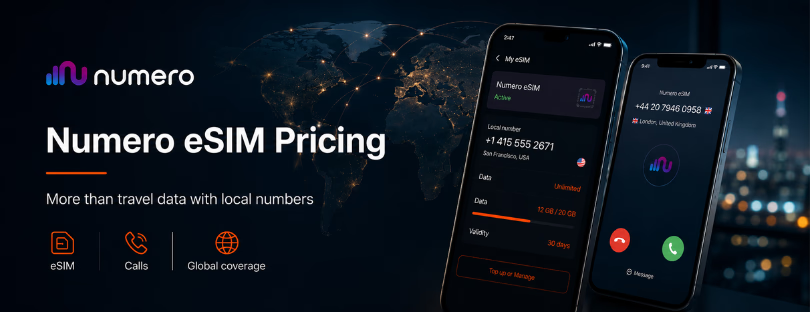
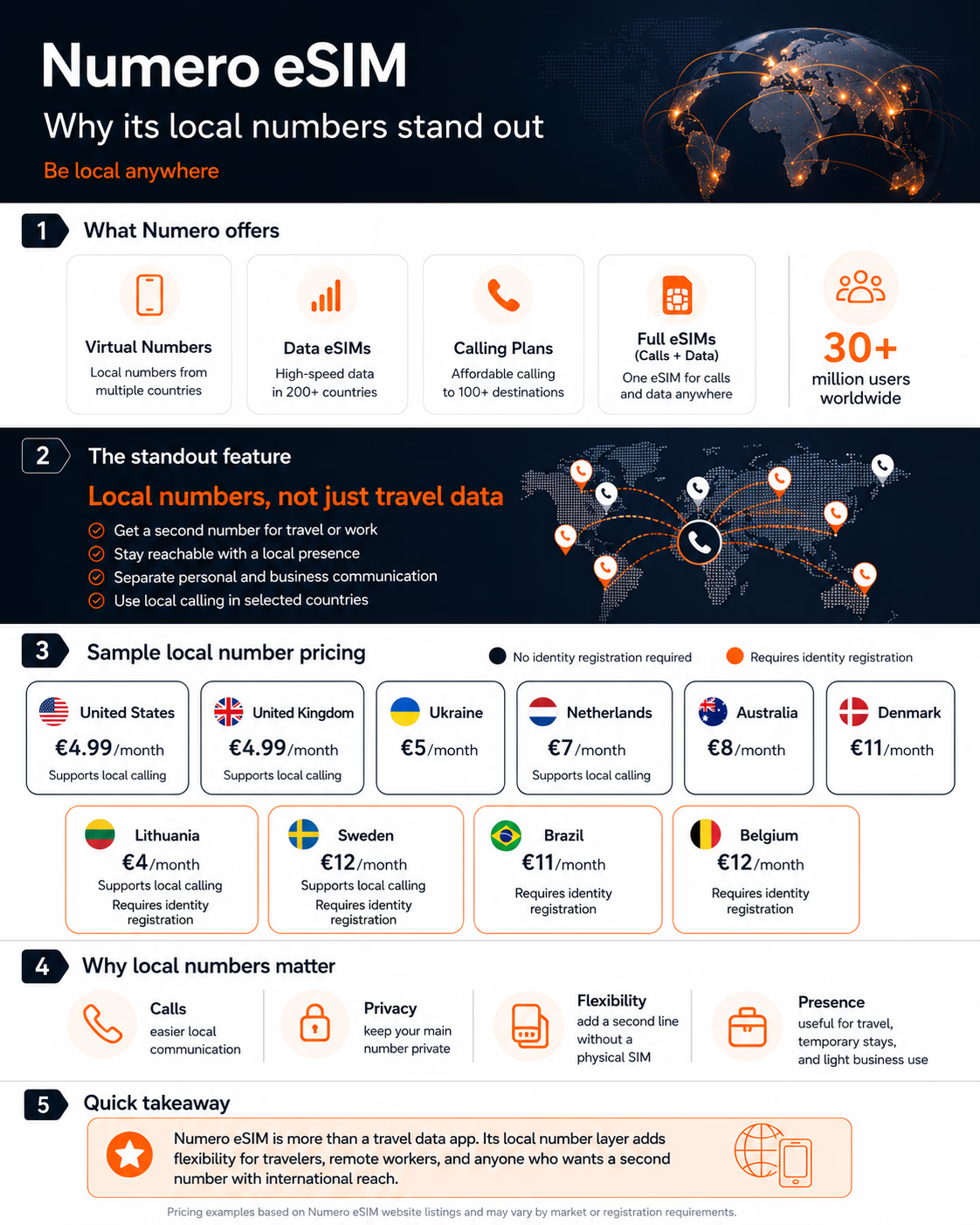
Its pricing is not just about how much data you get for a trip. It is built around a broader communication bundle: data eSIMs, virtual phone numbers, calling plans, and full eSIM options that combine mobile data with a real number and calling features. Numero describes itself as an “all-in-one solution” for virtual numbers, eSIMs and calling plans, and says it is used by more than 30 million users worldwide.
The pricing logic
Numero’s data eSIM side is familiar: travellers can buy data plans for popular destinations such as the USA, Turkey, Saudi Arabia, Egypt, France, Spain, the UAE, Mexico and Italy, with local and regional plan options shown on its site. The company also says it supports travel data in more than 190 countries, while its Google Play listing mentions a global eSIM working across 120 countries.
Where the pricing becomes more interesting is the phone-number layer.
Numero sells virtual mobile numbers from multiple countries, with monthly pricing varying by country. Some examples listed on its website include US and UK numbers from €4.99 per month, Ukraine from €5 per month, Netherlands from €7 per month, Australia from €8 per month, Denmark from €11 per month, and Sweden from €12 per month. Some numbers support local calling, while some countries require identity registration.
That matters because most travel eSIM providers are still data-first. They solve internet access, not necessarily the awkward “I need a local number” problem. Numero is clearly leaning into that second problem.
For travellers, that can be useful in small but very real moments: booking a restaurant, receiving a verification code, registering for a local service, speaking with a driver, or keeping a second number separate from a personal one. For freelancers and small businesses, it can also work as a light international presence. You may not need a full local telecom contract just to look reachable in another market.
The local number advantage
This is Numero’s strongest benefit. It understands that connectivity is not always only about data.
The app offers virtual numbers, USA numbers for WhatsApp, toll-free numbers for business owners, SMS verification use cases, number hiding, call forwarding and voicemail. Its Google Play listing also makes an important distinction: a virtual number works over the internet as a VoIP service, while a “real number via eSIM” works through communication towers and may be more suitable for banking and government services.
That distinction should not be buried, because it affects buyer expectations. A virtual number can be excellent for privacy, sign-ups, business presence and travel convenience. But it is not always the same as a fully native mobile number from a local operator. Some banks, platforms and government services may treat VoIP numbers differently.
Numero is at its best when users understand exactly which product they are buying: data eSIM, virtual number, calling credit, local calling plan, or full eSIM.
Calling and credit
Numero also offers calling credit top-ups in simple amounts, including €2, €5, €10, €20 and €50. That keeps the calling side flexible rather than forcing users into one rigid bundle.
Its Google Play listing says local calling plans are available for more than 20 countries, and the receiver does not need to have Numero installed or even an internet connection. That is a practical detail, and it separates Numero from app-to-app calling tools that only work when both sides are inside the same ecosystem.
There is also a referral mechanism where friends get a €3 discount and users can earn credit, which is a small but smart retention move in a category where many customers buy once and disappear after a trip.
What to watch
Numero’s pricing is flexible, but flexibility can also make comparison harder.
A traveller comparing Airalo, Ubigi, Yesim or Nomad eSIM usually looks at gigabytes, validity, country coverage and price per GB. With Numero, that is only half the story. You may also be paying for a number, calling credit, local calling capability or a full eSIM. That makes the product more useful, but also more layered.
There are also some pricing caveats. Numero’s US special-offer page notes that prices exclude tax and may differ because of currency exchange and tax rules. Some US virtual numbers are shown at €1 per month promotional pricing instead of €5, but those offers need to be understood as limited or campaign-based pricing rather than the default market price.
User reviews also show the usual tension in this category. Numero has a large review base on Google Play, with 137K reviews and a 3.8 rating shown at the time checked. Some users praise the app’s virtual number usefulness and support, while one recent review complained about prices changing at checkout, with Numero replying that differences may come from store commission rather than its platform pricing.
Market context
The timing is good for Numero. Travel eSIMs are moving beyond the first phase of “cheap data abroad.” GSMA Intelligence’s 2026 consumer eSIM checkpoint highlights how new propositions are taking travel eSIM to the next level, while Counterpoint Research says travel eSIM adoption is entering a high-growth phase and could triple by 2030.
The next fight will not only be about who offers the cheapest 5GB plan. It will be who removes the most friction. Holafly has already moved toward global subscription-style connectivity with a phone-number angle, while many classic travel eSIM players remain focused mostly on data.
That puts Numero in an interesting position. It is not trying to win only on “data per euro.” It is trying to win on communication completeness.
Final thoughts about Numero eSIM Pricing
Numero eSIM pricing makes the most sense when you stop looking at it like a standard travel eSIM store.
If you only need a few gigabytes for a weekend trip, a simpler data-first provider may be easier to compare. But if you need data plus a second number, local calling, privacy, SMS flexibility or a lightweight business presence, Numero becomes much more relevant.
That is the bigger trend in travel connectivity now. The market is maturing from “avoid roaming charges” to “make me reachable anywhere.” Numero’s advantage is that it saw that gap early. Its challenge is to keep pricing transparent enough that users understand exactly what they are paying for, because in a crowded eSIM market, trust is becoming just as important as coverage.