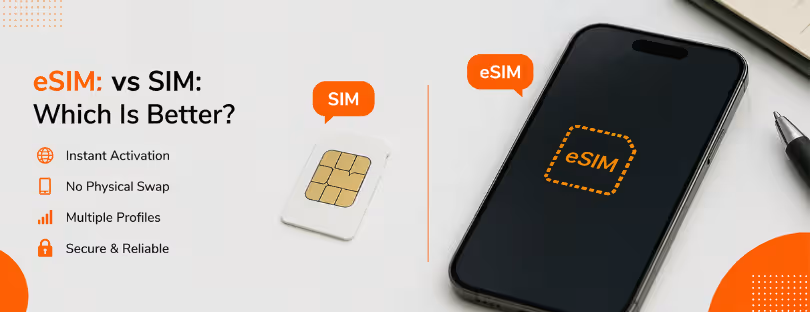
Is eSIM actually better than a SIM card, or is it just hype?
You’ve probably seen both sides. Some people swear by eSIM. Others stick to physical SIMs like it’s 2015. The truth is not black and white. But once you understand how both actually work in real life, the answer becomes pretty clear.
Let’s break it down in a way that actually helps you decide.
What we’re really comparing
At the core, both do the same job.
They connect your phone to a mobile network.
A traditional SIM card is a physical chip you insert into your phone. You buy it, swap it, remove it, lose it, break it. You know the drill.
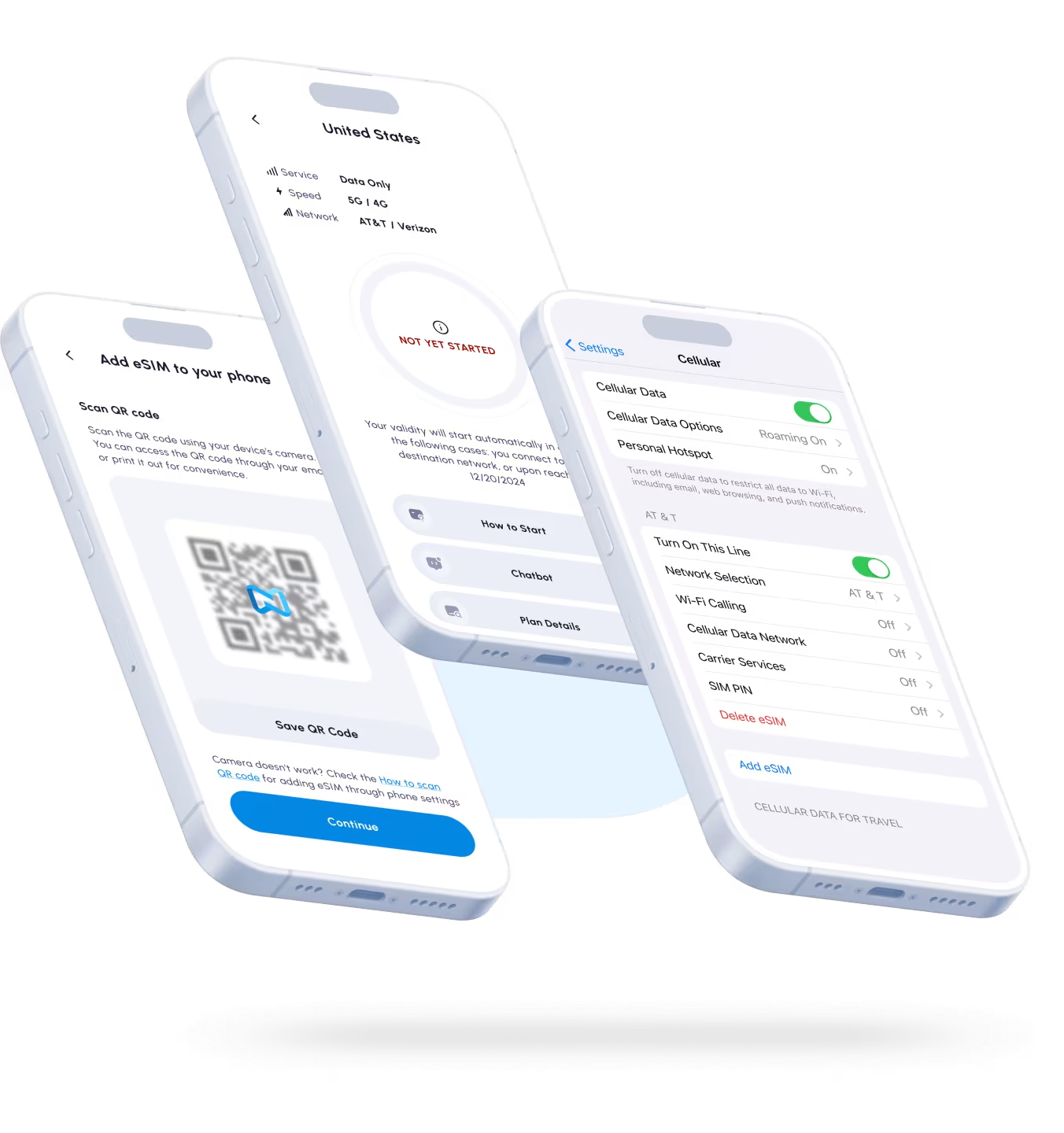
An eSIM is embedded inside your phone. No plastic. No swapping. You activate it digitally, usually by scanning a QR code or installing it through an app.
That’s the technical difference.
But the real difference shows up in how you actually use them.
The moment you travel, everything changes
This is where eSIM starts to pull ahead.
Imagine you land in a new country.
SIM Card Experience
- Search for a shop at the airport
- Compare overpriced tourist plans
- Wait in line
- Swap your SIM (and risk losing your original one)
- Deal with activation issues
eSIM Experience
- Buy a plan online before you travel
- Install it in 2 minutes
- Land and connect instantly
No store. No waiting. No stress.
That’s not a small difference. That’s a completely different experience.
Convenience is not just a buzzword
People throw around “convenience” like it doesn’t mean much. But in connectivity, it’s everything.
With eSIM:
- You can switch between plans without touching your phone physically
- You can store multiple profiles (work, travel, personal)
- You don’t need to carry or manage tiny plastic cards
If you travel often, this becomes addictive very quickly.
You stop thinking about connectivity as a “task.”
It just works.

But SIM cards still have their place
Let’s not pretend SIM cards are dead. They’re not.
There are still situations where a physical SIM makes more sense.
For example:
- Older phones don’t support eSIM
- Some countries still have limited eSIM support
- Local prepaid SIMs can sometimes be cheaper for long stays
- Not everyone is comfortable with a digital setup
Also, if you’re someone who likes walking into a shop and talking to a human, SIM cards still win there.
So no, SIM is not obsolete.
But it is… slower.
Cost: the most misunderstood part
Here’s where things get interesting.
A lot of people assume:
“SIM is cheaper, eSIM is more expensive.”
That used to be true.
Not anymore.
Today, pricing depends more on the provider than the format.
You can find:
- Very cheap eSIM plans for short trips
- Competitive regional eSIM packages
- Even unlimited data options
At the same time:
- Airport SIM cards are often overpriced
- Roaming through your home operator is usually the worst deal
So the real comparison is not SIM vs eSIM.
It’s a smart choice vs. a lazy choice.
And eSIM makes the smart choice easier to access.
Flexibility is where eSIM wins hard
This is probably the biggest advantage.
With a SIM card, you are locked into whatever you insert.
With eSIM, you can:
- Install multiple plans
- Switch networks instantly
- Use one line for data, another for calls
- Keep your home number active while using travel data
This is huge for:
- Business travelers
- Digital nomads
- People managing multiple numbers
It’s not just better. It’s a different level of control.
The hidden benefit: you stop overthinking connectivity
This is something most people don’t realize until they use eSIM for a while.
You stop planning connectivity.
You stop worrying about:
- “Where will I buy a SIM?”
- “What if it doesn’t work?”
- “How much will roaming cost?”
You just open your phone, pick a plan, and move on.
That mental shift is underrated.
So… is eSIM better than SIM?
Short answer?
Yes. For most people, in most situations, eSIM is better.
But let’s be precise.
eSIM is better if you
- Travel even occasionally
- Want flexibility and control
- Prefer digital solutions
- Hate dealing with physical SIM cards
SIM is still fine if you
- Use an older device
- Stay mostly in one country
- Prefer in-person purchases
- Want the absolute lowest local price in some markets
So it’s not about replacing SIM overnight.
It’s about where the industry is clearly heading.
 Why the industry is moving to eSIM
This shift is not random.
It’s happening for a reason.
Phone manufacturers love eSIM because:
- It saves space inside devices
- It improves water resistance
- It simplifies hardware design
Operators are adapting because:
- It reduces logistics costs
- It enables digital distribution
- It opens new business models
And platforms (especially in travel tech) are building entire ecosystems around it:
- Instant activation
- Global plans
- Subscription-based connectivity
- API-driven distribution
This is bigger than just a “new type of SIM.”
It’s a structural change in how connectivity is delivered.
Where eSIM still needs to improve
To keep it real, it’s not perfect yet.
Some pain points still exist:
- Not all devices support it
- Some activation flows can be confusing for beginners
- Switching devices can be less intuitive than swapping a SIM
- Certain markets still lag in adoption
But these are temporary problems.
And they’re being solved quickly.
What this means for you
If you’re still asking whether eSIM is better, you’re already at the tipping point.
Because the real question is shifting to:
When should you stop using SIM cards altogether?
For many people, the answer is: already.
Especially if you:
- Travel across Europe
- Use multiple countries in one trip
- Need reliable data without surprises
Once you try eSIM properly, going back feels… outdated.
Final thoughts
This is not just a tech upgrade.
It’s a behavior change.
SIM cards made sense in a world where connectivity was tied to physical distribution.
eSIM belongs to a world where connectivity is:
- Instant
- Global
- Flexible
- Digital-first
And that world is already here.
So yes, eSIM is better than SIM.
Not because SIM is bad.
But because eSIM removes friction in a way that changes how you experience connectivity entirely.
And once that friction is gone, it’s very hard to accept it again.