How Leading Organizations Are Regaining Control Over Global Mobile Connectivity
Enterprise roaming has a strange way of surviving every digital transformation program. enterprise connectivity
A company can modernize cloud access, roll out zero-trust policies, negotiate software licenses with surgical precision and still leave international mobile connectivity sitting in the messy corner of “travel expenses.” The employee lands, turns on data, tries to work, and the organization finds out what happened weeks later when the invoice arrives.
That delay is the problem.
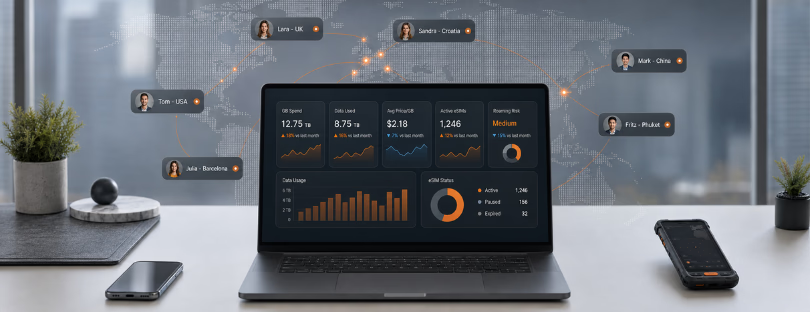
For CIOs, IT directors, procurement teams and finance leaders, international roaming is no longer just a pricing issue. The bigger issue is that many organizations still do not know enough, early enough. Who is using data? In which country? On which device? For which trip? Is the usage business-critical, careless, avoidable, or simply the result of a bad legacy plan?
Without visibility, roaming is not managed. It is explained after the damage is done.
The invoice arrives too late
Traditional roaming models were built for a slower world. Employees traveled, used their corporate mobile plan abroad and the bill arrived later. That worked, barely, when international mobility was limited to a handful of executives.
It fits badly with how companies operate now.
Sales teams move between regions. Engineers visit industrial sites. Consultants fly between client offices. Media teams cover events abroad. Executives expect secure access to collaboration tools, approval workflows and dashboards wherever they are. The phone is not a convenience in that context. It is part of the work stack.
Yet many roaming setups still depend on post-usage billing, fragmented operator contracts and delayed reporting. Finance sees the cost after consumption. Procurement negotiates rates without always controlling behavior. IT is expected to support employees abroad without real-time visibility into what is happening on the mobile side.
That is why the problem is bigger than “roaming is expensive.” Expensive can sometimes be negotiated. Uncontrolled is harder.
The hidden cost
The obvious cost is the telecom invoice. It is visible, painful and easy to complain about.
The less obvious cost is what employees do when they are trying to avoid that invoice.
Some switch mobile data off. That looks prudent until they miss a customer message, cannot load a shared document, delay a payment approval or join a video call from a hotel lobby with unstable Wi-Fi. Others use public Wi-Fi wherever they can find it, from airports to cafés to conference venues. That may save a few euros on data, but it creates a very different question for IT security teams.
Then there is the operational drag. Someone has to approve expenses, explain policy, check invoices, chase receipts, manage SIMs, handle “my data is not working” messages and decide whether a surprise charge was reasonable. Multiply that by hundreds of trips and the roaming bill becomes just one line in a much larger productivity leak.
This is the part enterprises often miss: uncontrolled connectivity does not stay inside the telecom budget. It spills into security, employee experience and operational management.
From roaming to connectivity management
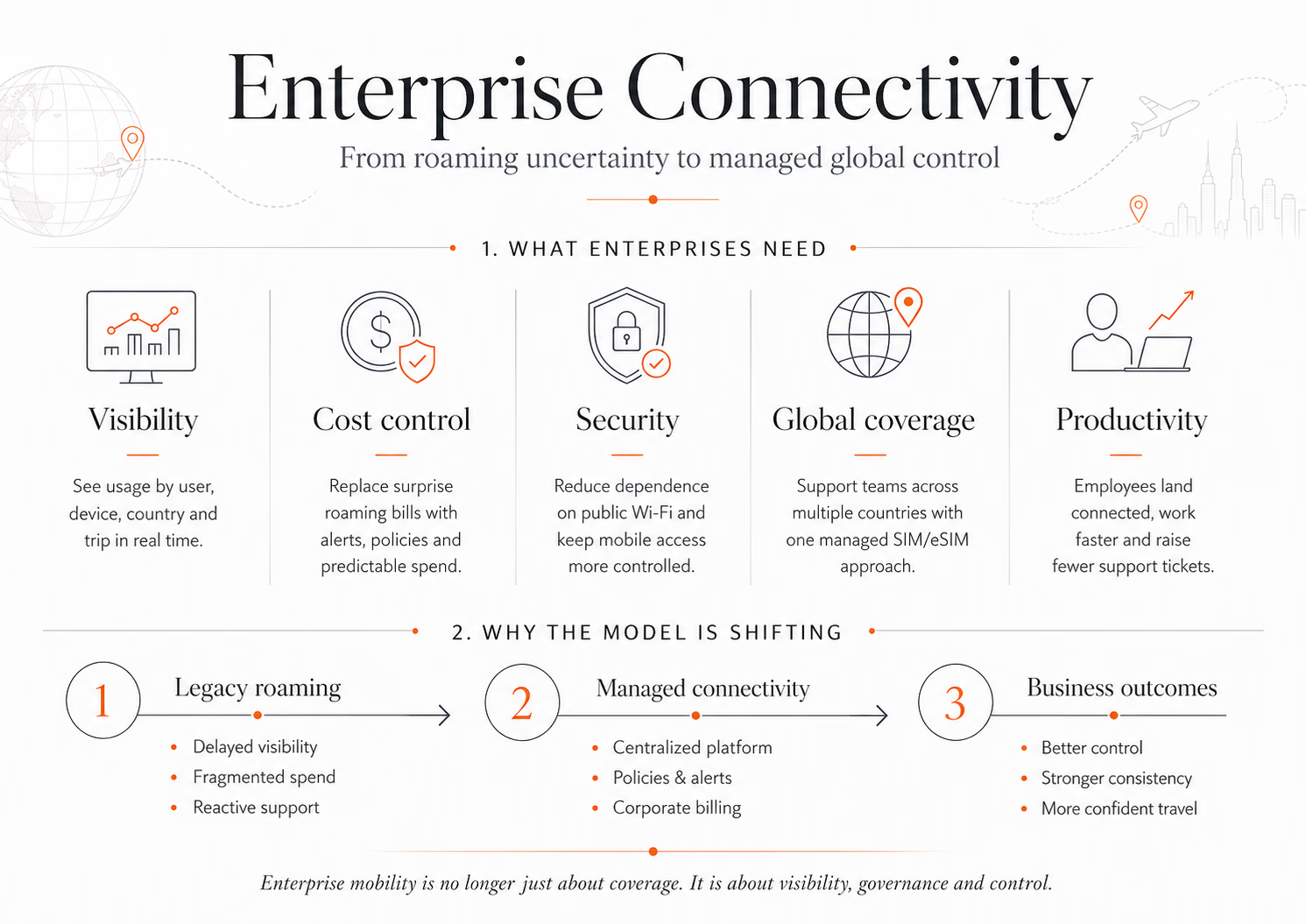
The stronger organizations are reframing the issue. They are not asking only, “Can we get cheaper roaming?” They are asking, “Can we manage global connectivity with the same discipline we apply to cloud, identity and devices?”
That shift changes the buying criteria.
A modern enterprise connectivity model needs centralized visibility, corporate billing, policy controls, usage alerts, device flexibility and coverage that works across the places employees actually travel. Predictability matters as much as price. So does simplicity. If the process is too complicated, employees will route around it with consumer apps, local SIMs, reimbursements or public Wi-Fi.
The real goal is not to micromanage every megabyte. It is to remove uncertainty before it becomes a cost, a security gap, or a support ticket.
What better control looks like
The most useful evidence comes from companies that have already changed their model.
Roquette, a global ingredients company with teams operating across more than 50 countries, reported an 80% reduction in roaming costs after adopting Ubigi for Business. The interesting part is not only the percentage. Roquette also connected more than 200 employees and pointed to easier management, employee autonomy and less pressure on IT teams.
NTT Data Japan shows a different operational story. Its employees had relied on rental Wi-Fi routers for international travel. That model can work, but it brings rental fees, returns, insurance, planning and technical support into every trip. With Ubigi for Business, NTT reported 67% savings, covering 249 business trips and more than 600 employees, while centralizing management and simplifying internal procedures.
Eramet, a mining and metallurgical group with operations across multiple regions, highlights the cost structure issue. In some zones, data costs dropped from €1,300 per GB to €25 per GB. The company also needed both SIM and eSIM formats, which is a useful reminder that enterprise connectivity is rarely one-size-fits-all. Real fleets include older devices, rugged devices, routers, phones and laptops.
Different sectors. Different mobility patterns. Similar lesson: the biggest gains come when connectivity becomes visible and governed.
Where Ubigi fits
Ubigi for Business is a good example of the new model because it is not simply a travel eSIM sold to employees one trip at a time. Built by Transatel, an NTT company, it sits closer to enterprise fleet connectivity: SIM and eSIM options, centralized management, real-time balance visibility, alerts, corporate billing and mobile data coverage in more than 200 destinations.
Its telecom foundation matters. Transatel operates its own core network and has direct agreements with 330 mobile operators, which gives Ubigi a stronger infrastructure story than a pure reseller model. For companies worried about public Wi-Fi reliance, secure cellular connectivity also has a clearer role in the enterprise policy conversation.
That does not mean every organization needs this level of platform. A small team with two international trips a year may be fine with strict expense rules and approved consumer eSIM purchases. But once travel becomes frequent, multi-country and department-wide, informal solutions start showing cracks. What looks flexible at ten travelers becomes messy at two hundred.
A more competitive market
Ubigi is part of a wider enterprise connectivity shift, but the market is not moving in one single direction.
Some solutions are built around telecom operator relationships and global mobile agreements. Others come from enterprise mobility, SIM and eSIM orchestration, or the travel eSIM ecosystem adapting its user-friendly model for business teams. Each approach has strengths, depending on the organization’s size, travel patterns, security requirements and internal governance model.
The choice is not simply about who offers the lowest rate per GB. That number matters, but it tells only part of the story. The better question is which model gives the company control without making life harder for the people who travel.
The choice depends on the organization. Some need deep integration with procurement and device management. Some need broad country coverage and low administrative effort. Some care most about security posture. Others simply need to stop employees expensing random data solutions after every trip.
The mistake is buying only on price per GB. That number matters, but it tells only part of the story. The better question is: which model gives the company control without making life harder for the people who travel?
The governance gap
This is where many enterprises still need to mature.
A connectivity platform can show usage, but the company still has to define policy. Who gets international data automatically? Who needs approval? What happens when a threshold is reached? Which regions are covered by the corporate plan? Are employees allowed to buy their own eSIMs and expense them? Should public Wi-Fi be discouraged, blocked, or simply avoided for sensitive work?
These are not telecom-only questions. They sit between IT, procurement, finance, security and HR.
That is why “roaming management” feels too narrow as a category. The stronger framing is global mobile connectivity governance. It is less glamorous than AI dashboards or cloud transformation, but for a traveling workforce, it is much closer to daily reality.
Final take about enterprise connectivity
For years, international roaming was treated as an unavoidable inconvenience: annoying, expensive and slightly outside everyone’s control. That excuse is losing credibility.
The tools now exist to bring global mobile connectivity into a managed model. The companies getting the best results are not just negotiating cheaper roaming. They are reducing uncertainty. They know who is connected, where money is going, which policies apply and how employees can work abroad without improvising.
Ubigi for Business is one practical example of that shift, especially because it combines enterprise management with Transatel’s telecom infrastructure and real customer outcomes. But the larger point is bigger than any single provider.
Global work needs global connectivity that behaves like a business service, not like a travel afterthought. Once organizations see roaming through that lens, the conversation changes. It moves from “why is this bill so high?” to “why did we ever leave this unmanaged?”