Inside Guernica: VR Experience at Picasso Museum
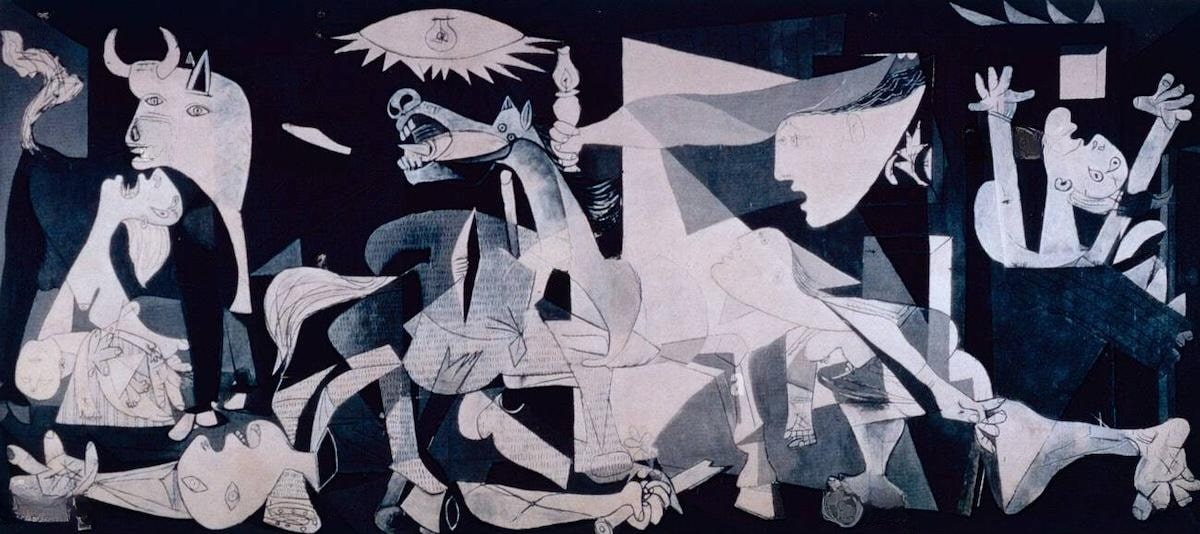
Here’s the thing about Guernica: most people know the image, fewer understand the story behind it, and almost no one has experienced it this way.
At the Musée national Picasso-Paris, a new immersive experience is trying to change that. The Metamorphoses of Guernica, co-produced by Lucid Realities and VIVE Arts, runs until 6 September 2026 and rethinks how one of the most important artworks of the 20th century can be understood today.
This is not just another museum add-on. It is a clear signal of where cultural storytelling is heading.
Stepping inside Guernica
At its core, the experience takes you through the full lifecycle of Guernica. Not just the finished piece, but everything around it.
You start in 1937 Paris, at the Spanish Republican Pavilion during the International Exhibition, where the painting was first revealed. From there, you move into the ruins of Gernika itself, the Basque town devastated by aerial bombing that triggered Picasso’s response. Then into the artist’s studio at the Grands-Augustins, where the work took shape. And finally, through its journey across countries before landing permanently at the Museo Reina Sofía.
This is where the format matters.
Instead of reading wall text or listening to a guide, you experience the context spatially. You see how the painting emerged from a very specific political and emotional moment. And suddenly, the abstraction starts making sense.
Voices that shaped the narrative
What makes this more than a visual reconstruction is the narrative layer.
The story is told through two perspectives that are rarely foregrounded in mainstream interpretations of Guernica:
- Juan Larrea, writer and member of the Spanish Republican delegation
- Dora Maar, surrealist artist and Picasso’s partner, who documented the painting’s creation through photography
This is a smart editorial choice. It shifts the experience from “Picasso the genius” to a broader network of influence, politics, and collaboration.
It also aligns with how art history is increasingly being reinterpreted today. Less hero narrative, more ecosystem thinking.
Why VR actually works here
This one doesn’t.
The difference is intent. According to museum director Cécile Debray, the goal was not to replace the original artwork but to extend access to its context. That matters because Guernica itself is not physically in Paris, but in Madrid.
So instead of replicating the painting, the experience reconstructs its meaning.
That approach is consistent with what Nicolas Thépot, the project’s director, has been doing across cultural XR projects. His work tends to focus on mediation rather than spectacle. Less “wow effect”, more narrative clarity.
And that is exactly where VR can deliver real value.
A growing playbook in cultural tech
This is not happening in isolation.
Over the past few years, immersive art has moved from experimental to strategic. Institutions are no longer asking “should we do XR?” but “how do we do it properly?”
Some relevant benchmarks:
- Musée d’Orsay with Monet – The Obsession of Water Lilies
- Louvre Museum with Mona Lisa: Beyond the Glass
- Acute Art is working with global contemporary artists
According to reports from UNESCO and ICOM, immersive technologies are becoming a core tool for audience engagement, especially among younger visitors and international audiences who may not have physical access to collections.
What’s interesting is how the narrative is evolving.
Early immersive exhibitions focused on scale and visual impact. Today, the emphasis is shifting toward context, education, and emotional connection. The Metamorphoses of Guernica sits firmly in this second wave.
Why this matters beyond art
There is a bigger story here, and it goes beyond museums.
What you are seeing is the convergence of three trends:
- Content becoming experiential
- Storytelling becoming spatial
- Access becoming global and device-driven
This is not that far from what is happening in travel tech.
Think about it. Travelers are no longer satisfied with static information. They expect interactive, personalized, and contextual experiences before they even arrive somewhere. Museums are simply one of the first sectors to fully embrace that shift.
For platforms like Alertify’s audience, this is relevant because it mirrors how digital experiences are evolving across industries. Whether it is connectivity, tourism, or cultural discovery, the expectation is the same: reduce friction, increase immersion, and make complexity intuitive.
 What stands out
 What stands out
Not trying to replace the original
This is key. The experience does not compete with the physical artwork. It complements it.
Strong editorial framing
Using Larrea and Maar as narrative anchors adds depth and avoids the usual clichés.
Clear use of technology
VR is used as a storytelling tool, not as a feature.
Aligned with institutional strategy
This is integrated into the museum’s broader mission, not a one-off experiment.
Conclusion
If you zoom out, The Metamorphoses of Guernica is less about Picasso and more about a shift in how culture is delivered.
Compared to earlier immersive projects that leaned heavily on visual spectacle, this one is closer to what platforms like Acute Art or institutional programs at the Louvre are moving toward: narrative-first, context-driven experiences that extend the meaning of the original work rather than duplicating it.
And that aligns with broader data. UNESCO and ICOM have both highlighted immersive tech as a key driver for accessibility and audience expansion, particularly in a post-pandemic world where hybrid cultural consumption is becoming the norm.
The real takeaway is simple.
The future of cultural heritage is not just about preservation. It is about translation.
And the institutions that win will not be the ones with the biggest collections, but the ones that can make those collections understandable, relevant, and experiential for a global audience.