eSIM Carrier Activation Explained: What Really Happens
Here’s the thing: most people think eSIM is just about scanning a QR code and getting instant data. And yes, that’s part of it. But behind that simple moment sits something much more important.
eSIM carrier activation.
If you really want to understand how eSIM works, how reliable it is, and why some setups feel seamless while others don’t, this is the layer you need to get.
Let’s break it down in a way that actually makes sense.
What eSIM carrier activation really means
When we talk about “eSIM carrier activation,” we’re not talking about the QR code itself. That’s just the entry point.
Carrier activation is the process by which your device connects to a mobile operator’s infrastructure and gets a working mobile profile. This includes authentication, provisioning, and enabling your access to the network.
In simple terms, it’s the moment your phone stops being just a device with a downloaded profile and becomes a fully connected mobile endpoint.
No activation, no data. It’s that simple.
The invisible infrastructure behind activation
This is where things get interesting.
Unlike physical SIM cards, where activation is often tied to inserting a card and maybe receiving an SMS, eSIM activation is fully digital. It relies on a remote provisioning system defined by GSMA standards.
At the center of this is something called the SM-DP+ server. You don’t see it, but it’s doing the heavy lifting.
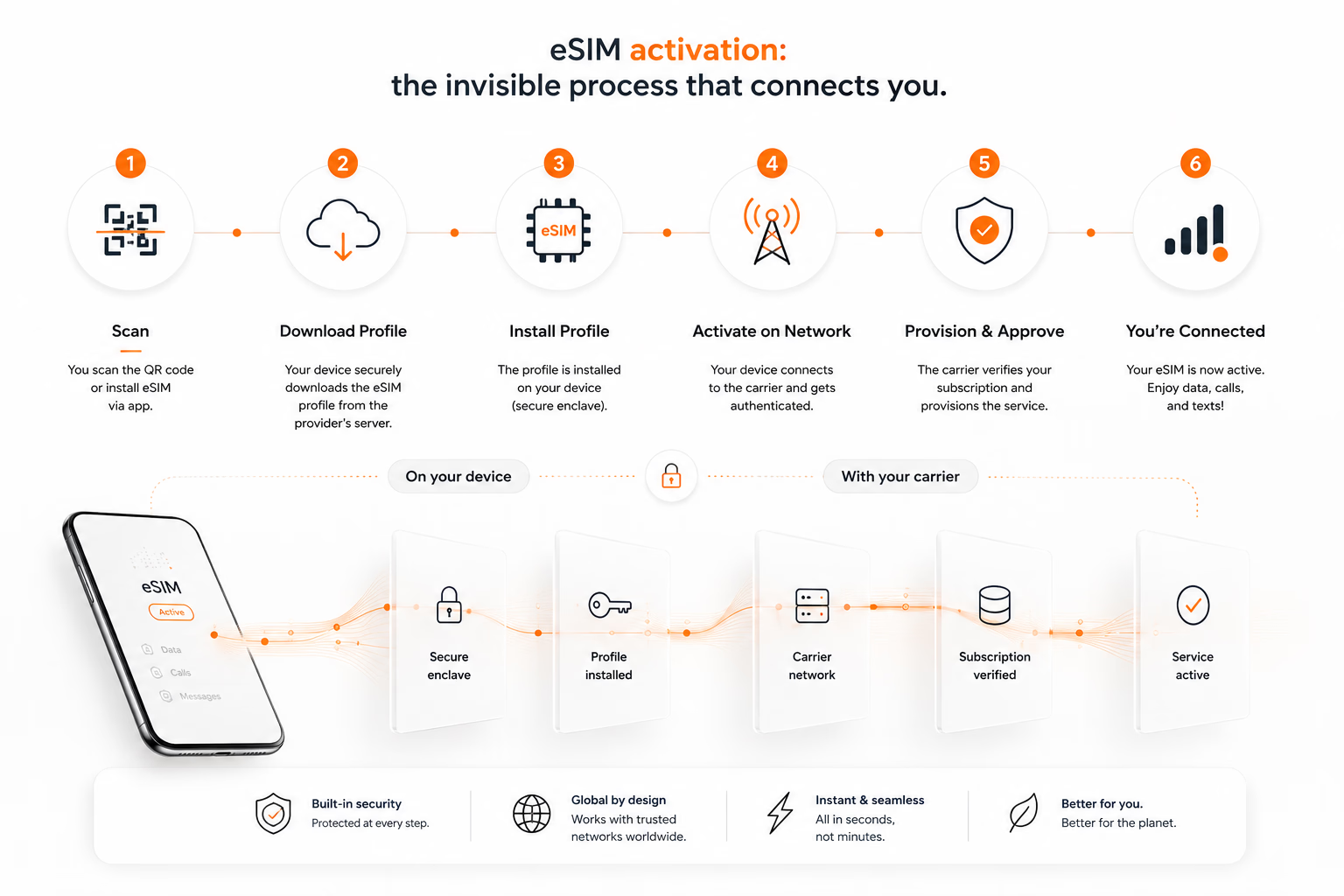
Here’s what happens behind the scenes:
- Your device requests the eSIM profile
- The SM-DP+ server securely delivers it
- Your phone installs the profile
- The carrier authenticates your device on the network
- Activation completes and your connection goes live
All of this usually takes under a minute. But that speed hides a pretty complex ecosystem.
Why activation quality actually matters
Not all eSIM experiences are equal. And a big part of that comes down to how carrier activation is handled.
Some providers have direct integrations with mobile networks. Others rely on intermediaries or aggregators. Some optimize activation flows. Others don’t.
This leads to real differences in user experience:
- Instant activation vs delayed activation
- Smooth onboarding vs failed installs
- Reliable connection vs unstable network access
If you’ve ever heard someone say “my eSIM didn’t work,” chances are the issue wasn’t the concept of eSIM itself. It was the activation process.
Activation types: it’s not always the same
Here’s something most guides won’t tell you.
There isn’t just one type of eSIM carrier activation. There are several models, and they affect how your connectivity behaves.
The most common ones are:
Understanding this matters more than you think. It affects when your plan starts counting, and whether you risk losing a day of usage.
Why timing can make or break your experience
One of the biggest mistakes travelers make is installing an eSIM too early without understanding activation timing.
Some plans start the moment you install them. Others start when you first connect to a network abroad.
That difference can literally cost you money.
Let’s say you install your eSIM two days before your trip, thinking you’re just preparing. If your plan activates immediately, you’ve already lost two days before even landing.
On the flip side, waiting too long can also backfire. If you land without a working connection and try to install on airport WiFi, you’re adding friction where you don’t want it.
The best move? Always check activation logic before installing.
The role of carriers vs eSIM providers
Another layer that often gets overlooked is the difference between the eSIM provider and the actual carrier.
Many travel eSIM brands don’t operate their own networks. Instead, they partner with local carriers around the world.
So when you activate an eSIM in France, you might actually be connecting to Orange or SFR. In the US, maybe AT&T or T-Mobile.
This means your experience depends on two things:
- The provider’s platform and activation flow
- The underlying carrier’s network quality
That’s why two eSIMs with similar pricing can feel completely different in real life.
Why some activations fail (and what to watch for)
Let’s be real. Not every activation goes smoothly.
Here are the most common reasons things go wrong:
The takeaway? Activation is fast when everything aligns. But it’s still a system with multiple dependencies.
eSIM activation is becoming a competitive edge
Here’s where things get interesting from a market perspective.
Activation used to be a technical detail. Now it’s becoming a key differentiator.
The best providers are investing heavily in:
- One-click activation flows
- App-based onboarding instead of QR codes
- Real-time provisioning
- Clear activation timing rules
Why? Because friction kills conversions.
If a user struggles to activate, they won’t come back. Simple as that.
This is especially important in the travel segment, where users need instant reliability.

What this means for the future of connectivity
Zoom out for a second.
eSIM carrier activation is more than just a technical step. It’s the foundation of how mobile connectivity is evolving.
We’re moving toward a world where:
- Devices connect automatically to the best available network
- Activation happens in the background without user input
- Connectivity becomes embedded into apps, platforms, and services
Think about how WiFi works today. You don’t think about authentication or provisioning. You just connect.
That’s where mobile connectivity is heading.
And eSIM activation is the bridge that gets us there.
What you should actually do as a user
If you want a smooth experience, here’s what actually matters:
- Check if your device supports eSIM and is unlocked
- Understand when your plan activates
- Install your eSIM on stable WiFi
- Don’t delete your QR code until everything works
- Label your eSIM if you’re using multiple profiles
It’s not complicated. But those small steps make a big difference.
The bottom line
eSIM carrier activation is one of those things you don’t think about until something goes wrong.
But once you understand it, everything about eSIM makes more sense.
Why some providers feel premium.
Why others feel frustrating.
Why timing matters more than price sometimes.
At the end of the day, the real promise of eSIM isn’t just digital SIM cards.
It’s seamless, invisible connectivity.
And activation is the moment where that promise either delivers… or doesn’t.