BTC Bahamas Targets Cruise Travelers with New eSIM
There’s a very specific moment every cruise passenger knows.
You step off the ship, open your phone, and suddenly… nothing works the way it should. Roaming kicks in, WiFi is unreliable, and you’re stuck figuring out connectivity instead of enjoying your first hour onshore.
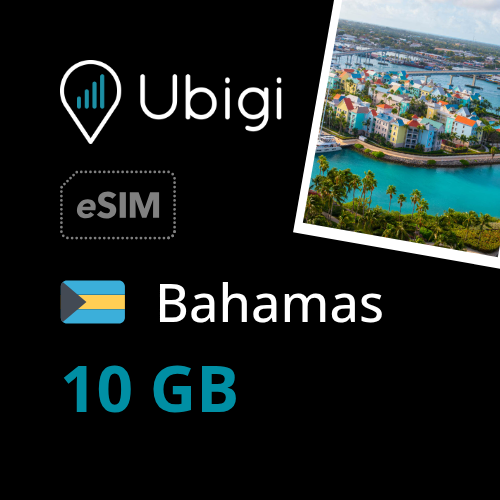
That’s exactly the gap BTC Bahamas is trying to close with its newly launched Tourist eSIM, designed specifically for travelers arriving through the Nassau Cruise Port.
And importantly, this isn’t just another generic travel eSIM. It’s a local operator stepping directly into one of the most underserved moments in travel connectivity.
Built for the First Hour, Not Just the Entire Trip
Most eSIM providers think in terms of countries or regions.
BTC is thinking in terms of arrival moments.
“The introduction of the Tourist eSIM comes as BTC celebrates major recognition from Ookla, earning top honors for best mobile coverage and best mobile video experience for the second half of 2025,”
BTC said in a press release yesterday.
BTC Chief Executive Officer Sameer Bhatti said during a launch event for the Tourist eSIM:
“Today’s travelers expect a seamless, always-on mobile experience from the moment they arrive. Our new Tourist eSIM delivers exactly that, with generous data, extensive calling to the United States and Canada, and effortless activation on BTC’s award-winning network. This allows visitors to focus on enjoying their time in The Bahamas, not worrying about connectivity.”
That framing matters.
Because the real problem is not “how do I stay connected in the Bahamas.”
It’s “how do I get connected instantly when I step off the ship.”
The Bahamas Is a Perfect Test Case
The scale of the opportunity is massive.
“The Bahamas welcomed a record-breaking 12.5 million visitors in 2025, including 10.6 million cruise arrivals, and the demand for reliable, on-the-go connectivity continues to grow. BTC’s Tourist eSIM addresses this need, enabling travelers to stay connected with confidence on its 4G LTE network.”
Cruise-heavy destinations like Nassau are uniquely challenging from a connectivity perspective:
- Travelers stay for hours, not weeks
- They need immediate access, not delayed activation
- They rely heavily on messaging, maps, and social sharing
- Many don’t want to commit to full travel plans or multi-country packages
This is where traditional global eSIM players often feel slightly mismatched. Their products are built for broader journeys, not hyper-short, high-intensity visits.
BTC is effectively zooming in on a very specific use case.
What the Tourist eSIM Actually Offers
Instead of overwhelming users with complex options, BTC keeps it simple and aligned with real behavior.
12GB of data
- 3,000 minutes to the US and Canada
- 3,000 on-network minutes
This is clearly designed for cruise passengers spending a single day in Nassau. The data allowance is generous enough for navigation, video calls, and social media without thinking twice.
Unlimited data
- Same extensive calling options
This targets short-stay travelers who want a more relaxed, always-on experience without worrying about usage.
There’s also a strong emphasis on frictionless onboarding:
“The Tourist eSIM eliminates the need for a physical SIM card, allowing users to activate a local plan directly on compatible devices before arrival or upon entry into the country. With flexible prepaid options, travelers can select plans tailored to the duration and nature of their stay.”
In other words, BTC is removing the two biggest historical barriers: physical SIM logistics and activation delays.
Local Operators Are Quietly Entering the eSIM Race
This launch is part of a broader shift that’s becoming more visible across the industry.
“The launch of the Tourist eSIM reflects BTC’s broader vision for the future of connectivity in the Caribbean that’s smart, simple, and always accessible.”
Bhatti added:
“Whether visitors are here for a day or an extended stay, we want connectivity to be the easiest part of their experience. The combination of our Tourist eSIM and our award-winning network allows guests to move freely across the islands, stay connected with loved ones, and explore more with confidence.”
What’s interesting here is not just the product itself, but who is launching it.
For years, travel eSIM has been dominated by global aggregators like Airalo and Holafly. They built scale through distribution, marketplaces, and partnerships.
Now, local telecom operators are starting to play offense.
And they have advantages:
- Direct control over network quality
- Strong local infrastructure
- Ability to bundle voice and local services
- Better positioning for short-stay use cases
At the same time, they lack the global reach and brand familiarity of established eSIM platforms.
This creates an interesting tension in the market.
Where This Fits in the Bigger eSIM Trend
If you zoom out, BTC’s move aligns with a larger pattern.
Travel connectivity is fragmenting into layers:
- GIobal eSIM platforms focused on scale and multi-country convenience
- Infrastructure players enabling APIs and embedded connectivity
- Local operators targeting high-intent, location-specific moments
The Tourist eSIM sits clearly in that third category.
And that category is growing.
According to data and benchmarks from organizations like Ookla, network performance and reliability are becoming key decision factors, not just pricing. Travelers increasingly care about whether connectivity works instantly and consistently, especially in high-traffic environments like ports and airports.
This is where local operators can realistically compete.
What This Means for Travelers and the Market
From a user perspective, this is a positive shift.
More targeted products mean less friction and better alignment with actual travel behavior.
From a market perspective, it signals something bigger:
The travel eSIM space is no longer just a global marketplace game.
It’s becoming a layered ecosystem where:
- Distribution wins at scale
- Infrastructure wins in the background
- And local precision wins in specific moments
Conclusion
BTC’s Tourist eSIM is not trying to compete with global eSIM providers head-on.
It’s doing something smarter.
It’s owning a very specific moment that global players often overlook, the first hour after arrival.
And that’s where this becomes interesting.
Because if more local operators follow this path, the market will start to shift from broad, one-size-fits-all offerings to highly contextual connectivity.
Global players will still dominate discovery and distribution. But local operators will increasingly capture the experience on the ground.
In other words, the future of travel connectivity won’t be decided by who has the most countries.
It will be decided by who owns the most critical moments.