Albania Beaches Are Europe’s Fast-Rising Coastline
Albania’s beaches are having the kind of travel moment that usually comes with a warning label: go now, before everyone else does.
For years, Albania’s coastline sat in the awkward space between “hidden gem” and “not quite ready.” Travellers knew about it. Backpackers whispered about it. Italians, Kosovars, Poles, Germans, and regional visitors were already filling beach bars in July and August. But internationally, Albania was still treated like a cheaper side note to Greece, Croatia, or Montenegro.
That has changed fast.
Albania welcomed around 11.7 million foreign visitors in 2024, up about 15% from the previous year, according to figures reported from INSTAT data. That is a huge number for a country with a population of roughly 2.4 million. And the coast is one of the biggest reasons why. Official tourism promotion now openly positions the Riviera as one of the country’s strongest assets, highlighting places such as Dhërmi, Himarë, Qeparo, Borsh, Gjipe Bay, Gramë Bay, Kakomeja, Krorëza, and Aquarium Beach.
Why travellers are looking south
The Albanian coast is split, roughly speaking, into two moods.
The Adriatic side, around places like Durrës, Golem, Shëngjin, and Velipojë, is easier, flatter, sandier, and more family-friendly. It is where many regional visitors go for classic summer holidays: long beaches, apartment rentals, beach umbrellas, seafood, kids running between sunbeds, and a very familiar Balkan holiday rhythm.
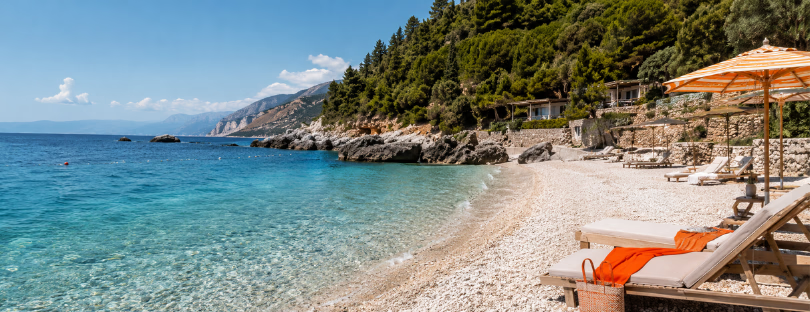
Then comes the Ionian coast, and this is where the international buzz really lives. The stretch from Vlorë down toward Sarandë feels more dramatic: mountains falling into blue water, winding roads, sharp coves, beach clubs, guesthouses, stone villages, and those turquoise shots that now dominate TikTok and Instagram. Ksamil gets the biggest attention, sometimes too much. Dhërmi has the beach-club energy. Himarë feels more balanced. Borsh is long, spacious, and less polished. Gjipe is the postcard for people who still want a little effort before the reward.
That variety matters. Albania is not selling just one type of beach holiday. It can be cheap and simple, scenic and quiet, lively and social, or increasingly upscale.
The price advantage
Let’s be honest: price is part of the story.
For many travellers, Albania still looks attractive because it offers Mediterranean scenery without the full Mediterranean bill. Compared with Croatia’s Dalmatian coast, Greece’s famous islands, or parts of southern Italy, Albania can still feel more accessible, especially for accommodation, food, beach days, and longer stays.
But the “cheap Albania” narrative is starting to expire. In Ksamil and parts of the Riviera, peak-season prices have already moved sharply upward. Some travellers arrive expecting bargain paradise and find paid sunbeds, crowded beaches, parking stress, and restaurant prices that no longer feel shockingly low.
That does not mean Albania is overpriced. It means Albania is entering the next phase: from discovery destination to mainstream Mediterranean competitor.
The beaches worth knowing
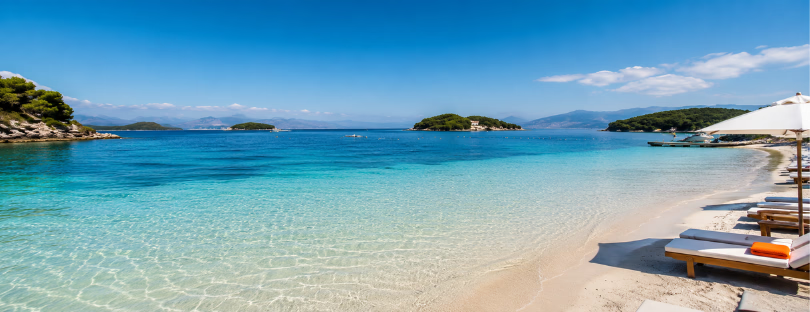
Ksamil is still the headline act, with clear water, small islands, and a polished resort feel. It is beautiful, but in July and August, it can feel more like a beach machine than a secret escape.
Dhërmi is best for travellers who want scenery with energy. Beach clubs, music, younger crowds, and stylish stays have made it one of the Riviera’s most recognisable names.
Himarë is probably the smarter base for many visitors. It gives access to great beaches without feeling as overbuilt as Ksamil. It also works well for people who want a relaxed town, not just a sunbed.
Borsh is the one to watch. It has one of the longest beaches on the coast, more space, and a feeling that Albania still has room to breathe.
Gjipe Bay remains one of Albania’s strongest natural beach experiences. It is not the easiest beach to reach, and that is partly the point. You go for the setting, not convenience.
The growth problem
The difficult part is that Albania’s greatest beach advantage is also fragile.
A country can become famous for untouched coastlines and then slowly lose the very thing people came for. Reuters has already reported environmental concerns around Albania’s wider tourism and conservation story, including pollution and pressure near protected areas such as the Vjosa Valley, which UNESCO designated as a Biosphere Reserve in 2025. The issue is not only beaches, but the pattern is familiar: rapid tourism growth brings money, attention, jobs, and infrastructure, but also waste, construction pressure, traffic, and stress on local ecosystems.
This is where Albania needs to be careful. Croatia has had to manage overtourism in Dubrovnik and along parts of the coast. Greece is dealing with pressure on islands such as Santorini and Mykonos. Montenegro has seen how quickly a small coastline can become dominated by real estate and luxury projects. Albania still has a chance to avoid the worst version of that story.

Smarter than a “hidden gem”
For Alertify readers, the interesting part is not simply that Albania’s beaches are beautiful. That is obvious now. The bigger story is that Albania is becoming one of Europe’s most important tests of next-generation tourism growth.
It has the scenery. It has the prices, although less dramatically than before. It has access from European markets. It has a younger tourism brand than Croatia or Greece, which gives it more room to define itself.
But the real winners will not be the destinations that get the most viral beach videos. They will be the ones who manage growth without turning every cove into the same beach-club template.
Albania’s real opportunity
Albania should not try to become “the cheaper Greece” or “the new Croatia.” That would be a small ambition for a country with such a distinctive coast.
Its stronger play is to become the Mediterranean destination that still feels flexible: beach town, mountain road, old village, seafood lunch, boat trip, affordable apartment, boutique hotel, and untouched bay all within the same trip.
That is rare. And it is exactly why Albania is moving from an alternative destination to a serious competitor.
The risk is speed. If development runs faster than planning, Albania could lose its edge before it fully owns it. But if the country protects the character of places like Himarë, Borsh, Gjipe, and Qeparo while improving services, transport, waste management, and beach access, it has something most mature Mediterranean markets no longer have: room to grow without becoming boring.