Edinburgh Castle Entry Guide for First-Time Visitors
Edinburgh Castle entry used to feel simple: walk up the Royal Mile, join the queue, buy a ticket, go in. That version of travel is fading fast. The castle now behaves like many headline attractions: timed, capacity-sensitive, digitally booked, and less forgiving of spontaneous arrivals.
But Edinburgh Castle is no longer the kind of place you “maybe pop into” after lunch if the weather looks good. In peak months, that can mean standing outside the gates with no ticket left to buy.
The official message is direct: tickets often sell out far in advance, especially in summer, and once online tickets are sold out, there are no further tickets at the castle. The site also warns about lookalike pages and fake tickets, a very modern problem for a landmark this visible.
What entry costs now
At the time of writing, standard online entry is £23.50 for adults aged 16 to 64, £19 for concessions, and £14 for children aged 7 to 15. Walk-up prices are higher: £26 for adults, £21 for concessions, and £15.50 for children. Family tickets follow the same pattern, with the online price clearly better.
The difference is not dramatic, but the message is obvious: book directly, book online, and do it early. For families, the saving is more noticeable: £67.50 online versus £74.50 at the gate for two adults and two children.
There is also a Flexi Ticket, priced higher, which allows one entry on any day within a seven-day window starting from the chosen visit date. It will not suit everyone, but it makes sense if you are travelling in unstable weather, with children, or trying to avoid locking a short city break around one fixed morning.
The visit itself
The castle opens from 9.30am daily. From April to September, the last entry is 5pm, and the site closes at 6pm. In colder months, last entry is usually 4pm and closing is 5pm, with Christmas and New Year exceptions. The castle recommends setting aside at least two hours for the main attractions.
That two-hour guidance is realistic, but slightly optimistic if you stop, read, queue for the Honours of Scotland, and take photos over the city. A rushed one-hour visit is possible. It is also not very satisfying.
The best rhythm is simple: book a morning slot, arrive with your phone charged, and do not plan a tight lunch reservation immediately after. The audio guide costs £4 and can be used on your own phone or on a hired device. The castle recommends downloading it before travelling because connectivity on site can vary. That detail is very Alertify: even at a major attraction, your phone is part of the visit, but the network experience is not guaranteed.
Details travellers miss
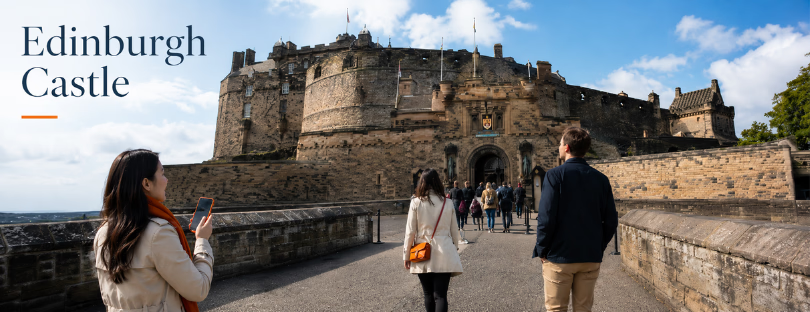
Edinburgh Castle is spectacular, but it is not a flat museum. It is a fortress on a hill. Visitors cross the esplanade, then enter through steep, cobbled routes. The access guide notes that the route to Crown Square is around 350 metres, with cobbles and a steepest point of 15 degrees. There is a mobility vehicle available on request, but it does not run during the One o’Clock Gun window, so timing matters.
Large bags are another issue. Suitcases and rucksacks of 30 litres or more are not permitted, and the castle does not store luggage, prams, pushchairs, or personal items. Travellers often discover this too late, especially when squeezing in one last attraction before the train or airport.
The One o’Clock Gun remains one of those small pieces of theatre people remember, fired daily at 1pm except Sundays, Good Friday, and Christmas Day. It is not the whole reason to visit, but it gives the site a pulse.
Who should think twice
If this is your first time in Edinburgh, Edinburgh Castle is still worth doing. It gives the city a centre of gravity and explains why the skyline feels so dramatic. But it is not the quietest or cheapest heritage experience in Scotland. Travellers who dislike crowds, steep walking, fixed timeslots, or big landmark pricing may prefer Stirling Castle, Craigmillar Castle, or the Palace of Holyroodhouse, depending on the trip.
Compared with London’s Tower of London, Edinburgh Castle is still less expensive for standard adult entry, but the direction of travel is similar: heritage attractions are becoming more planned, more digital, and more capacity-managed. Compared with smaller Historic Scotland sites, Edinburgh Castle feels more like a flagship operation than a relaxed wander.

Conclusion
The smart way to think about Edinburgh Castle entry is not “ticket plus castle.” It is access management. You are buying a place inside one of Scotland’s most visited historic environments, while major attractions balance tourism demand, preservation, security, and visitor flow.
That makes the official booking route important, not just convenient. Buy direct, avoid suspicious resale pages, download anything you need before arrival, and treat the visit like a scheduled part of the trip rather than a casual fallback. Edinburgh Castle still delivers the drama: volcanic rock, city views, military history, the Crown Room, and the One o’Clock Gun. What has changed is the entry experience around it.
The best attractions in Europe are no longer just places you visit. They are systems you have to navigate. Edinburgh Castle is absolutely worth it, but it rewards the traveller who plans like a local and moves like a professional.