
UK Travel Trends 2026: AI Planning, Dark Skies & Longer Flights
British travel habits are shifting again, and this time it is not just about where people can fly cheaply or quickly. A new report from easyJet and easyJet Holidays paints a picture of travellers who want more meaning, more confidence, and more intention from their holidays in 2026.
Based on research with 2,000 British holidaymakers and co-authored by respected travel writer Nigel Thompson, the report suggests that holidays are becoming less transactional and more emotional. People still care about value, but they are now designing trips around passions, moments and experiences that feel personal, memorable and worth the effort.
Try before you fly is becoming normal
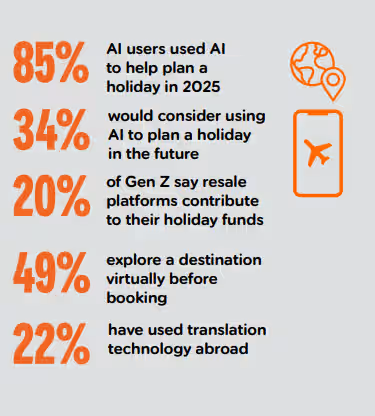
One of the clearest signals in the report is how planning behaviour is changing. Nearly half of British travellers (49%) say they now want to “try before you fly”, using destination vlogs, social media content and even virtual reality to explore a place before committing to a booking.
This is not about novelty anymore. It is about confidence. Travellers want reassurance that a destination matches their expectations, their lifestyle and their energy. For some, that means checking whether a city break feels walkable and lively. For others, it means understanding the vibe of a beach town or how busy a resort really is in peak season.
AI tools are accelerating this shift. From itinerary builders to visual search and translation apps, technology is removing friction at every stage of the journey. According to the report, 22% of Brits are already using translation technology while abroad, and more than half (52%) plan to visit a completely new destination in 2026. The psychological barrier to exploring somewhere unfamiliar is getting lower, not higher.
Longer short-haul is the new sweet spot
Another standout trend is what easyJet describes as “longer short-haul” becoming the new normal. Flights of five to six hours are increasingly seen as a comfortable compromise between effort and reward.
Destinations like Tunisia are benefitting from this shift, with the airline seeing a 12% increase in flights to the country in 2026. The island of Djerba in particular, is gaining attention as travellers look beyond the obvious Mediterranean hotspots. Georgia is also emerging strongly, with Tbilisi attracting city-break travellers thanks to new direct routes from the UK.
At the same time, easyJet reports a 21% increase in flying to longer-leisure destinations such as Morocco, Turkey and Cyprus compared to last year. These places offer a sense of escape, cultural depth and good value, without tipping into long-haul territory. For many travellers, that balance feels just right.
Holidays built around moments, not maps
Perhaps the most interesting shift in the data is how people are choosing destinations in the first place. Price and proximity still matter, but they are no longer the only drivers. Increasingly, trips are being built around defining moments.
That might mean following a historic pilgrimage route, travelling in the footsteps of a favourite TV series, or planning a trip around a sporting event. Over a quarter of respondents (28%) say they would choose a destination based on TV, books or films.
This is where culture, storytelling and travel collide. With The White Lotus returning to Europe, a new wave of screen-led travel is expected across parts of southern France. At the same time, “Canon Country tourism” is gaining traction, with travellers visiting places immortalised by classic literature and its modern retellings, from Shakespeare’s Verona to Hemingway’s Pamplona.
Dark skies and deeper curiosity
Astronomy tourism is another trend moving firmly into the mainstream. “Dark sky tourism” is emerging as one of the most distinctive travel motivations for 2026, driven by Gen Z, TikTok and a growing interest in astrophotography and science-led travel.
The timing helps. On August 12, a total solar eclipse will be visible from parts of Spain, including Valencia, Palma Mallorca and Ibiza. For many travellers, this is not just a holiday add-on but the reason for the trip itself. It fits perfectly with the broader move towards experience-led travel, where being present for something rare or unrepeatable matters more than ticking off landmarks.
Pilgrimage, purpose and slow connection
Building on this desire for meaning, the report highlights a rise in pilgrimage-style travel, particularly among what it calls “Gen-P” travellers. Routes such as Santiago de Compostela and Lourdes are seeing renewed interest, blending spirituality, culture, walking and community.
These journeys are less about religion alone and more about reflection, connection and stepping away from everyday routines. They also align with wider trends around slow travel, wellness and digital detoxing, all of which continue to influence how Europeans travel.
Nigel Thompson summed this up clearly in the report:
“We’re seeing travellers plan around passions and purpose – whether that’s spirituality, culture, sport or nature. It looks like 2026 is about meaning as much as mobility, but value remains a key factor.”

Sport as a reason to travel, not just watch
Sport continues to shape travel decisions, but in more creative ways. With the 2026 World Cup taking place across the Atlantic, many fans are opting to stay closer to home, travelling across Europe to watch matches in fan zones rather than flying long-haul.
At the same time, participatory sports holidays are evolving. Padel has exploded in popularity, particularly in Spain, where it has overtaken tennis in many regions. One in ten holidaymakers now say they try padel or pickleball while away, turning leisure time into a social, active experience rather than pure relaxation.
Different life stages, different freedoms
The report also highlights how generational and life-stage differences are shaping travel patterns. Parents with pre-school children are making the most of flexibility before school schedules take over, travelling more frequently outside peak periods.
At the other end of the spectrum, “Home Alone” parents whose adult children stay behind to house-sit or pet-sit are rediscovering the freedom to travel again. These travellers often have more disposable income and are more open to longer short-haul or experience-led trips.
What easyJet sees from the front line
From the airline’s perspective, these trends are already visible in booking data and operational planning. Kenton Jarvis, Kenton Jarvis, said:
“We’re always looking at ways our customers plan book and holiday and can already see some shifts in customer behaviour, like longer short-haul routes growing in popularity and technology playing a greater role both in making unfamiliar destinations feel accessible and helping us operate efficiently to keep fares low and journeys seamless.
“It is great to see more people exploring new destinations, using new technology in innovative ways and seeking out alternative experiences and I am proud of the part easyJet continues to play in helping to shape how each generation travels, while always aiming to make travel easy and accessible for all.”
From the holidays arm, Garry Wilson added:
“In 2026, there’s a clear desire to make holidays count.
“We’re seeing customers become far more intentional about how and when they travel, whether that’s getting away before everyday routines take over, switching off from screens, or planning trips around meaningful moments you simply can’t recreate at home.
“From community organised trips to experience-led breaks, people are prioritising connection, wellbeing and memories that last, not just time away.
“At easyJet Holidays, we’re focused on supporting customers with flexible options and a wide choice of destinations, helping them plan holidays that fit around what matters most to them.”
Conclusion: where this puts easyJet in the wider market
What makes this report interesting is not that these trends exist. Similar signals are appearing in research from Booking.com, Skyscanner, Amadeus and the European Travel Commission. Purpose-driven travel, experience-led planning, AI-assisted discovery and longer short-haul routes are now widely recognised across the industry.
What sets easyJet apart is how closely these insights align with its network, pricing model and customer base. While legacy carriers focus heavily on long-haul growth and ultra-low-cost airlines compete almost exclusively on price, easyJet sits in a strategic middle ground. It benefits directly from the rise of five-to-six-hour flights, secondary destinations and flexible, self-designed trips.
For travel tech, tourism boards and hospitality players, the message is clear. Travellers in 2026 are not chasing distance for the sake of it. They are chasing relevance, confidence and experiences that feel personal. Brands that help travellers visualise, understand and emotionally connect with a destination before they book will win attention and trust.
In that sense, this is less a trend report about holidays and more a reminder that travel has returned to being a form of self-expression. And for airlines and platforms that understand that shift early, the opportunity is not just to sell seats, but to shape how and why people move at all.