The Business Implications of eSIM Technology
For years, eSIM was sold to travellers as a simple upgrade: land in another country, scan a QR code, avoid roaming shock. Useful, yes. Strategic? Not really.
That is changing fast.
The business implication of eSIM technology is no longer just that employees can get online abroad without hunting for a SIM card at the airport. The bigger shift is that connectivity is becoming something companies can buy, assign, monitor and scale almost like software.
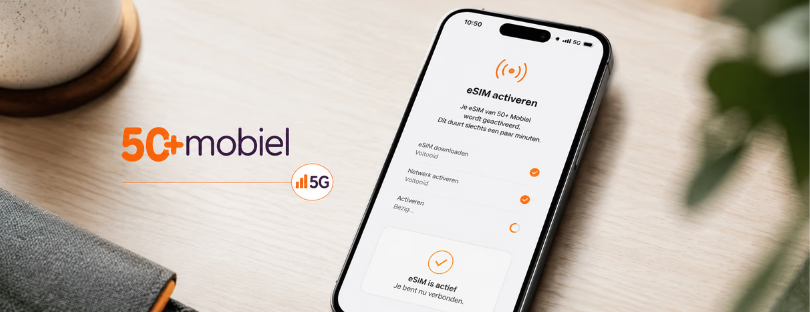
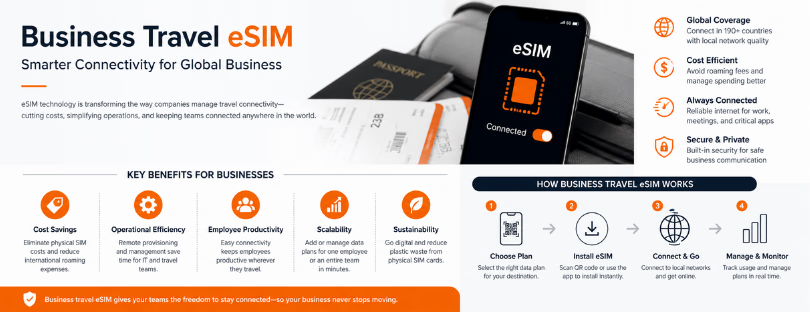
A business travel eSIM looks simple from the employee’s side. Open the app, install the plan, and connect when needed. Behind that sits a more important story: fewer plastic SIMs, less manual admin, better cost control and a cleaner way to support people who work across borders.
What eSIM really changes
A traditional SIM card is physical, which means it brings physical problems. Someone has to order it, ship it, activate it, replace it when lost and manage the contract behind it. That may sound minor until you multiply it across frequent trips, several countries and hundreds of devices.
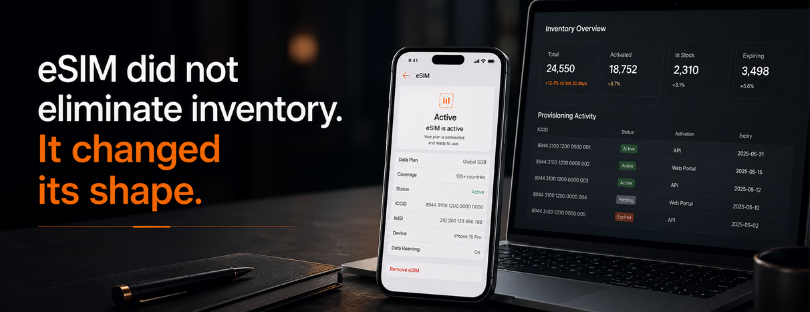
An eSIM removes much of that friction. The SIM profile is digital and can be downloaded to a compatible device. For businesses, mobile connectivity can be provisioned remotely instead of handled through drawers full of plastic cards and spreadsheets nobody wants to maintain.
READ MORE: One eSIM for All Business Travel: What Actually Changes
Business travel has also become less predictable. Employees may travel for a conference one week, work remotely from another country the next, or need temporary connectivity for a project team. A fixed roaming bundle from a home operator does not always fit that pattern.
The more flexible model is to treat connectivity as a layer that follows the user, not the country, contract or plastic card.
The cost question
Cost saving is still the obvious argument. International roaming remains expensive for many companies, especially when usage is inconsistent. One heavy user on video calls can burn through a travel allowance quickly. One forgotten roaming setting can create an ugly invoice.
A business travel eSIM does not magically solve every cost problem, but it gives companies more options. They can pre-assign data plans, support short trips without long contracts, or use regional plans for frequent travellers.
READ MORE: Saily by NordVPN Launches Business eSIM Solution
There is also a hidden cost angle. Finance teams focus on roaming bills, but operations teams feel the pain elsewhere: IT tickets, device setup, poor connectivity, lost productivity and messy reimbursements. eSIM helps because it reduces the number of moving parts.
Providers such as Instabridge have positioned eSIM around easy global internet access, flexible data and app-based onboarding. In the wider market, Airalo, Ubigi, Nomad eSIM, Yesim and GigSky have helped normalize the idea that travel connectivity can be bought instantly and managed digitally.
That is where the market is heading: not just cheaper data, but better control.
The enterprise layer
The real business value appears when eSIM moves beyond individual convenience.
For a small team, it may mean fewer roaming bills and happier employees. For a larger organization, it becomes part of mobility management. IT teams can onboard users faster, support devices remotely and reduce reliance on physical logistics. Travel managers can give employees connectivity before they leave, not after something goes wrong.
This is also where eSIM becomes more than an internal IT tool. A hotel group could offer connectivity as a guest add-on. An airline could sell a travel eSIM during check-in. A fintech could bundle mobile data into a premium travel card.
That is the bigger implication: eSIM is not only a cost-saving tool. It is becoming a distribution product.

The downside nobody should ignore
There are limits. Not every device supports eSIM. Not every country has the same network quality. Not every provider explains throttling, fair usage, hotspot rules, validity or refunds clearly enough. For business users, those details matter.
Security also deserves a more serious conversation than “digital is safer.” eSIM removes the risk of losing a physical SIM card, but companies still need proper device management, user authentication, policy controls and vendor due diligence. A weak onboarding process can turn a smart connectivity product into another IT headache.
Employees do not care about telecom architecture. They care whether the phone connects before the taxi app opens. If activation feels confusing, the promise breaks.
Why is this market different now?
The timing matters. GSMA specifications have made remote SIM provisioning a more standardized part of the mobile ecosystem, while GSMA Intelligence has pointed to eSIM moving from early adoption toward mass-market deployment. Travel eSIMs have also changed expectations. People now know mobile data can be bought on demand without visiting an operator’s store.
For traditional mobile operators, this creates pressure. They still have the network assets, enterprise relationships and compliance muscle. But specialist eSIM providers often move faster on user experience, digital distribution and flexible plan design.
The real conclusion
The business implication of eSIM is not that the SIM card has become digital. That is the surface-level story.
The real story is that connectivity is becoming programmable. It can be embedded into travel flows, assigned to employees, bundled into customer offers and managed with far less friction than before.
For business travel, that is a major shift. A business travel eSIM is no longer just a clever workaround for roaming. It is becoming part of the modern mobility stack, sitting somewhere between telecom, SaaS, travel management and employee experience.