Roamless No Roaming Charges: Smarter Travel Data
For years, “No roaming charges” sounded like the kind of phrase mobile operators used right before showing you the small print.
Travelers know the routine. You land, switch off airplane mode, and immediately start doing mental maths. Is data roaming included? Is this country in the same zone? Did your operator quietly move Turkey, Switzerland, or the UAE into a more expensive bucket? Will one Google Maps session become a €40 mistake?
That anxiety is exactly where Roamless is trying to position itself. Not just as another travel eSIM store, but as a more persistent connectivity app for people who move between countries and do not want to keep buying a new plan every time they cross a border.
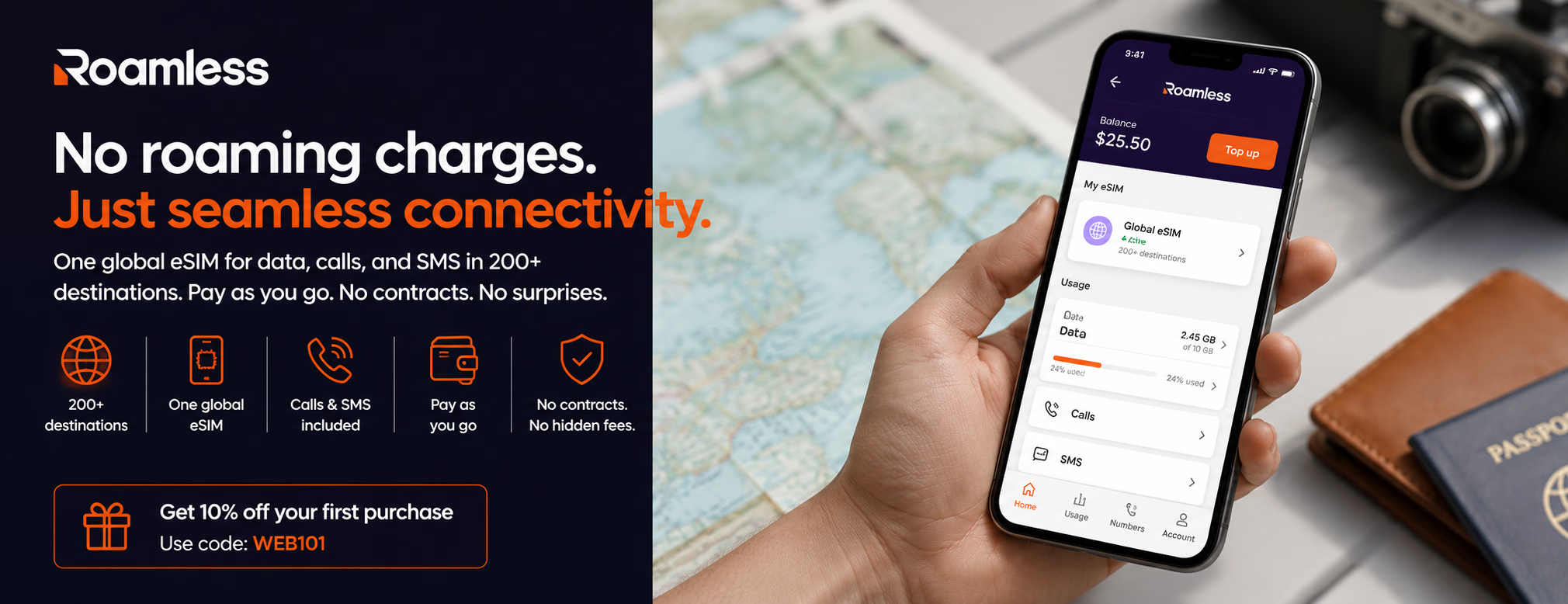
Roamless describes itself as a global mobile connectivity app offering mobile data, phone numbers, international calling, and SMS in one place, with service in 200+ destinations and no carrier contracts, physical SIM cards, or traditional roaming charges. Its central idea is simple: install one global eSlM, add credit or choose a data plan, and use it across countries without swapping profiles every trip.
The real problem is not just price
The travel eSIM market often talks about cheap data. Fair enough. Price matters. But the bigger frustration for many travelers is decision fatigue.
You are going to Spain, then Morocco, then maybe Portugal. Do you buy a local plan? A regional plan? A global plan? What happens if your trip changes? What if you only use 600 MB but paid for 5 GB? What if the plan expires before your next trip?
READ MORE: Roamless – Global Travel Connectivity Startup – Raises $12M to Fix Broken Roaming
Roamless attacks that problem with a pay-as-you-go model. According to the company, users only pay for what they use, and one balance can cover mobile data, international calls, and SMS. It also says users can keep connectivity active as long as they have credits, rather than worrying about expiring bundles or running out mid-trip.
That is the interesting part. Roamless is not only selling “avoid roaming charges.” Everyone in travel eSIM says that now. Roamless is selling less planning.
And honestly, that may be more valuable than a slightly cheaper gigabyte.
One eSIM, fewer decisions
Most travel eSIM products still feel trip-based. You search the country, buy a bundle, install the profile, activate it, use it, then repeat the process later. It works, but it is not elegant.
Roamless’ Single Global eSIM™ model tries to remove some of that friction. The app description on Google Play says users can choose between pay-as-you-go credits or data plans on one globaI eSIM, get a second phone number, and connect in 200+ destinations. The App Store listing also highlights the same structure: one eSIM, data and voice in one app, usage tracking, top-ups, and no expiration for pay-as-you-go use.
READ MORE: Roamless App: One eSIM for Data, Calls and Travel
That matters for frequent travelers. A tourist going once a year to Greece may be perfectly happy with a simple 10 GB plan from any major eSIM marketplace. But a consultant, founder, journalist, remote worker, or airline-hopping conference traveler has a different problem. They do not want to rebuild their connectivity setup every two weeks.
Roamless is closer to a “keep it installed” product than a one-off travel accessory.
Where Roamless feels different
There are plenty of eSIM providers promising freedom from roaming fees. Airalo offers local, regional, and globaI eSIM packages in 200+ destinations. Holafly leans heavily into unlimited data and avoiding roaming fees. Saily, from the Nord Security ecosystem, promotes affordable eSIM data plans in 200+ destinations with security features layered into the app experience.
Roamless sits slightly differently.
Airalo is strong as a marketplace. You browse, compare, buy the country or region you need. Holafly is attractive for travelers who hate counting data and prefer unlimited-style simplicity. Saily is building a wider travel-security angle, which makes sense given its NordVPN parentage. Roamless, meanwhile, is pushing the “single wallet, single eSIM, ongoing use” idea.
READ MORE: Roamless Adds Calls, SMS and Phone Numbers — Is This the All-in-One Travel eSIM?
That does not automatically make it better for everyone. Heavy video users may still prefer unlimited-style offers where available. Price hunters may still compare country by country. Business users may want managed enterprise dashboards, invoicing, policies, and admin controls rather than a consumer app.
But Roamless has a good answer for the traveler who wants one thing above all: stop thinking about roaming.
Voice and numbers add another layer
One of the more notable moves from Roamless is that it is not staying in the “data-only eSIM” lane. The app now promotes Roamless Numbers, international calling, SMS, and the ability to use your own number for outbound calling and messaging through verification. Its listings mention in-app international calls starting at $0.01 per minute, plus second-number options with UK, Canada, or Australia prefixes.
This is a smart direction because travel connectivity is becoming broader than “how many GB do I get?” Travelers still need to receive codes, call hotels, message clients, register for local services, or separate work and personal communication abroad.
READ MORE: Nomad Launches UK eSIM with Unlimited 5G and Local Number
Most travel eSIM providers have historically avoided that mess by staying data-only. Easier product. Cleaner margins. Fewer telecom headaches.
Roamless seems to be moving closer to a lightweight mobile operator experience inside an app. Not a full replacement for your home carrier, but something more complete than a disposable travel data plan.
The market is moving fast
This shift is happening because traditional roaming is under pressure. TechRadar, citing Juniper Research, reported that travel eSIM revenue was projected to reach $1.8 billion by the end of 2025, up 85% from 2024, as smaller digital providers and Connectivity-as-a-Service platforms make it easier to launch eSIM services.
Another TechRadar report, citing CCS Insight, said travel eSIM numbers could rise from 70 million in 2024 to 280 million by 2030, with the market value surpassing $4.4 billion. The broader point is clear: roaming revenue is no longer protected in the way it used to be. Travelers have alternatives, and they are learning to use them.
That is why “no roaming charges” is no longer enough as a slogan. The next battle is convenience, trust, persistence, and who owns the traveler relationship before, during, and after the trip.
Conclusion
Roamless is interesting because it understands something many travel eSIM brands still underplay: travelers do not only want cheaper data. They want the end of roaming anxiety.
That is a slightly different promise.
Airalo made eSIMs searchable and mainstream. Holafly made unlimited data feel simple for holiday travelers. Saily is connecting eSIMs with digital security. Roamless is betting on continuity: one eSIM, one balance, one app, and a growing set of communication tools around it.
Will that win every use case? No. The eSIM market is too fragmented for one winner. Some people will always buy the cheapest country plan. Some will want unlimited. Some enterprise buyers need procurement controls, not an app wallet.
But Roamless has picked a clever lane. It is not trying to make roaming cheaper inside the old roaming model. It is trying to make roaming feel outdated. And for frequent travelers, that may be the more powerful message.