Most travel eSIM brands sell urgency. You are flying tomorrow, your roaming package looks expensive, and you need data now. Keepgo plays a slightly different game. It is not the loudest name in the consumer eSIM market, and it does not position itself like the usual “cheap data for your holiday” brand. Its core idea is more patient: buy prepaid data, keep it alive, and use it when you need it.
That matters because the travel connectivity market is becoming crowded. Airalo, Holafly, Ubigi, Nomad eSIM, Saily, GigSky, Yesim and dozens of smaller players are fighting for the same moment: the traveller standing at the airport, trying to avoid roaming shock. Keepgo’s pitch is not just “buy an eSIM.” It is closer to “build yourself a reusable connectivity safety net.”
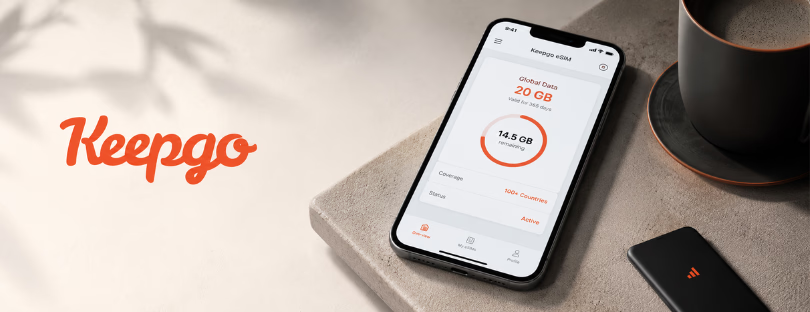
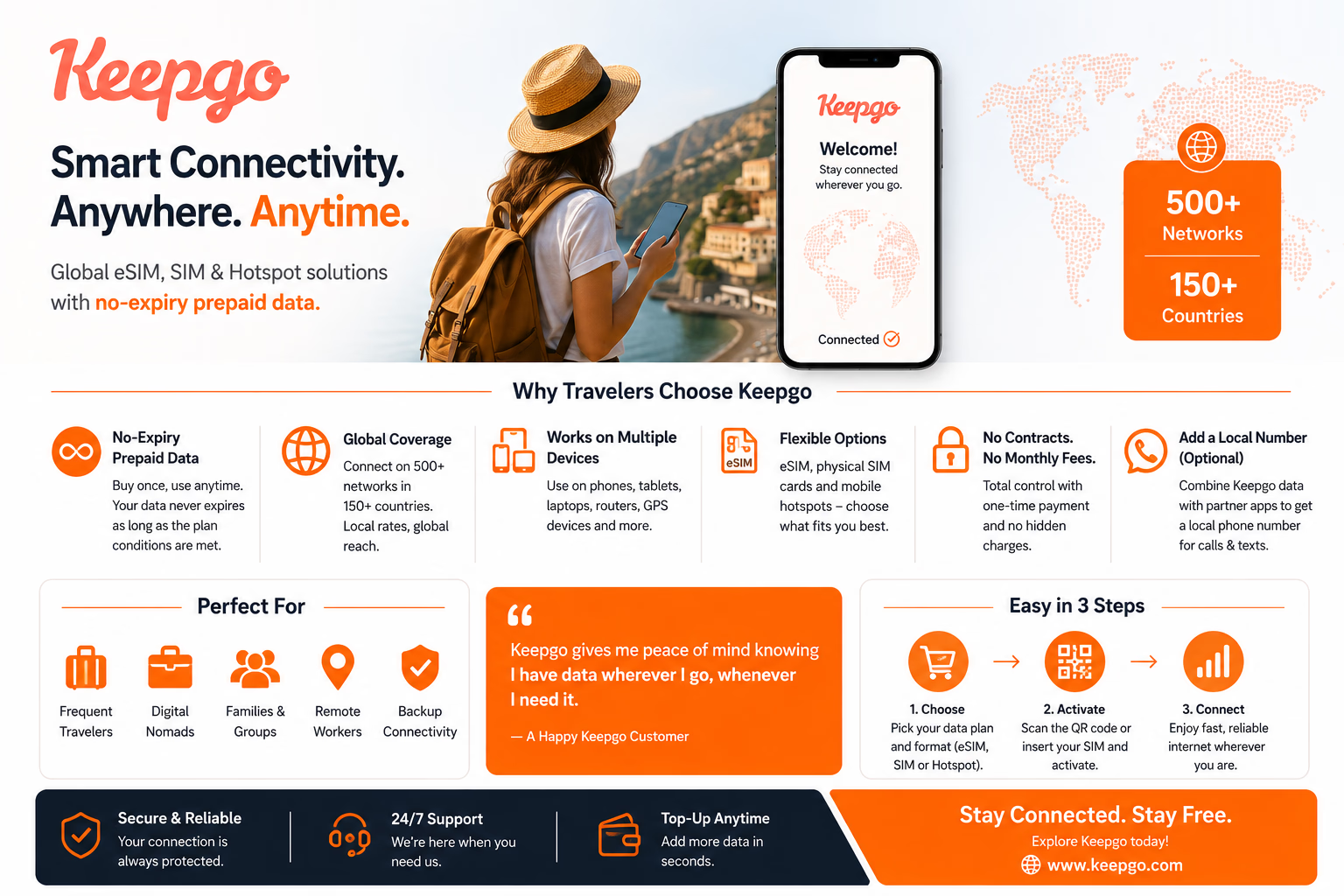
According to Keepgo, its no-expiry prepaid data bundles work across 500+ networks in 150+ countries, with no contracts and no monthly fees. The company also offers eSIMs, physical SIM cards and mobile hotspots, which gives it a broader hardware-friendly angle than many app-first travel eSIM providers.
The no-expiry angle
The standout feature is lifetime prepaid data. Keepgo says the data you buy is valid forever, as long as the plan conditions are maintained, and there are no monthly charges. That is a very different proposition from the common 7-day, 15-day or 30-day travel eSIM model.
For occasional travellers, this can feel more practical than it sounds. Think about the person who travels three or four times a year, not always to the same region, and hates wasting unused data. With many travel eSIMs, unused data simply disappears when the validity window ends. Keepgo’s model speaks to people who do not want to rebuy connectivity from zero every time they cross a border.
There is a catch, of course. No expiry does not automatically mean the cheapest. In some destinations, fixed-data plans can look expensive compared with aggressive regional offers from other providers. But Keepgo is not only competing on the lowest sticker price. It is competing on continuity, backup value and the comfort of having data ready before the next trip.
More than just phone data
Another interesting part of Keepgo’s positioning is device flexibility. The company says its connectivity can work with phones, tablets, laptops, routers, GPS devices and even locked phones, depending on the chosen option. That makes the brand more relevant for remote workers, families, road-trippers, small teams and people who need a backup line for more than one device.
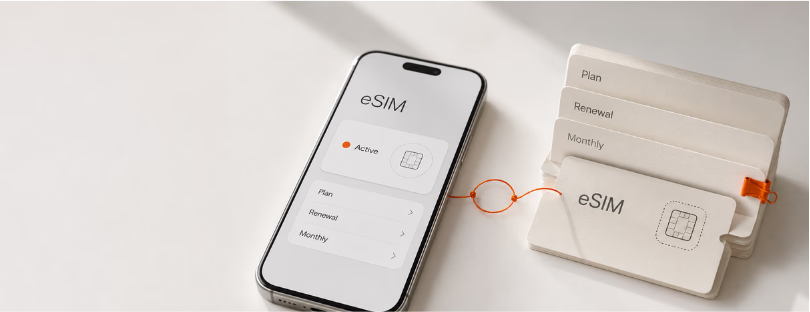
This is where Keepgo starts to look less like a standard travel eSIM shop and more like a lightweight global connectivity toolkit. A mobile hotspot can be useful when several devices need to connect. A physical SIM still matters for users whose devices do not support eSIM. A data-only eSIM suits the modern traveller who mainly communicates through WhatsApp, FaceTime, Telegram, Messenger or similar apps.
That last point is important. Keepgo eSIMs are data-only and do not include a mobile phone number. The company’s own FAQ says users can combine Keepgo data with free or paid local phone number services, including partner apps, if they need calling or texting functionality.
So the local number story needs to be framed correctly. Keepgo is not selling a native phone-number eSIM in the way some users might imagine. It is selling the data layer, while local number functionality can be added through separate VoIP or phone number services. For many travellers, that is enough. For banking SMS, government forms or strict two-factor authentication, users still need to check the details carefully.
Where Keepgo fits in the market
Keepgo’s clearest audience is not the traveller who wants unlimited TikTok streaming for one weekend. Holafly has built strong visibility around unlimited-style travel plans. Airalo is strong on app experience, broad destination discovery and mainstream eSIM awareness. Ubigi benefits from its Transatel infrastructure background and often appeals to connected-car, laptop and premium mobility users. Nomad eSIM and Saily compete heavily on simplicity, price perception and consumer-friendly packaging.
Keepgo sits in another corner. It is better understood as a “persistent travel data wallet” than a one-trip eSIM. That is a useful distinction because the eSIM market is moving beyond the first wave of roaming replacement. GSMA Intelligence has argued that travel eSIM is becoming one of the clearest consumer benefits of eSIM and can help expand mobile connectivity use among travellers who might otherwise stay offline abroad.
In that environment, brands need sharper identities. Everyone can say “instant activation” now. Everyone can say “avoid roaming fees.” The more interesting question is what kind of traveller each brand is really built for.
Keepgo’s answer seems to be: the traveller who wants control, not drama. Someone who does not want to keep buying short-validity plans. Someone who likes the idea of topping up a line and keeping it available. Someone who may need data across several devices, not only a smartphone.
More on Alertify
Follow the latest KEEPGO eSIM news
No-expiry data, travel eSIM updates and smart connectivity stories in one place.
Explore news →
What travellers should check
Keepgo’s benefits are strongest when users understand what they are buying. Check the destination list, network options, refill prices, hotspot support and whether the plan is eSIM, SIM or hotspot-based. Also check whether you need a real mobile number or whether app-based calling is enough.
This is where the wider travel eSIM industry still has work to do. Consumers are no longer impressed by vague claims. They want to know whether data expires, whether speeds are throttled, whether hotspot use is allowed, which networks are used, and what happens if the service does not work on arrival.
Keepgo is strong because its model is refreshingly different. But different also needs explanation. No-expiry data is valuable, especially for repeat travellers, but it must be compared against real usage habits. A heavy user going to one country for two weeks may find a cheaper or more generous plan elsewhere. A frequent traveller who wants backup data across multiple trips may find Keepgo far more logical.
Conclusion
Keepgo is not trying to win the eSIM market by shouting the loudest. Its stronger play is trust through permanence. In a sector obsessed with short-term travel plans, it offers something that feels almost old-fashioned: prepaid data that stays with you.
That could become more relevant, not less. As the market matures, travellers will stop asking only “who is cheapest today?” and start asking “who fits how I actually travel?” For some, that will be Airalo’s marketplace feel. For others, Holafly’s unlimited positioning. For business and premium mobility users, it may be Ubigi, GigSky or Yesim, depending on coverage, product depth and use case.
For Keepgo, the opportunity is clear: own the backup-connectivity category. Not every traveller needs unlimited data. Not every traveller wants a new plan every trip. Some simply want a reliable line in their pocket, ready when roaming gets expensive, Wi-Fi fails, or the next country appears on the itinerary sooner than expected. That is not the flashiest promise in travel eSIM. But it is a very useful one.
Driven by wanderlust and a passion for tech, Sandra is the creative force behind Alertify. Love for exploration and discovery is what sparked the idea for Alertify, a product that likely combines Sandra’s technological expertise with the desire to simplify or enhance travel experiences in some way.