


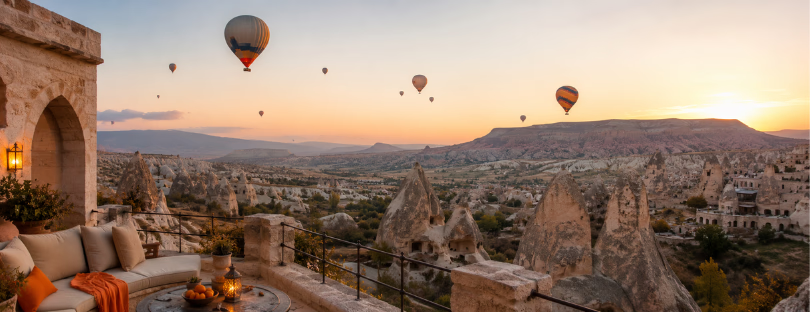
Cappadocia sits in central Türkiye, with Göreme, Uçhisar, Ürgüp, Avanos and Ortahisar forming the travel map most visitors use. On paper, that sounds simple. In reality, it feels like a region that geography and history have been quietly arguing over for centuries.
The landscape is the headline: soft volcanic rock, wind-carved valleys, fairy chimneys, cave churches, underground cities and hotels built into stone. UNESCO lists Göreme National Park and the Rock Sites of Cappadocia for good reason. This is not only a pretty sunrise destination. It is one of those places where tourism grew around something genuinely strange, fragile and difficult to copy.
Where exactly is Cappadocia?
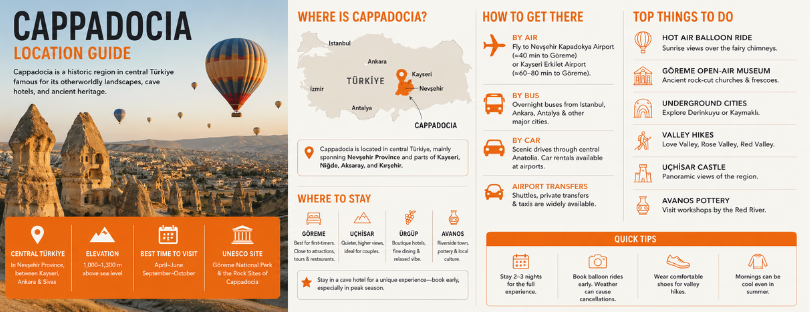
Cappadocia is inland, far from Türkiye’s beach-resort rhythm. It is not near Istanbul, Antalya or Bodrum, which is partly why it still feels like a separate trip rather than a quick add-on. Most first-time visitors base themselves in Göreme because it is close to the open-air museum, balloon viewpoints, valley walks and many tour departures. Uçhisar is quieter and more polished, with the castle as its visual anchor. Ürgüp has a slightly more grown-up hotel and restaurant scene. Avanos, by the river, is better if pottery workshops and a slower town feel appeal more than rooftop balloon photos.
This matters because “Cappadocia location” is not just a map question. It shapes the whole trip. Choose Göreme for convenience, Uçhisar for views, Ürgüp for comfort, and Avanos if you want distance from the Instagram rush.
Getting there
The easiest route is to fly via Istanbul to either Nevşehir Kapadokya Airport or Kayseri Erkilet Airport. Nevşehir is closer to Göreme, roughly 40 minutes by transfer, while Kayseri usually has more flight options and takes around 60 to 80 minutes by road. For most travellers, the right airport is not the closest one. It is the one with the better flight time, price and transfer connection.
Buses from Istanbul, Ankara and Antalya also exist, but the distances are long. Istanbul to Göreme by bus can take around 10 to 11 hours, which is fine for budget travellers or anyone who sleeps easily on coaches. For a short trip, flying is smarter.
Once there, do not assume you can move around as easily as in a large city. Shuttles and private transfers are common from the airports. Local tours are useful because attractions are scattered, and taxis can become expensive if you improvise everything day by day.
What to do
The balloon ride is the famous moment, of course. It usually happens at sunrise, and when the weather cooperates, the sight is extraordinary. But it is also the most misunderstood part of Cappadocia. Flights can be cancelled because of wind, so booking your balloon for the first morning is sensible. Stay at least two or three nights if the balloon matters to you.
Beyond that, Göreme Open-Air Museum is the essential cultural stop, especially for its rock-cut churches and frescoes. The underground cities, usually Derinkuyu or Kaymaklı, are the opposite experience: tighter, darker, more physical, and not ideal for anyone who dislikes enclosed spaces. Rose Valley and Red Valley are better for walkers, especially late afternoon. Uçhisar Castle gives the big view. Avanos adds pottery and a quieter half-day.
READ MORE: Best eSIM for Turkey 2026 — Tourist Congestion & Policy Stress Test
The mistake is trying to make Cappadocia only about one balloon photo. The better trip mixes one early morning, one historical visit, one valley walk and one slow evening on a hotel terrace.
Where to stay
Accommodation is part of the Cappadocia experience. Cave hotels are the signature stay, and many are genuinely beautiful, with arched rooms, stone walls and terraces facing the valleys. But not every cave room is romantic in practice. Some can feel damp, dark or poorly ventilated, especially in cheaper properties. Check recent reviews carefully and look for heating, air conditioning, bathroom ventilation and transfer help, not only pretty photos.
Göreme is best for first-timers who want easy logistics. Uçhisar suits couples and travellers who prefer quiet views. Ürgüp is good for boutique hotels and a more refined base. Travellers who want beaches, nightlife or resort-style ease may find Cappadocia too dry, dusty and early-morning focused. In that case, Istanbul plus the Aegean coast, or Pamukkale for another surreal landscape, may be better.
A real travel moment
Cappadocia works because it still feels location-specific. Many destinations now sell the same formula: boutique hotel, sunrise tour, rooftop breakfast, viewpoint. Cappadocia has all of that too, sometimes too much of it. What saves it is the substance underneath: the geology, cave architecture and underground cities are not decorative props.
The region could improve in one obvious area: clearer visitor management. Prices, balloon availability, transfers and tour quality vary widely, and first-time travellers often rely too much on hotel desks or random street agencies.
Still, compared with other “iconic landscape” trips, Cappadocia remains unusually complete. Santorini has the caldera but feels more luxury-coded. Petra has deeper archaeology but less variety in accommodation. Pamukkale is striking but usually shorter as a stay. Cappadocia sits somewhere between them: scenic, historical, accessible and commercial, but not yet emptied of meaning.
Final take
Cappadocia is worth the effort if you treat it as a region, not a photo stop. Go for the landscape, but stay long enough to see what sits behind it: churches, valleys, underground cities, small towns and morning silence before the balloons rise. That is where the place becomes more than a postcard.