Boarding Pass Is the New App Store for Travel Add-Ons
For years, airlines treated ancillary revenue like a menu bolted onto the booking flow. Baggage. Seat selection. Priority boarding. Insurance. Car rentaI. Maybe a hotel offer that appeared somewhere between payment and confirmation.
That model is not disappearing. It is still extremely profitable. IdeaWorksCompany’s 2025 Yearbook of Ancillary Revenue shows how central this business has become, with low-cost carriers such as Frontier, Spirit and Volaris earning more than half of total revenue from ancillary products in 2024. The same report also tracks major airlines generating billions from add-ons, loyalty and commission-based products.
But the interesting shift is not simply that airlines sell more extras. It is where those extras are being sold.
The boarding pass is quietly becoming one of the most powerful retail surfaces in travel.
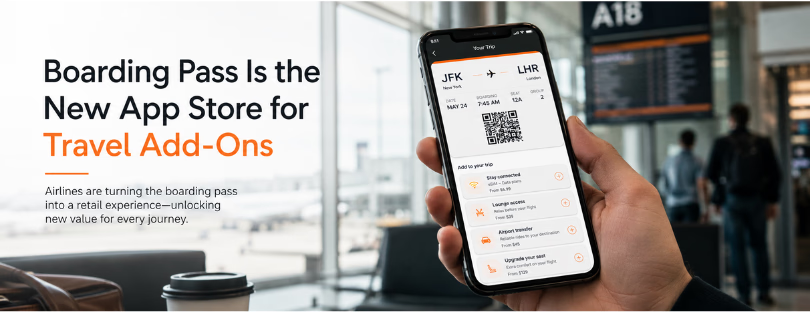
Not the paper boarding pass, of course. That version is fading fast. Ryanair’s move toward app-only boarding passes is one visible sign of where the industry is going. Digital boarding passes are no longer just proof that you can enter the aircraft. They are becoming a live, contextual travel interface.
And once the boarding pass becomes digital, dynamic and app-based, it starts to look much less like a ticket.
It starts to look like an app store.
Timing beats traffic
This is the part travel brands often miss.
The airline does not need to “find” the traveller. The airline already has them.
It knows the destination. It knows the departure time. It knows whether the passenger checked a bag, booked a seat, paid for priority boarding, added lounge access, or ignored every upsell so far. Most importantly, it knows when the traveller is about to need something.
That timing is worth more than generic reach.
A hotel ad three weeks before departure may be useful. A connectivity offer 24 hours before arrival in Tokyo is useful in a very different way. It sits inside the moment, not outside it.
READ MORE: Yesim Partner Solutions Are Positioning the Company as a Serious Contender in the Telecom-as-a-Service Space
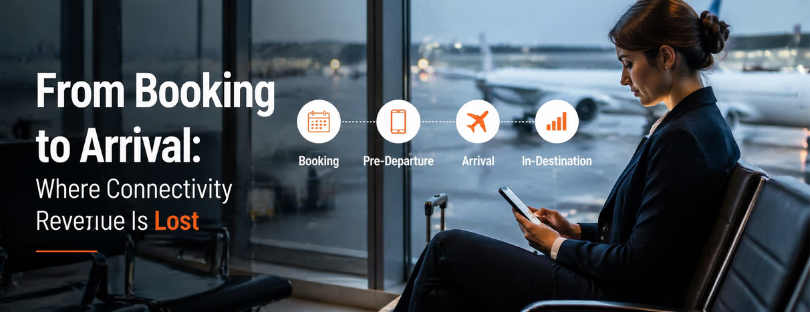
That is why the boarding pass matters. It is opened at exactly the point when travel becomes real: check-in, airport arrival, boarding, connection, immigration, baggage claim. These are high-intent micro-moments. The passenger is not casually browsing. They are solving problems.
How do I get online when I land?
Do I need transport from the airport?
Is lounge access still available?
Can I add fast track?
Do I need travel insurance, a visa support service, roaming data, airport transfer or a destination pass?
This is where the “new app store” idea becomes interesting. The boarding pass can become a curated shelf of travel utilities, not a random advertising slot.
Connectivity fits naturally
Among all possible add-ons, eSIM is one of the cleanest fits for the boarding pass environment.
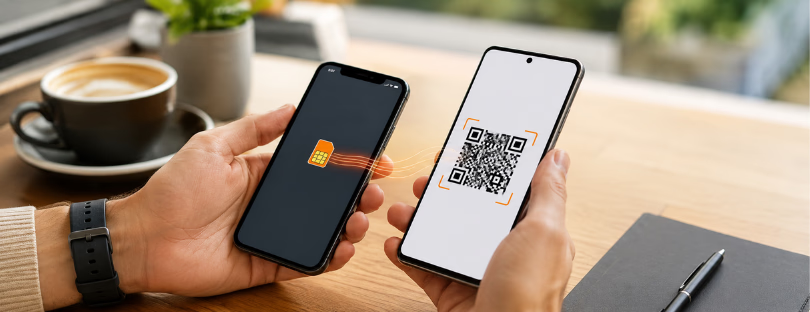
It is digital. It is destination-specific. It is useful before arrival. It does not require inventory, airport staff, physical fulfilment or aircraft space. It can be bought, installed and activated without touching the airline’s core flight operation.
That matters.
The World Aviation Festival recently framed eSIM as an overlooked airline ancillary opportunity because in-flight connectivity often ends when the passenger leaves the aircraft, while travel eSIM can extend the airline’s customer relationship into the destination itself.
This is also why airline eSIM integrations are starting to look less experimental. SalamAir, for example, recently announced an eSIM and e-Visa partnership with Arcube, positioning both as practical travel services that support ancillary revenue and a more frictionless passenger experience.
The logic is simple: if the airline already owns the pre-trip and boarding relationship, why should a traveller leave that environment to search Google for “Best eSIM Japan” or “Roaming alternative Dubai”?
That search moment can be captured earlier.
The API layer
This is where providers like Yesim become relevant, especially for airlines, OTAs, hotels, loyalty platforms, and travel apps that do not want to build telecom infrastructure from scratch.
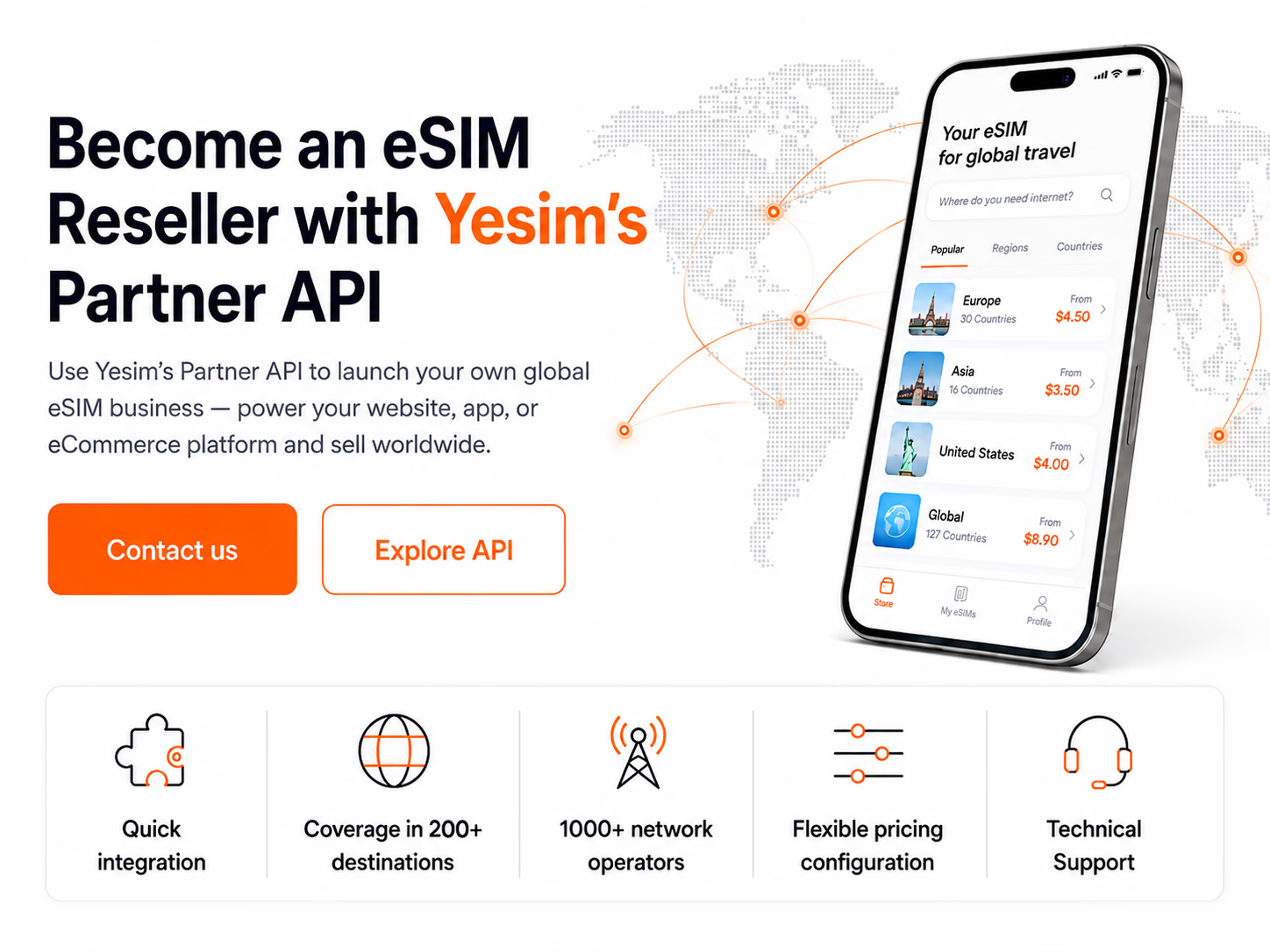
Yesim’s Partner API is designed to let partners add globaI eSIM services into their own website, app or eCommerce flow. The company highlights quick integration, coverage in 200+ destinations, access to 1000+ network operators, flexible pricing configuration, white-label options, documentation and technical support. It also specifically mentions use cases for websites, applications, e-commerce, airlines, hotels and other platforms.
That is important because airlines are not trying to become eSIM companies. Most of them do not want to manage telecom support, plan logic, network relationships and eSIM replacement flows internally. They want a product that fits into their retail environment, protects the passenger experience and creates margin.
READ MORE: Yesim B2B Strategy: API vs Enterprise Play
A good eSIM partner gives the airline three things: inventory, infrastructure and operational confidence.
This is why the right model is not just “put an eSIM banner on the confirmation page.” That is lazy retailing. The better model is contextual placement: destination data offer after check-in, family package before a long-haul leisure trip, regional plan for multi-city travel, business-friendly option for frequent flyers, or a simple “get connected when you land” card inside the digital boarding pass.
The airline keeps the customer relationship. The eSIM provider powers the connectivity layer behind it.
Not every add-on deserves the pass
There is a risk here. If airlines treat the boarding pass like a billboard, passengers will hate it.
The boarding pass is trusted because it is functional. It gets you through the airport. It has a job. If airlines overload it with irrelevant promotions, they will turn a useful interface into noise.
That means the next phase of airline retailing has to be more disciplined than the old ancillary playbook.
Baggage and seat selection worked because they were directly tied to the flight. The next generation of add-ons must be tied to the journey. That is a different test.
An eSIM passes that test because arriving without mobile data is a real travel pain point. Airport transfer can pass it. Visa support can pass it. Lounge access can pass it if timed correctly. Random shopping vouchers probably do not.
The winners will not be the airlines that add the most products. They will be the ones who understand which product belongs at which moment.
The bigger retail shift
This is part of a broader airline retailing movement. IATA has been pushing the industry toward modern airline retailing through concepts such as offers and orders, with the goal of moving beyond legacy ticketing and toward more flexible, customer-centric retail experiences. The direction is clear: airlines want to behave less like transport utilities and more like digital retailers.
The boarding pass is where that ambition becomes visible to the passenger.
Today, many add-ons still feel scattered across the booking path. Tomorrow, the boarding pass could become the control panel for the trip: gate, seat, disruption updates, baggage status, destination connectivity, visa help, transfers, lounge options, upgrade offers and loyalty triggers.
In that world, the airline app is not just an app. It is a travel operating system. And the boarding pass is its most valuable screen.
The real conclusion
The boarding pass will not replace the App Store in a literal sense. Travellers will still use Google, Apple Wallet, airline apps, OTAs, WhatsApp, maps, banking apps and eSIM apps. But in travel retailing, distribution is not only about where users can buy. It is about where they are most ready to act.
That is the airline advantage.
Consumer eSIM brands fight heavily for attention across search, app stores, influencers and paid media. That will continue. But airlines, hotels, fintechs and travel platforms have something many standalone providers have to buy: context.
They know the trip.
That changes the game.
For eSIM providers, the next battleground is not only who has the best plan for France or Japan. It is who gets embedded into the highest-intent travel moments. For airlines, the opportunity is not simply another commission line. It is a chance to make the boarding pass feel smarter, more useful, and more commercially alive.
The boarding pass used to say: You may board.
The next version says: Here is what you need next.