Ulefone Launches Two Rugged Tablets With eSIM and Dock Charging
If you spend any time around construction sites, logistics hubs, outdoor expeditions, or industrial environments, you already know that “normal” tablets rarely survive real work. Cracked screens, clogged ports, dead batteries and unreliable connectivity are still common pain points. That is exactly the space where Ulefone continues to play, and with two new tablets preparing to launch, the company is doubling down on rugged mobility rather than chasing consumer hype. Ulefone rugged tablet
The upcoming RugKing Pad Pro and RugKing Pad 2 Pro are not designed to replace your iPad. They are built for people who need tools, not toys. Based on early specifications and manufacturer disclosures, these tablets aim to combine durability, modular accessories, and always-on connectivity in a package that stays accessible in terms of price.
Two rugged tablets, one clear mission
Ulefone plans to launch two new RugKing models on January 26. Both tablets target professional and semi-professional users who operate in harsh environments where water, dust, drops, and temperature swings are part of daily life.
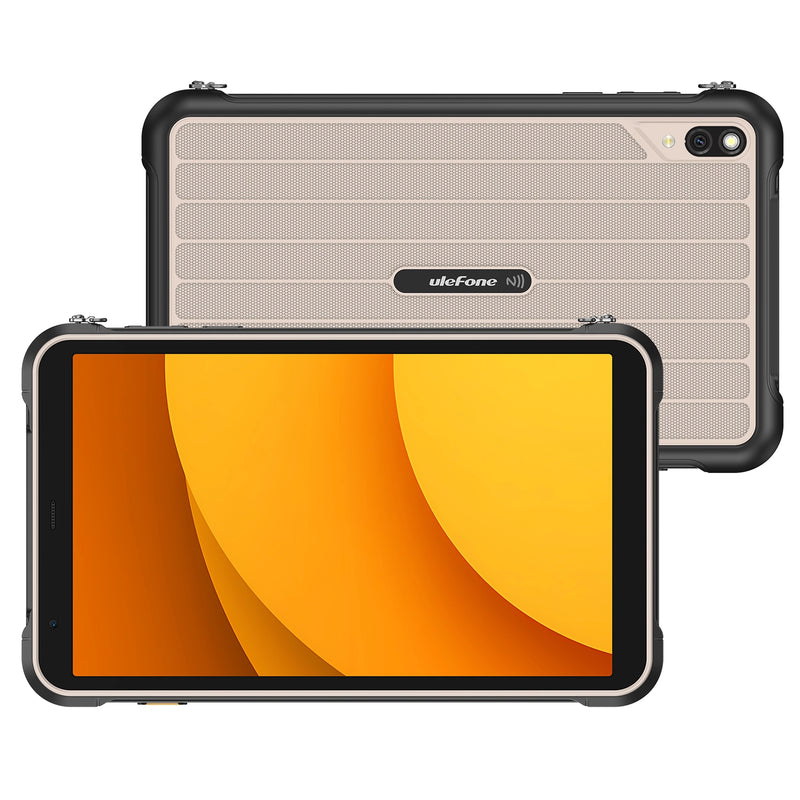
The RugKing Pad Pro is the more compact option, featuring an 8.68-inch display. The RugKing Pad 2 Pro steps up to a larger 10.1-inch panel, offering more screen real estate for maps, diagnostics, schematics, and field reports. While the size difference is obvious, the philosophy behind both devices remains the same: rugged first, features second, frills last.
Built to survive where normal tablets fail
Both tablets are certified to IP68 and IP69K standards and meet MIL-STD-810H requirements. In practical terms, that means resistance to dust ingress, water immersion, high-pressure water jets, vibration, and drops. These are not marketing buzzwords. These certifications are widely used across industrial hardware and are a baseline expectation for devices deployed in the field.
Ulefone is not trying to reinvent ruggedization here. Instead, it is aligning with proven standards that users already trust. For workers in construction, utilities, agriculture, and field service, that predictability matters more than flashy design.
Charging dock instead of cable juggling
One of the more interesting design decisions is support for a dedicated charging station. Instead of plugging in a USB cable every time, users can drop the tablet onto a dock to charge it. This leaves the USB port free, which is not a small detail when that same port can be used for specialized accessories.
In dirty or wet environments, exposed ports are often the first failure point. A dock-based charging workflow reduces wear, lowers contamination risk, and keeps accessories usable without constant cable swapping. It is a small ergonomic improvement that suggests Ulefone has spent time observing how rugged tablets are actually used in the field.
uSmart accessories and practical modularity
Both RugKing tablets are compatible with Ulefone’s uSmart ecosystem. That includes accessories such as endoscopes and microscopes, turning the tablet into a portable inspection tool.
For technicians, inspectors, mechanics, and engineers, this modular approach can replace multiple standalone devices. Instead of carrying a separate inspection camera or microscope, users can plug directly into the tablet they already use for documentation and communication. This is not new technology, but it is still rare to see it integrated cleanly into rugged tablets at this price point.
Performance choices that prioritize stability
Under the hood, both tablets run on the Unisoc T7250 chipset. This is not a performance monster, and Ulefone is not pretending otherwise. The focus here is efficiency, stability, and cost control rather than raw power.
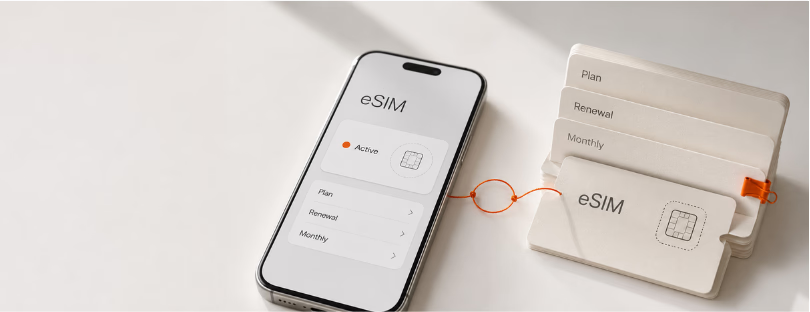
The processor includes an integrated mobile modem and supports dual SIM usage if the microSD slot is not occupied. An eSIM option is also supported, which is increasingly relevant for fleets and international operations that want centralized connectivity management.
The major limitation is the absence of 5G support. Connectivity is capped at LTE. For some users, that will be a dealbreaker. For others, especially in industrial and rural environments where 5G coverage is still inconsistent, LTE remains perfectly adequate.
Positioning, navigation, and field accuracy
Both tablets include a GNSS module supporting GPS, GLONASS, and Galileo. This matters far more than many spec sheets suggest. Reliable positioning is essential for logistics, surveying, asset tracking, and field reporting.
Multi-constellation GNSS improves accuracy and reliability, particularly in challenging environments such as urban canyons, forests, or mountainous terrain. This reinforces the idea that these tablets are designed for real-world deployment, not showroom demos.

Display size, storage, and battery differences
While the two models share a core platform, there are meaningful differences.
The RugKing Pad Pro offers:
- 8.68-inch display
- 128 GB internal storage
- 8 GB RAM
- 7,100 mAh battery
The RugKing Pad 2 Pro steps up with:
- 10.1-inch display
- 256 GB UFS 2.2 storage
- 8 GB RAM
- 10,200 mAh battery
Both tablets support charging at up to 18 watts. That is not fast by modern consumer standards, but it is typical for rugged devices where battery longevity and thermal stability are prioritized over speed.
Software direction and Android longevity
Ulefone states that both tablets will ship with Android 16. That is a notable commitment, especially in the rugged device segment where outdated software is still common.
Longer software relevance matters for enterprise buyers who expect devices to remain usable for several years. Android’s evolving support for enterprise management, kiosk modes, and security policies continues to make it a strong foundation for rugged deployments.

Pricing that targets working professionals, not enterprises only
According to Ulefone, the RugKing Pad Pro will launch at well under $250, while the RugKing Pad 2 Pro will come in just under $300.
This pricing places both devices significantly below many established rugged tablet brands, which often start at double or triple that level. It also opens the door for small businesses, independent contractors, and field teams that cannot justify enterprise-grade budgets.
Conclusion and market context Ulefone rugged tablet
Ulefone’s RugKing Pad Pro and Pad 2 Pro reflect a broader trend in rugged mobility. The market is shifting away from ultra-expensive, locked-down enterprise hardware and toward more flexible, Android-based tools that balance durability with affordability.
Compared to players like Samsung’s Galaxy Tab Active series or Panasonic’s Toughbook tablets, Ulefone clearly competes on price and modularity rather than brand prestige or raw performance. Samsung offers stronger software ecosystems and longer update guarantees, while Panasonic dominates in ultra-critical industrial deployments. Ulefone sits in between, targeting professionals who need reliability without enterprise-level pricing.
The lack of 5G is a weakness, but one that aligns with real-world coverage realities today. The inclusion of eSIM support, charging docks, and accessory compatibility shows a pragmatic understanding of how rugged tablets are actually used.
For Alertify readers tracking travel tech, field connectivity, and mobile tools, these launches are worth watching. They underline how rugged hardware is becoming more accessible, more modular, and more aligned with modern connectivity needs. As LTE remains dominant globally and Android continues to mature for professional use, devices like the RugKing series may quietly become the workhorses of tomorrow’s mobile workforce.