How eSIM Empowers Digital Nomads?
In today’s hyperconnected world, staying online while traveling is no longer a convenience. It is infrastructure. For digital nomads, remote workers, and globally mobile professionals, reliable connectivity is as essential as a laptop or passport.
Video calls from cafés, uploading work files from airport lounges, navigating unfamiliar cities, managing finances, and staying in touch with clients all depend on stable mobile data. Losing connectivity even for a few hours can disrupt work, plans, and productivity.
That is exactly where eSIM enters the picture.
Over the past few years, eSIM technology has quietly started reshaping how travelers connect to mobile networks around the world. Instead of relying on physical SIM cards, travelers can activate mobile plans digitally and switch networks through software.
For a growing community of remote professionals, that change is not just convenient. It fundamentally changes how global connectivity works.
What is eSIM?
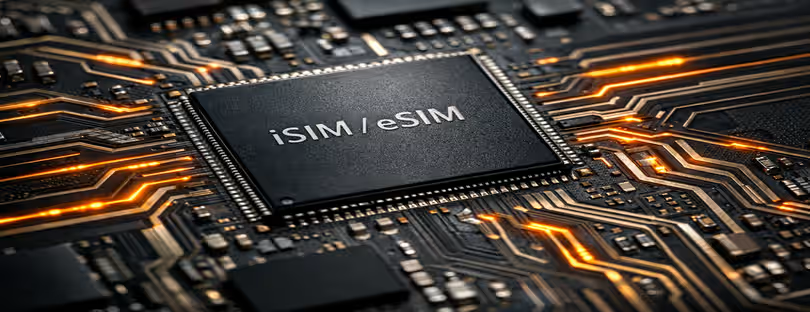
eSIM stands for embedded SIM. Unlike traditional SIM cards that you insert into your phone, an eSIM is built directly into the device hardware.
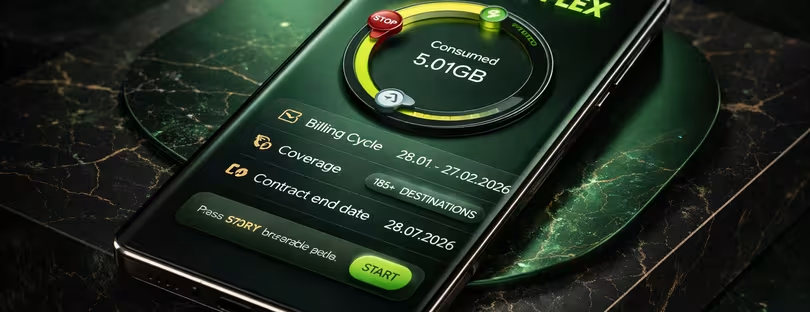
Instead of swapping plastic cards when changing operators, users simply download a mobile profile provided by a network operator or eSIM provider. Activation usually happens by scanning a QR code or installing a profile through an app.
Once installed, the device connects to the network just like a normal SIM card would. The difference is that everything happens digitally.
This small technical shift removes one of the biggest frictions in international travel connectivity: physically replacing SIM cards every time you cross a border.
Why eSIM Is Ideal for Digital Nomads
For people who regularly move between countries, connectivity challenges are constant. Finding local SIM cards, navigating unfamiliar telecom offers, dealing with language barriers, and avoiding expensive roaming charges can quickly become frustrating.
eSIM technology simplifies that entire process.
Global Connectivity
One of the most appealing aspects of eSIM for digital nomads is the ability to connect to networks almost anywhere in the world without visiting a store.
Instead of searching for a local SIM card after landing, travelers can install a data plan before departure or activate one instantly upon arrival.
Many eSIM providers offer regional or global plans that work across multiple countries. For nomads moving between destinations frequently, this eliminates the constant cycle of buying, installing, and discarding physical SIM cards.
Connectivity becomes something that can be managed in seconds from a phone.
Cost Efficiency
Traditional roaming services from home operators can still be extremely expensive, especially outside regulated regions like the European Union.
Digital nomads often find themselves juggling multiple local SIM cards or relying on Wi-Fi to avoid high roaming bills.
eSIM changes this equation by giving users direct access to local or regional data plans from their devices. In many cases, these plans cost significantly less than traditional roaming.
Because plans can be purchased and activated digitally, users can compare offers and choose the best option for their destination without visiting stores or negotiating unfamiliar telecom packages.
For frequent travelers, those savings add up quickly.

Flexibility and Convenience
Flexibility is where eSIM truly shines.
A single device can store multiple eSIM profiles at the same time. Users can switch between them directly from device settings, depending on location or coverage needs.
For example, a traveler might keep:
• A home operator profile for calls and SMS
• A regional travel data plan for Europe
• Another plan for Asia or the United States
Switching between them takes seconds.
This flexibility makes eSIM particularly attractive for remote professionals who depend on reliable connectivity but frequently move between markets.
How eSIM Actually Works
Despite the technological shift, the user experience is surprisingly simple.
Activation
Most eSIM activations happen through a QR code provided by the carrier or eSIM provider.
Users scan the code through their device settings, which installs the digital SIM profile. The device then connects to the relevant mobile network.
The entire process typically takes less than two minutes and can be completed anywhere with internet access.
For travelers, that means connectivity can be arranged before departure, during a layover, or immediately after landing.
Switching Providers
One of eSIM’s biggest advantages is the ability to manage multiple operator profiles.
Instead of physically removing SIM cards, users can simply select which profile should be active. This makes it possible to change providers quickly when traveling between countries.
For digital nomads, this means connectivity becomes something you manage like software rather than hardware.
Security and Reliability
eSIM technology follows strict security standards defined by the GSMA, the global mobile industry association.
Profiles are encrypted and securely downloaded to the device, ensuring that activation and network access remain protected.
From a performance perspective, connectivity quality is the same as traditional SIM cards because the device still connects to local mobile networks.
The difference lies only in how the SIM credentials are delivered and managed.

Devices Supporting eSIM
1. Smartphones
Leading smartphone manufacturers have embraced eSIM technology in their latest models, allowing users to enjoy the benefits of eSIM without sacrificing features or design. From iPhones to Android devices, eSIM support is becoming a standard feature in flagship and mid-range smartphones.
2. Laptops and Tablets
Beyond smartphones, eSIM is also making its way into laptops and tablets, catering to digital nomads who prefer larger screens and enhanced productivity tools while on the go. This expansion of eSIM support across device categories further enhances its appeal to a broad spectrum of users.
The Bigger Shift in Global Connectivity
The rise of eSIM is not only about replacing physical SIM cards. It represents a broader transformation in how mobile connectivity is delivered.
Telecom services are gradually shifting from hardware-based infrastructure toward software-driven connectivity models.
Instead of buying connectivity through physical retail stores or long-term contracts, users increasingly activate services instantly through apps and digital platforms.
For travelers and remote professionals, this shift aligns perfectly with modern mobility. Connectivity becomes something you activate when needed, change when necessary, and manage directly from your device.
Final Thoughts about eSIM Benefits for Digital Nomads
For digital nomads, connectivity used to be a constant logistical challenge. Finding local SIM cards, navigating telecom pricing, and avoiding roaming charges were simply part of the travel routine.
eSIM removes much of that friction.
By allowing users to activate mobile plans digitally, switch networks instantly, and manage multiple profiles on one device, the technology offers a level of flexibility that traditional SIM cards could never provide.
As more devices adopt eSIM and global coverage expands, the technology will likely become the default way travelers stay connected.
For a generation of professionals who work from anywhere, that shift is not just convenient. It is a foundational step toward truly seamless global connectivity.