


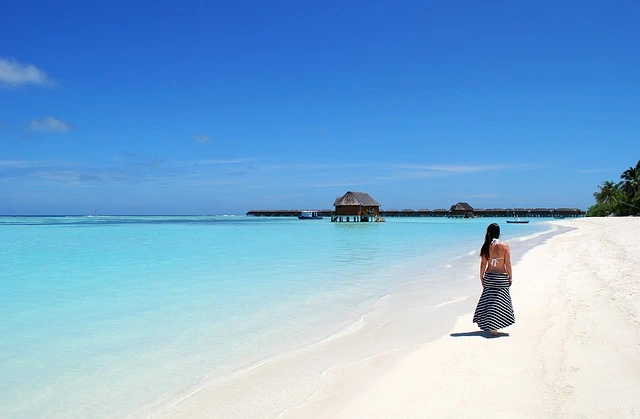
There’s a reason the Maldives has become shorthand for “unreachable paradise.” 1,200 islands scattered across the Indian Ocean, nearly 200 of them inhabited, and a geography so fragmented that getting from one beach to another can mean a seaplane, a speedboat, or both. It is, by almost any measure, inconvenient to get to and expensive to stay at — and it remains one of the most consistently booked luxury destinations on the planet. That tension is interesting.
But here’s what the glossy resort brochures tend to gloss over: not all Maldivian beaches are behind a resort gate. Some of the most compelling stretches of sand are on local islands, accessible to anyone willing to look past the overwater-bungalow fantasy.
What Actually Makes These Beaches Different
The cleanliness isn’t accidental. The Maldivian government has enforced some of the stricter marine environmental policies in the region, and the country’s sheer isolation — sitting roughly 700 kilometers southwest of Sri Lanka — keeps industrial runoff and mass-tourism pollution at bay in a way that, say, Thailand’s Phi Phi Islands simply cannot manage anymore. The coral reefs are still largely intact around many of the less-trafficked atolls, which is increasingly rare globally.
Veligandu Island in North Ari Atoll is a good benchmark. The snorkeling here isn’t a “see a few fish” situation — it’s the kind of house reef that actually justifies traveling this far. Manta rays, blacktip reef sharks, and green turtles on a Tuesday afternoon. The marine biodiversity in this part of the Ari Atoll is consistently cited by dive operators as among the best in the archipelago.
Reethi Beach, on Fonimagoodhoo in Baa Atoll, operates on a different frequency — quieter, oriented toward the horizon in a way that invites you to stop optimizing your itinerary. Baa Atoll is a UNESCO Biosphere Reserve, a designation that carries real weight here because the local operators have an economic incentive to actually protect it.
The Local Island Option Is Underrated
Fulhadhoo, also in Baa Atoll, is the kind of place that doesn’t have a marketing department. It’s remote even by Maldivian standards, with a beach that sees nesting sea turtles and almost no organized tourism infrastructure around it. If you’re chasing the curated resort experience, this isn’t it. If you want something that feels genuinely untouched, it’s worth the logistics.
Rasdhoo’s Bikini Beach deserves a mention specifically because it threads a needle that matters in a Muslim-majority country: it’s a designated area where visitors can wear Western swimwear without running into cultural friction. It’s a small thing, but for independent travelers navigating the local island circuit, it’s actually practical information.
Velassaru Beach in South Malé Atoll sits closer to the capital, which makes it logistically convenient without sacrificing quality. The coral reef access is strong, the water clarity is reliable, and it’s the kind of beach that photographs well without needing a filter — which, in 2025, has become its own form of recommendation.
Bioluminescence: The One Thing Worth Staying Up For
Mudhdhoo Beach is where the Maldives gets genuinely surreal. The bioluminescent plankton — dinoflagellates that emit light when agitated — create a phenomenon that’s been documented in a handful of spots worldwide, but rarely with the consistency and accessibility of Mudhdhoo. The effect is best after a new moon, when there’s minimal light pollution competing with the glow. Walking along the shore at night with the water lighting up blue-white at every wave break is one of those experiences that doesn’t translate well to Instagram but stays with you.

The Private Island Resort Economy
Niyama Private Islands, Reethi Rah, Cocoa Island — these names function as status markers in a very specific travel segment, and they’ve earned that position by delivering an experience that’s almost compulsively consistent. The private beach model works in the Maldives because the product is the island itself, not just the amenities on it. When Baros or Banyan Tree Vabbinfaru talk about “house reefs,” they mean coral ecosystems within swimming distance of the shore that have been actively protected for decades.
That said, the economics of private island resorts are worth understanding if you’re making a decision. You’re not just paying for a room — you’re paying for exclusivity of access to a specific reef system, a curated natural environment, and the operational infrastructure required to maintain all of it on a remote island. Whether that’s worth $800 a night or $3,000 a night is a personal calculation, but the base value proposition is clearer than it might appear.
Getting the Logistics Right
On the practical side: the Maldives runs on two seasons. November through April is the dry season — ideal conditions for water sports, snorkeling visibility, and beach time generally. May through October brings the southwest monsoon, which produces the swells that make the Maldives genuinely interesting for surfers, particularly around Pasta Point and Chickens in North Malé Atoll.
For accommodation, the range is wider than the destination’s luxury reputation suggests. Budget guesthouses on local islands like Maafushi start well under $100 per night and give you access to bikini beaches and reef snorkeling without the resort premium. Mid-range options like Amber Beach Hotel and Point Inn fill the gap for travelers who want comfort without the overwater-bungalow price tag.
Connectivity is a practical consideration that’s easy to underestimate. Mobile coverage in the Maldives is handled primarily by Dhiraagu and Ooredoo Maldives, and while coverage is solid on inhabited islands and at resorts, it gets patchy fast once you’re on a boat between atolls. For travelers island-hopping on a local island circuit, an eSIM with a regional data plan is more flexible than trying to navigate local SIM logistics in Male on arrival.

Here are 5 hotels* in the Maldives, ranging from budget to luxury:
- Three Inn: This budget-friendly hotel offers a comfortable stay at a reasonable price. It is located at Lot 10805, 16 Nirolhu Magu. The price is $61 per night.
- Point Inn: A 4-star hotel located at Point Inn, 10366 Hirundhu Magu. The price is $101 per night.
- Amber Beach Hotel: This hotel is located at Lot No. 10997, Kaani Magu, 18 Goalhi Kaafu Atoll. The price is $106 per night.
- Planktons Beach: A 3-star hotel located at Lot No. 10094 Dhigga Magu. The price is $158 per night.
- Jen Maldives Male by Shangri-La: This luxury 4-star hotel is located at Ameer Ahmed Magu. The price is $247 per night.
* Please note that prices are subject to change based on availability and season.
Conclusion: Where the Maldives Sits in the Global Beach Market
The Maldives occupies a specific and increasingly pressured position in global travel. It’s the reference point for aspirational beach tourism — the place people mean when they say “someday.” But that positioning is being challenged from multiple directions. The Seychelles has strengthened its sustainability credentials. The Azores is pulling eco-conscious travelers. Palau has implemented marine protection policies that are arguably more rigorous. And within Southeast Asia, the upper end of the Andaman coast has narrowed the gap on luxury beach infrastructure considerably.
What the Maldives still has that’s hard to replicate is the atoll geography itself — that specific visual of an island you can walk around in twenty minutes, surrounded by a lagoon that shifts from teal to deep blue within a few hundred meters. UNESCO’s recognition of Baa Atoll as a Biosphere Reserve puts it in the same conversation as the Galápagos and the Great Barrier Reef in terms of ecological significance, even if it doesn’t get the same headlines.
The World Tourism Organization has tracked consistent year-on-year growth in Maldives arrivals since borders reopened post-pandemic, with the country recording over 1.8 million tourists in 2023 according to the Maldives Tourism Ministry — a record at the time. The pressure that creates on coral ecosystems is real and documented by organizations like the Coral Triangle Initiative, which has flagged bleaching risk across Indian Ocean reef systems.
The smarter play for the destination, and for travelers, is probably the local island circuit — lower environmental footprint, more authentic experience, better value, and frankly more interesting than checking into a resort and never leaving. The beaches are just as good. The fish don’t know the difference.