How eSIM Data Is Changing Global Mobile Connectivity
Something interesting has happened in the telecom world over the past few years. For decades, mobile connectivity relied on a tiny plastic chip. Every traveler knew the ritual: land at the airport, search for a SIM kiosk, swap cards, and hope the network worked.
Then quietly, almost invisibly, the industry started replacing plastic with software.
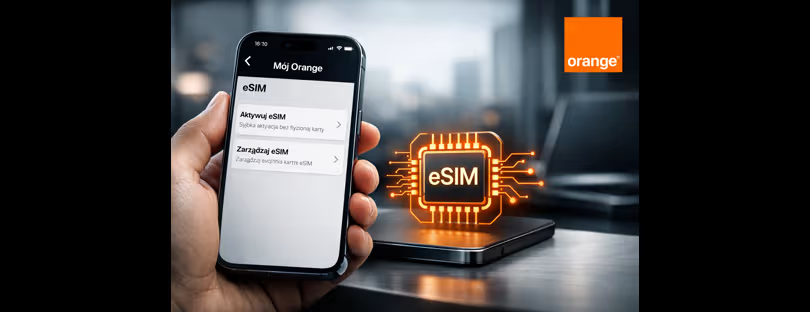
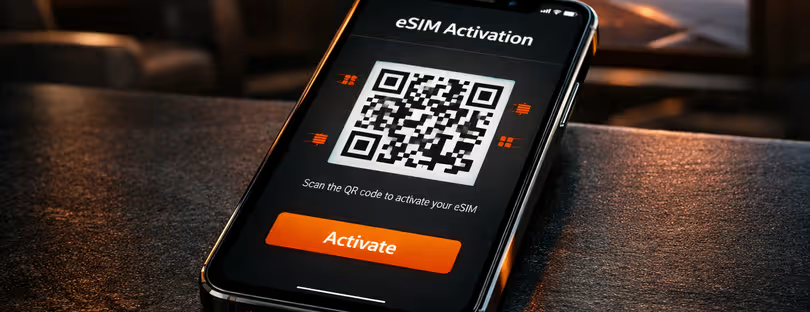
That shift is what we now call eSIM data. Instead of inserting a SIM card, your device downloads a digital profile that connects you to a mobile network. In practice, it means you can activate mobile data from an app or QR code within minutes.
For travelers, digital nomads, and business users, the impact has been dramatic. Connectivity has gone from a physical product to a software service.
And the market is exploding.
Industry research suggests the global travel eSIM market reached around $2.24 billion in 2025 and could grow dramatically over the next decade as adoption accelerates.
But the story of eSIM data is bigger than just a technology upgrade. It represents a fundamental shift in how telecom services are delivered, sold, and used around the world.
What “eSIM data” actually means
Let’s clarify the concept first.
An eSIM (embedded SIM) is a programmable chip already built into your device. Instead of inserting a physical SIM card, users download a carrier profile digitally.
In practice, eSIM data works like this:
Download instead of insert
You scan a QR code or install a carrier app.
Activate instantly
Your phone downloads the network profile remotely.
Connect to local networks
Your device connects to available partner networks in the region.
For travelers, this removes the biggest friction in global connectivity. No SIM swaps, no physical stores, and no need to wait until you land to get internet access.
You can activate a data plan before your plane even lands.
That convenience is one of the reasons travel is now the biggest catalyst for eSIM adoption. In fact, surveys show more than half of eSIM users activate it primarily for travel connectivity.

The real driver: travel data demand
If you follow the telecom sector closely, you will notice something fascinating.
Most eSIM adoption today is not coming from traditional operators. It is coming from travel data providers.
Companies like Airalo, Holafly, Nomad, Ubigi, and others have built entire businesses around the idea that travelers want instant data connectivity without roaming fees.
Traditional roaming was designed for a different era.
Operators negotiated bilateral agreements, passed traffic through their home networks, and charged high fees for the convenience. Travelers often came home to hundreds of euros in roaming bills.
eSIM data disrupted that model.
Instead of roaming through your home operator, travel eSIM providers sell local or regional data packages that connect directly to partner networks in the destination country.
The result is usually:
- cheaper data
- faster activation
- better network flexibility
And that explains why millions of travelers have adopted the technology so quickly.
Why the market is accelerating
Three forces are driving the rapid growth of eSIM data.
1. Device compatibility
The biggest bottleneck used to be hardware. Today, most premium smartphones support eSIM.
Analysts expect more than half of smartphones globally to support eSIM by 2030 as manufacturers integrate it across their product lines.
Apple’s move toward eSIM-only devices in some markets accelerated this trend dramatically.
2. Global travel recovery
As international travel rebounds, connectivity becomes essential infrastructure.
Research suggests travel eSIM users could exceed 80 million by 2027, driven largely by tourism and business travel.
For many travelers today, data connectivity ranks just behind flights and hotels in travel planning.
3. The rise of connectivity apps
Another key shift is the appification of telecom.
Instead of buying connectivity through telecom operators, users now download apps that function as telecom marketplaces.
You choose a destination, select a data plan, and activate connectivity within minutes.
This approach turns telecom into something closer to a digital service.
The new players reshaping connectivity
The eSIM data ecosystem is no longer dominated by telecom operators.
Instead, a new layer of companies has emerged.
Travel eSIM platforms
Airalo, Holafly, Nomad, aloSIM
Global connectivity providers
Ubigi, GigSky, Redtea Mobile
Infrastructure and aggregators
eSIM enablers working with hundreds of mobile operators
Many of these companies operate as connectivity aggregators rather than network owners. They negotiate wholesale data access with mobile networks and package it into consumer-friendly plans.
According to analysts, this model is one of the reasons the travel eSIM market is expected to expand rapidly in the coming years.
And it also explains why traditional operators are paying close attention.
Because every traveler who buys a travel eSIM is one less roaming customer.

Data is becoming the product
There is another subtle change happening in the telecom industry.
Historically, SIM cards were tied to phone numbers and national operators.
eSIM data changes that equation.
Many travel eSIMs are data-only products.
Voice calls happen through apps like WhatsApp or Teams. Authentication happens through cloud services. And communication increasingly runs through internet platforms rather than telecom infrastructure.
That means the data connection itself becomes the core product.
This shift is similar to what happened with messaging apps replacing SMS.
And it raises an important strategic question for the telecom industry:
If connectivity becomes purely digital and app-driven, who controls the customer relationship?
Operators are starting to react
Mobile network operators are not ignoring the trend.
Some are launching their own travel eSIM products. Others are partnering with global platforms.
But the structural challenge remains.
Travel eSIM providers operate globally. Operators operate nationally.
That difference in scale is why many analysts believe the travel eSIM sector will continue to disrupt traditional roaming revenues.
Some projections suggest the number of travel eSIM users could grow by more than 400% over the next five years.
For operators, that is both a threat and an opportunity.
The bigger connectivity shift
If you zoom out, eSIM data is not just about travel.
The same technology is powering:
- connected cars
- smartwatches
- IoT devices
- enterprise connectivity platforms
In the automotive sector, for example, eSIM-enabled vehicles are already turning cars into mobile offices with built-in connectivity services.
In other words, the travel eSIM market may just be the first visible layer of a much larger transformation.
Connectivity is becoming embedded everywhere.
And software is replacing hardware as the way we manage it.
Conclusion: connectivity is becoming software
The real story behind eSIM data is not the QR code or the convenience of downloading a plan.
It is the transformation of telecom into software infrastructure.
Travel eSIM providers such as Airalo, Holafly, Nomad, and Ubigi represent the first wave of this shift. They showed that connectivity could be purchased, activated, and managed like any other digital service.
But they are not the only players.
Banks, travel platforms, airlines, and even cybersecurity companies are beginning to experiment with branded eSIM services. At the same time, mobile operators are building their own digital offerings to compete in this new environment.
The direction is clear.
Connectivity is moving away from plastic SIM cards and toward programmable, app-based networks.
In that world, the winners may not necessarily be the companies that own the towers.
They may be the ones that control the software layer connecting users to those networks.
And if current growth forecasts hold true, eSIM data could become the default way the world stays connected long before the next decade ends.