Osaka Castle VR Signals New Travel Experience Shift
There’s a shift happening in how we experience places, and it’s not coming from travel apps or booking platforms. It’s coming from immersive environments that let you step inside history.
HTC’s VIVERSE platform just introduced one of the clearest examples so far.
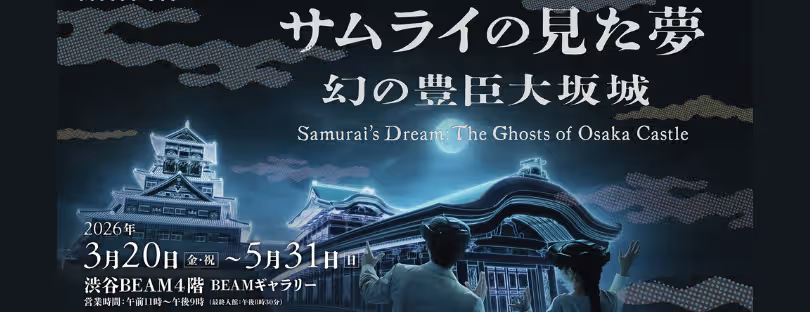
Samurai’s Dream: The Ghosts of Osaka Castle is a free-roam VR experience that takes audiences back to Japan’s Sengoku period and places them inside Osaka Castle at its peak. Not as spectators, but as participants moving through a reconstructed world that no longer exists.
This is not about watching history. It’s about entering it.
Turning cultural heritage into a living environment
The project brings together NHK, NHK Promotions, NTT DOCOMO Studio & Live, and VIVERSE. That combination matters because it blends historical authority with technical execution.
NHK contributes decades of research, documentary production, and detailed CG archives built through historical dramas and investigative programming. These assets form the backbone of the experience.
More than 90% of what visitors see originates from NHK’s historical productions. That matters. It means the environments are not speculative or loosely inspired. They are grounded in years of research.
What VIVERSE and its partners have done is translate that archive into a real-time, interactive format.
Instead of learning about Toyotomi Hideyoshi’s Osaka Castle, you walk through it. You sjapanee the scale, the structure, the atmosphere. You experience the environment as a space, not as content.
That shift changes how people engage with history.
From solo VR to shared, physical experiences
One of the most important aspects here is how the experience is delivered.
This is not at-home VR. It is location-based, free-roam VR designed for groups.
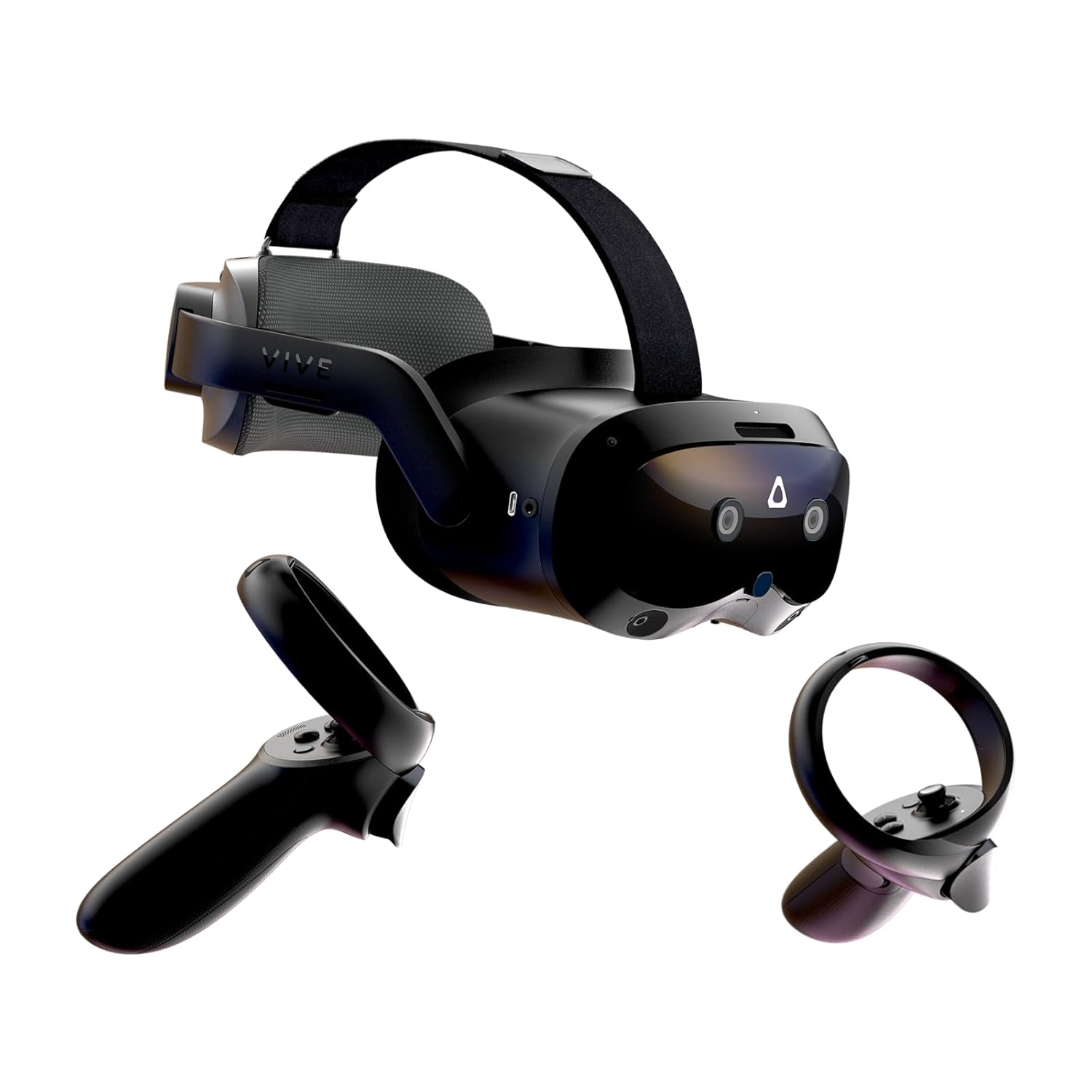
HTC’s system combines VIVERSE’s GEM platform with VIVE headsets, allowing multiple participants to move freely inside a physical venue while sharing the same virtual environment.
You are not isolated inside a headset. You are moving alongside others, reacting together, and experiencing the same narrative in real time.
Joseph Lin, General Manager of VIVERSE, explains the vision:
“The next great entertainment medium isn’t a screen, but a room. VIVERSE exists to make location-based immersive experiences as turnkey and globally scalable as streaming,” said Joseph Lin, General Manager of VIVERSE. “We’re excited to be partnering with the world’s greatest cultural institutions and production companies to bring history, heritage, and storytelling to life. What we’ve built with our partners is a blueprint for what that future of interactive entertainment looks like.”
That idea reframes VR from a device into a destination.
Storytelling beyond reconstruction
What makes this experience stand out is not just accuracy, but how the story is told.
Visitors are guided through the environment by a pale blue flame, moving across floating structures, golden interiors, and battlefields shaped by the ambitions of the samurai era.
The design draws on the concept of Yūgen, emphasizing mystery and emotional depth.
Most VR experiences focus on realism or spectacle. This one focuses on atmosphere and meaning. It is trying to create an emotional connection with history.
You are not just seeing a place. You are moving through a narrative shaped by it.
The technology behind the experience
Behind the scenes, the production required significant adaptation.
NHK’s original CG environments can exceed twenty million polygons, far beyond what standard real-time VR can handle. These assets had to be optimized without losing visual quality.
At the same time, HTC’s XR infrastructure ensures that multiple users can move through the space simultaneously without breaking immersion.
This combination enables what the partners describe as “Free-Roaming Shared Reality.”
It is not just about rendering a world. It is about making it stable, social, and scalable.
That scalability is what turns this from a one-off attraction into a repeatable format.
Why this matters for travel
At first glance, this looks like a high-end VR attraction.
It is more than that.
Travel is increasingly shaped by digital layers. Connectivity, mobile services, and content platforms already influence how people plan and experience trips.
Immersive environments add another layer. They allow people to experience a place before arriving, or engage with it in ways that are not physically possible.
For tourism boards and cultural institutions, this creates a new type of product.
Instead of promoting a destination, you let people step into it.
That is a fundamental shift.
Where this fits in the wider market
Location-based VR is not new. Companies like Sandbox VR and Zero Latency have been building shared VR environments for years, mostly focused on gaming.
The difference here is positioning.
Samurai’s Dream is not built around gameplay. It is built around cultural reconstruction and historical storytelling.
That places it closer to museums than to VR arcades.
According to industry reports from PwC and Statista, location-based VR is expected to grow steadily, but content quality remains the main constraint.
Projects like this begin to solve that by turning existing cultural assets into immersive experiences.
What comes next
The experience premiered in Tokyo on March 20, 2026, with plans to expand across Japan and internationally.
If that rollout works, it creates a clear model.
Cultural institutions provide content. XR platforms deliver the experience. Infrastructure players enable distribution.
And together, they create a new category of experience.
Conclusion
What VIVERSE and its partners are building is not just another VR attraction. It is an early version of how places might be accessed in the future.
Compared to players like Sandbox VR or Zero Latency, the difference is clear. Those platforms focus on entertainment. This focuses on cultural depth and historical accuracy.
That distinction matters.
Because the long-term opportunity is not just in VR entertainment. It is in turning heritage and destinations into immersive environments that can be experienced globally.
Research from PwC and Statista shows steady XR growth, but growth alone is not the story. The real shift happens when content becomes meaningful enough to change behavior.
This is one of the first examples that gets close.
And once authenticity, storytelling, and scalability align, immersive experiences stop being optional.
They start becoming part of how we access the world.