Physical SIM Cards Are Becoming Obsolete for Travelers
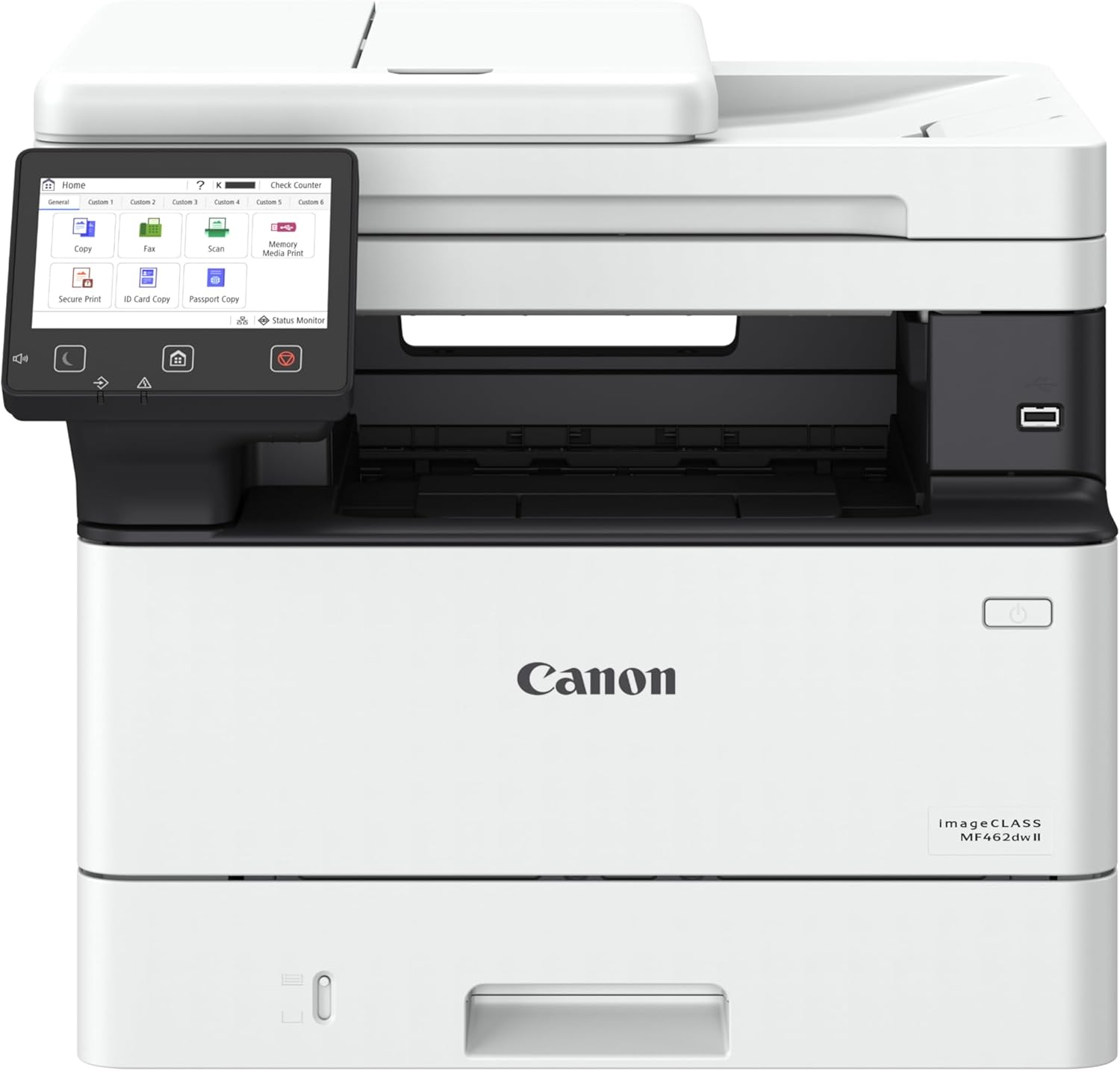
Let’s be honest: nobody under 30 has ever walked into a hotel lobby, glanced at the fax machine sitting next to reception, and thought, “Wow, that’s still useful.” Fax machines are relics. They hum, they beep, they exist — but only because someone in middle management still insists “we might need it one day.”
Physical SIM cards? Same category. They’re the new hotel fax machine: old, clunky, and somehow still hanging around because people cling to habits long after they stop making sense.
And if you’re a traveler still swapping tiny bits of plastic in and out of your phone at the airport kiosk? Sorry, but it’s 2025. That’s like carrying around travelers’ checks.
The SIM Shuffle: A Ritual No One Asked For
Let’s walk through the “SIM card traveler experience.”
You land in a new country. You’re jet-lagged, dehydrated, and just want to call your Uber. Instead, you’re hunting down a kiosk in a noisy terminal, haggling in broken English with a vendor who hands you a plastic card the size of a credit card that contains — wait for it — a smaller plastic card. You then poke around your bag for the microscopic “SIM ejector tool” (aka a paperclip you bent on your last trip) and pray you don’t drop the card onto the airport floor where it will vanish forever into the abyss of lint and chewing gum.
Welcome to connectivity, 2007-style.
Why do travelers still do this? Because it feels familiar. Because once upon a time, this was the only option. But nostalgia doesn’t make a fax machine useful, and it doesn’t make physical SIM cards relevant either.
The Obsolescence Problem
Technology moves in one direction: forward.
We ditched floppy disks. We ditched CDs. We ditched physical boarding passes. We ditched those plastic hotel key cards that demagnetized every time you put them near your phone.
But SIM cards? For some reason, people act like they’re sacred.
The reality: SIM cards are a hardware solution for a problem that software solved years ago. eSIMs do the exact same job — only faster, cleaner, and without requiring you to fumble around with plastic confetti.
Clinging to SIM cards in 2025 is like insisting you need to rent DVDs at Blockbuster because “streaming might not work everywhere.” Sure, you can justify it — but you sound like your uncle who still thinks WhatsApp is “too complicated.”
The Cost of Clinging
Here’s the kicker: holding on to physical SIM cards doesn’t just make you look out of touch. It costs you.
- Time. Every second wasted at the airport kiosk is a second you’re not already on your way.
- Money. Tourist SIMs are notorious for overpriced, underdelivering data packages. They’re designed to rip off people who don’t know better.
- Flexibility. Physical SIMs lock you into one country or one carrier. Traveling to three countries in a week? Enjoy juggling SIM trays like a magician.
- Security. SIM swapping scams and cloning are still a thing. Physical SIMs are the weak link.
It’s like paying for hotel Wi-Fi in 2025. You don’t just look old-fashioned — you’re actively getting fleeced.
The eSIM Wake-Up Call
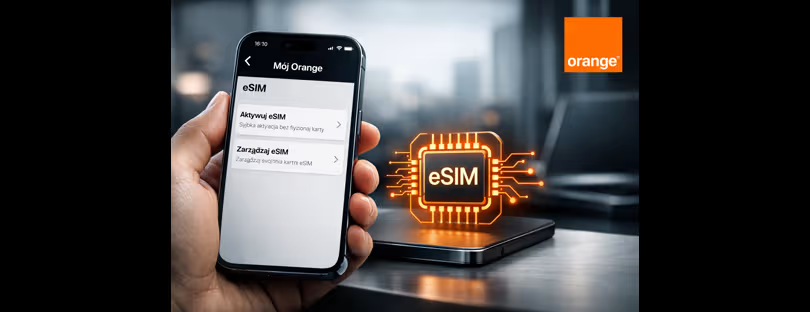
Enter the eSIM. No plastic. No kiosks. No ejector tools.
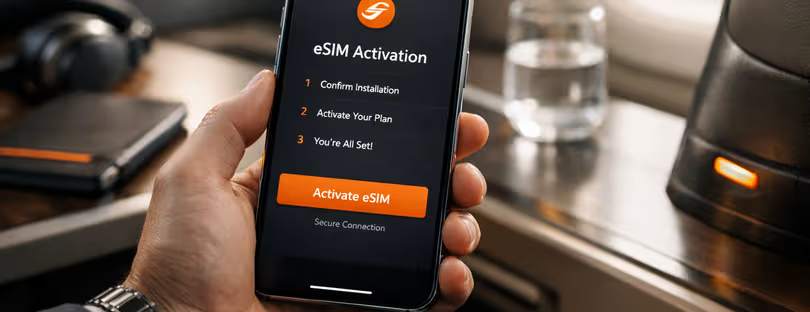
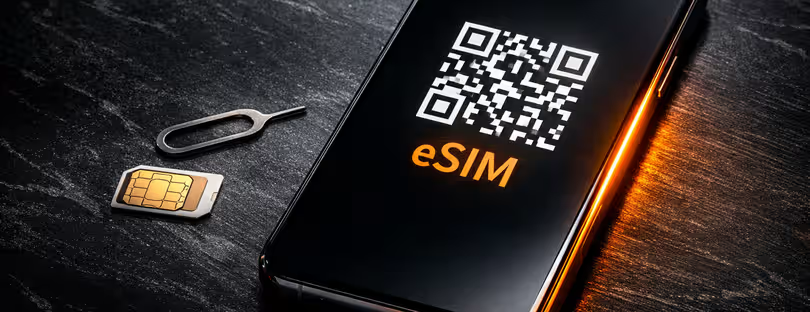
You scan a QR code. Your phone activates instantly. Done. Connectivity before you even board your flight if you feel like it.
Traveling through five countries in two weeks? No problem. You install multiple plans, switch between them in your phone settings, and never once worry about losing a microscopic card in the cracks of your airplane seat.
Need a backup? Most providers let you reinstall the eSIM or send it to a new device. Try doing that when you’ve left your SIM card in a random Airbnb nightstand.
eSIM is software. Which means it can evolve, improve, and integrate in ways physical cards simply can’t. That’s why Apple already dropped the SIM tray entirely in some regions — and let’s be clear, once Apple kills a port or slot, the industry follows. (RIP headphone jack.)
The Fax Machine Analogy
So why compare SIM cards to fax machines? Because both are technically “still around” — and both survive only on inertia.
Hotels keep fax machines because someone, somewhere, once a year, insists on faxing a signed contract. Travelers keep using SIM cards because they’ve always done it that way.
But ask yourself: Does the existence of fax justify its relevance? Of course not. Same with SIM cards.
In both cases, the future is obvious: it’s digital, it’s faster, it’s cleaner, and it’s already here. The only thing keeping the old hardware alive is a mix of habit and fear.
The Psychology of Sticking With Old Tech
Why do people hang on to obsolete tech? Comfort. A false sense of control. The tactile feeling of “owning” something.
Popping in a SIM card makes people feel like they’ve really activated their phone abroad. Just like sliding that hotel key card into the door felt more secure than tapping your phone. Just like printing out boarding passes felt safer than trusting your app.
It’s all an illusion. You don’t gain control. You gain friction.
And here’s the kicker: younger travelers don’t even see it as a choice. They don’t “cling” to SIM cards because they never started with them. Ask a Gen Z backpacker in 2025 if they’ve ever swapped a SIM in an airport, and they’ll look at you like you just asked if they’ve ever developed film in a darkroom.
The Brutal Truth: Nobody Will Miss Them
Let’s fast-forward. Five years from now, physical SIM cards will be as niche as fax machines are today. You’ll find them in rural corner stores, government offices that never upgrade, and in the hands of tech-averse travelers who still insist on paying cash for everything “because it feels safer.” Physical SIM Cards vs eSIMs
For the rest of us, SIM cards will be a trivia question. “Remember when we used to carry those tiny things around?”
Nobody will miss them. Nobody will write love letters to SIM trays. Nobody will mourn the ejector tool. They’ll fade out the way all transitional tech does — slowly, then suddenly.
Final Boarding Call Physical SIM Cards vs eSIMs
Travel is about movement, about adapting, about going forward. So why are so many travelers still dragging around yesterday’s tech?
Physical SIM cards are the new hotel fax machine. They linger not because they’re useful, but because people can’t quite admit it’s time to move on.
But here’s the reality check: moving on has never been easier. Scan a QR code. Get connected. That’s it.
So if you’re still fumbling with plastic at the airport kiosk in 2025, ask yourself: are you really being practical — or are you just the traveler equivalent of the hotel manager who insists the fax machine might come in handy one day?
Spoiler: it won’t. Physical SIM Cards vs eSIMs