Mallorca Island Guide: Best Things to Do and See
Mallorca island has long held a special place on Europe’s travel map. If you ask frequent travelers where the Mediterranean feels both glamorous and accessible, Mallorca almost always appears in the conversation.
Part beach paradise, part cultural crossroads, and part tourism laboratory, this Balearic island has evolved into one of the most visited destinations in Europe. The numbers alone tell a remarkable story: Mallorca welcomed around 13.4 million visitors in 2024, a record for the island and a clear sign that its popularity continues to grow.
But behind those postcard beaches lies something far more interesting. Mallorca is not just another holiday destination. It is a case study in how modern tourism works, how destinations compete, and how the future of travel is being reshaped.
For travelers exploring the Mediterranean today, Mallorca island is a fascinating place to start.
The Mediterranean’s Most Versatile Island
Mallorca is the largest island in Spain’s Balearic archipelago, located in the western Mediterranean Sea between mainland Spain and Italy.
That geography gives it a rare advantage. Within a single day, you can move between dramatically different landscapes.
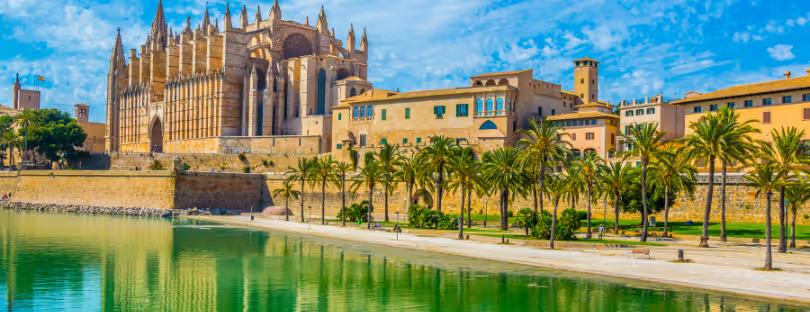
One moment you are wandering through the Gothic streets of Palma, the island’s capital, standing beneath the famous La Seu cathedral, whose rose window is one of the largest Gothic windows in the world. The next moment you are driving through the Serra de Tramuntana mountains, a UNESCO-listed landscape of winding roads, olive terraces, and tiny stone villages.
Mallorca also happens to have more than 200 cave systems, dozens of secluded coves known locally as “calas,” and over 300 sunny days a year, which explains why travelers keep returning.
But versatility is Mallorca’s real secret weapon.
It works equally well for:
Beaches and summer travel
Mallorca’s southern and eastern coasts are lined with classic Mediterranean beaches such as Cala d’Or, Cala Millor, and Playa de Muro.
Culture and architecture
The old city of Palma blends Roman, Moorish, and medieval influences, creating one of the most interesting historic centers in Spain.
Outdoor adventure
Cyclists, hikers, and climbers increasingly treat Mallorca as an outdoor playground, especially around the Tramuntana mountains.
Luxury escapes
Five-star resorts, Michelin-star restaurants, and boutique countryside hotels have transformed parts of the island into a high-end travel hub.
This diversity is why Mallorca attracts such a wide range of travelers, from British weekend visitors to digital nomads and luxury yacht owners.
The Rise of Europe’s Tourism Giant
Tourism has shaped Mallorca for more than half a century.
Mass tourism began accelerating in the 1950s and 1960s, when cheap flights from northern Europe suddenly made Mediterranean holidays accessible to the middle class.
By the 1970s, millions of visitors were already arriving each year.
Today, tourism dominates the island’s economy. In fact, it accounts for roughly three quarters of Mallorca’s economic output, making it one of the most tourism-dependent regions in Europe.
The scale is extraordinary.
At peak moments, the island hosts far more tourists than residents, with some estimates suggesting 29 visitors per resident during busy months.
That creates both opportunity and tension.
Hotels, airlines, restaurants, and local businesses thrive on tourism revenue. At the same time, overcrowding, housing costs, and environmental pressure have become major public debates.
In many ways, Mallorca is experiencing the same tourism challenges seen in cities like Venice, Barcelona, or Dubrovnik.
The difference is that Mallorca is actively trying to reinvent how tourism works.
Beyond Party Tourism: Mallorca’s Quiet Reinvention
If you visited Mallorca twenty years ago, you might remember Magaluf and the island’s reputation for cheap party tourism.
That image still exists in certain areas, but the broader story is very different today.
Mallorca is quietly shifting toward a more diversified travel model.
Luxury hospitality has expanded dramatically. Rural hotels in historic estates now attract visitors looking for quiet countryside escapes. Food tourism is booming thanks to the island’s wineries, olive oil producers, and Michelin-starred restaurants.
At the same time, cultural tourism is gaining traction.
Workshops with local artisans, craft retreats, and creative experiences are becoming part of the island’s tourism offer, reflecting a broader trend toward more meaningful travel experiences.
This shift mirrors something happening across the global travel industry.
Travelers are increasingly looking for authentic experiences instead of mass tourism packages.
Mallorca is trying to position itself exactly at that intersection.

The Most Beautiful Places to Explore
If you are visiting Mallorca island for the first time, there are a few places that define the experience.
Palma de Mallorca
The island’s capital blends Gothic architecture, Mediterranean marinas, and modern restaurants. Palma Cathedral and the Royal Palace of Almudaina are the city’s iconic landmarks.
Serra de Tramuntana
This dramatic mountain range runs along the island’s northwest coast. Villages such as Deià, Valldemossa, and Sóller feel almost frozen in time.
Hidden calas
Mallorca’s coastline is famous for small turquoise coves tucked between cliffs. Cala Deià, Cala Llombards, and Cala Varques are among the most photogenic.
Alcúdia and Pollensa
Located in the north, these towns offer Roman ruins, medieval streets, and access to some of the island’s best beaches.
Each area reveals a different side of Mallorca, which is why travelers rarely see the entire island in a single trip.
Travel Tips for Mallorca (Quick Sidebar)
Here are a few practical tips if Mallorca Island is on your travel list.
Getting to Mallorca
Most visitors arrive via Palma de Mallorca Airport, one of Spain’s busiest airports with frequent connections across Europe. Ferries also connect the island to Barcelona, Valencia, and Ibiza.
Best areas to stay
Palma is ideal for culture and nightlife.
Alcúdia offers family-friendly beaches.
Sóller and Deià are perfect for scenic mountain escapes.
Recommended hotels
Boutique countryside hotels and agroturismos (rural estates) are increasingly popular. Many travelers prefer them over large resorts for a more authentic experience.
Getting around
Renting a car is the easiest way to explore the island. Public buses connect major towns, but the best beaches and mountain villages often require a car.
Ticketing and attractions
Popular sites such as Palma Cathedral require timed entry tickets, especially during the summer months.

Why Mallorca Matters in the Bigger Travel Picture
Mallorca Island is more than just another Mediterranean destination.
It reflects several powerful trends shaping the future of travel.
First, the island shows how mass tourism can transform a local economy. Tourism now drives most of Mallorca’s income and employment.
Second, it illustrates the growing pressure of overtourism. Local debates about housing costs, infrastructure, and sustainability are becoming more common in major destinations around the world.
Third, Mallorca highlights a shift toward higher-quality tourism. Spain itself is increasingly promoting a strategy focused on spending and experience rather than simply visitor numbers.
This is why Mallorca’s evolution matters beyond the island itself.
It may well represent the blueprint for how major destinations adapt to the next era of global travel.
Final Thoughts
Mallorca island is easy to love at first glance.
The beaches are stunning, the villages are charming, and the Mediterranean climate does most of the marketing work on its own.
But the real story of Mallorca lies deeper.
Few places in Europe illustrate the power and complexity of tourism as clearly as this island. It has grown from a quiet Mediterranean outpost into one of the world’s most visited destinations, welcoming millions of travelers every year while simultaneously trying to reinvent itself.
Compared with similar Mediterranean destinations such as Ibiza, Mykonos, or Santorini, Mallorca offers something rare: scale, diversity, and cultural depth all in one place.
That balance is precisely what makes the island so fascinating today.
And if Mallorca manages to solve the challenge many destinations now face, how to welcome millions of visitors while preserving local life and nature, it could become not just a travel icon but a model for the future of tourism itself.
Alertify is supported by its audience. When you purchase through links on our site, we may earn an affiliate commission