How Technology Is Redefining Luxury Travel Experiences
Luxury travel has quietly changed its priorities. Marble lobbies, flawless service, and carefully curated art collections still matter, but they are no longer the main differentiator. For today’s affluent, tech-savvy travelers, real luxury is increasingly defined by how intelligently a trip adapts to them. The most progressive hotels and resorts are no longer just places to stay. They are becoming responsive digital environments that learn, anticipate, and evolve with every guest interaction.
This shift is especially visible in high-end hospitality, where technology is not used for efficiency alone but as a tool to create emotional connection, confidence, and a sense of being truly understood. Artificial intelligence, augmented reality, and virtual concierge systems are now embedded into the luxury experience from the first search to long after checkout.
Personalization as the new luxury currency
At the top end of the travel market, personalization has moved far beyond remembering a guest’s pillow preference. Leading luxury brands are deploying AI-driven systems that analyze a wide range of signals, from previous stays and booking behavior to dining choices and, in some cases, publicly available social media activity.
The goal is simple. Remove friction and surprise the guest in the right way.
Before arrival, rooms can already be adjusted to preferred lighting levels, temperature, and even scent profiles. Dining suggestions reflect dietary habits and past orders rather than generic “chef’s recommendations.” Activity proposals are aligned with how a guest actually travels, whether that means private wellness sessions, low-key cultural experiences, or high-adrenaline excursions.
What makes this approach powerful is not the data itself but how discreetly it is used. Guests do not feel analyzed. They feel recognized. In an industry where emotional perception often matters more than tangible features, this kind of invisible intelligence is becoming a competitive weapon.
Data with restraint, not excess
Luxury hospitality is also learning an important lesson that mass-market travel sometimes ignores. More data does not automatically mean better experiences. High-end travelers expect relevance, not intrusion.
The most respected hotel groups are therefore focusing on consent-based personalization and contextual intelligence. Preferences are refined through interaction rather than assumption. If a guest changes habits or travels for a different purpose, the system adapts accordingly. Business trip behavior does not dictate leisure stays. A honeymoon profile does not follow a guest forever.
This restraint is increasingly important as privacy awareness grows globally. Affluent travelers tend to be more informed and more selective about how their data is used. Brands that get this balance right are rewarded with loyalty that goes beyond points and perks.
 Seeing the experience before committing
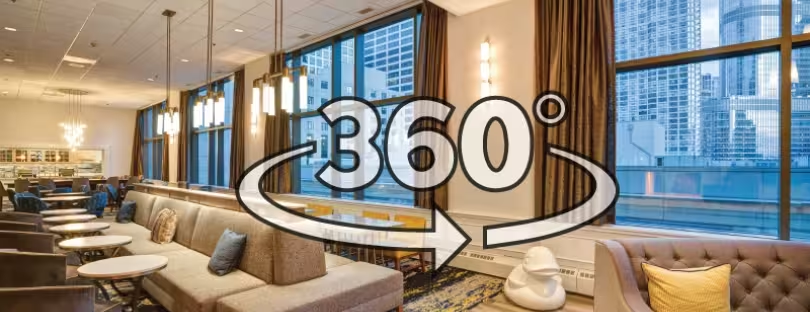
Augmented reality and virtual reality are changing how luxury travel decisions are made, especially when bookings involve five- or six-figure budgets. Instead of relying on staged photos and polished descriptions, travelers can now explore suites, villas, yachts, and even private islands virtually before confirming a reservation.
Virtual walkthroughs offer a level of transparency that builds trust. Guests can understand layout, privacy, views, and scale in a way static images simply cannot provide. This is particularly valuable for ultra-luxury resorts, branded residences, and long-stay properties, where expectations are high and disappointment is expensive.
Once on site, AR tools extend the experience rather than replace human interaction. Cultural overlays bring historical sites to life. Art collections inside hotels can be explored through interactive storytelling. Destination guides become dynamic, adapting to location and time rather than pushing static itineraries.
For travelers who value informed decision-making, these technologies reduce uncertainty and elevate confidence without removing the magic of discovery.
Digital concierges that actually feel helpful
AI-powered concierge systems are now standard across many luxury properties, but the difference lies in how they are positioned. In premium hospitality, technology does not replace staff. It amplifies them.
Virtual concierges handle immediate requests such as reservations, spa availability, transport coordination, or local recommendations. Over time, they learn from interactions and refine their suggestions, becoming faster and more precise with each stay.
What matters is tone and timing. The best systems feel conversational, never robotic. They know when to suggest and when to stay quiet. They also know when to escalate to a human concierge for complex or emotionally sensitive requests.
For guests, this creates a sense of constant availability without pressure. For hotels, it allows staff to focus on moments that truly require human judgment and empathy.


One defining characteristic of successful luxury technology is invisibility. Guests do not want to feel like they are navigating a system. They want to feel like everything simply works.
From mobile check-in that actually saves time to room controls that respond intuitively, the best implementations disappear into the background. When technology becomes noticeable, it is usually because something has gone wrong.
This philosophy separates true luxury innovation from gimmicks. Touchscreens and apps alone do not impress experienced travelers. What impresses them is continuity. A stay that feels coherent across devices, staff interactions, and physical spaces.
Hotels that understand this are investing less in flashy features and more in integration. Systems talk to each other. Guest profiles remain consistent. Preferences follow the traveler across properties and even continents.
A competitive landscape shaped by trust
Compared to mass-market platforms and tech-first hospitality startups, established luxury brands hold a unique advantage. They already own the relationship with the guest. Technology simply deepens it.
At the same time, new players are pushing innovation faster, forcing traditional groups to modernize or risk irrelevance. Boutique tech-enabled resorts, branded residences, and experiential travel companies are setting new expectations around flexibility and personalization.
Industry research from sources such as Skift, McKinsey, and Deloitte consistently points to the same conclusion. High-net-worth travelers value seamless digital experiences as much as physical comfort, and they are willing to pay a premium for brands that get it right.
Conclusion: where luxury travel tech is heading
Luxury travel is no longer about adding technology for the sake of innovation. It is about using it selectively to remove friction, deepen emotional engagement, and respect the intelligence of the guest.
Compared to mass tourism platforms that prioritize scale and automation, the luxury segment is moving toward something more nuanced. Intelligent systems that adapt quietly. Personalization that evolves rather than locks guests into profiles. Digital tools that support human services instead of replacing it.
The brands leading this shift are not necessarily the most experimental, but the most disciplined. They understand that trust, privacy, and relevance matter more than novelty. As AI, AR, and data-driven personalization mature, the gap between luxury hospitality done well and done poorly will widen quickly.
For travelers, this means fewer generic stays and more experiences that genuinely feel designed for them. For the industry, it means that the future of luxury will not be defined by how advanced the technology is, but by how thoughtfully it is used.