How eSIM Turned Connectivity Into Software
For most of the mobile era, connectivity was something physical.
You bought a plastic SIM card, inserted it into your phone, and that tiny chip represented your identity on the mobile network. If you wanted to change operators, you swapped the card. If you traveled abroad, you bought another one. Connectivity was literally something you could hold in your hand.
That model defined telecom for more than two decades.
But today that logic is quietly disappearing. What used to be hardware is turning into software. And the transition from SIM cards to eSIM is not just a convenience upgrade. It is a structural change in how connectivity is built, delivered, and managed.
The telecom industry is slowly moving from plastic chips to programmable connectivity.
And that shift is reshaping everything.
The plastic SIM era
To understand why eSIM matters, it helps to remember how traditional SIM cards worked.
A SIM card contains the secure identity that allows a device to authenticate with a mobile network. This identity includes the IMSI number and cryptographic keys that prove the subscriber belongs on the network. For decades, that identity lived on a removable plastic card.
The system worked well for a world built around national telecom operators.
You bought a SIM in a store.
You inserted it into your device.
Your phone is connected to that operator’s network.
If you changed operators, you changed the card. If you traveled internationally, you bought another SIM.
The entire ecosystem depended on logistics. Operators had to manufacture, distribute, and manage millions of plastic cards. Retail channels became an essential part of telecom distribution.
But once smartphones and global travel became normal, the limitations of this model started to show.
The moment connectivity became digital
eSIM changed one fundamental rule.
Instead of inserting a SIM card, the subscriber profile can now be downloaded to a chip embedded inside the device. This chip, called eUICC, can store multiple operator profiles and switch between them digitally.
The technology behind this system is called Remote SIM Provisioning. It allows operators to securely install and activate SIM profiles over the air.
In practical terms, the user experience becomes dramatically simpler.
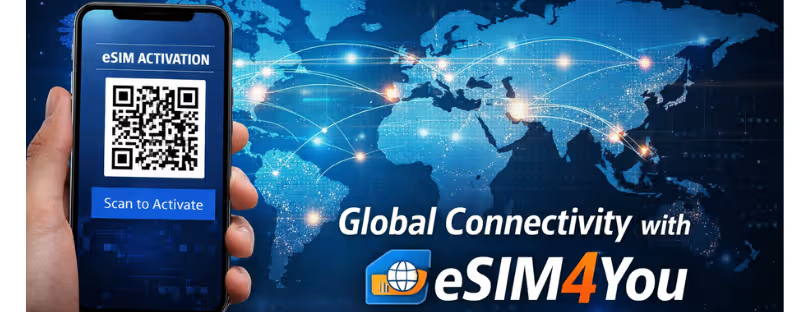
You scan a QR code.
The profile downloads.
Your device connects.
No store visit.
No plastic card.
No shipping.
The SIM card stops being a physical object and becomes a piece of software.
That change might sound small, but it unlocks something much bigger.
From digital SIM to programmable telecom
Once connectivity becomes digital, it can be controlled by software.
And once software controls connectivity, telecom starts to behave like a platform rather than a static service.
This is where the industry shift becomes interesting.
Instead of selling only data bundles, companies can start exposing connectivity through APIs and digital platforms. Connectivity can be activated, modified, and managed programmatically.
An app can automatically activate a plan when you land in a new country.
A device can switch networks without the user doing anything.
A platform can monitor usage in real time and adjust plans dynamically.
This is something the traditional SIM world could never support. Physical cards were static. Software profiles are dynamic.
Connectivity becomes programmable infrastructure.
Travel eSIM companies as software telecom
The travel eSIM sector is one of the first places where this shift is visible.
Unlike traditional mobile operators, most travel eSIM companies do not own network infrastructure. Instead, they build digital platforms that sit on top of telecom networks.
Their job is orchestration.
They aggregate network agreements.
They manage eSIM provisioning platforms.
They deliver connectivity through apps.
From the user’s perspective, the experience feels completely digital. Connectivity becomes something you install inside an app rather than something you buy in a telecom shop.
This architecture is one reason the travel eSIM market has grown so quickly.
Companies can launch globally without building physical infrastructure.
Connectivity becomes software.
Where Yesim fits into this shift
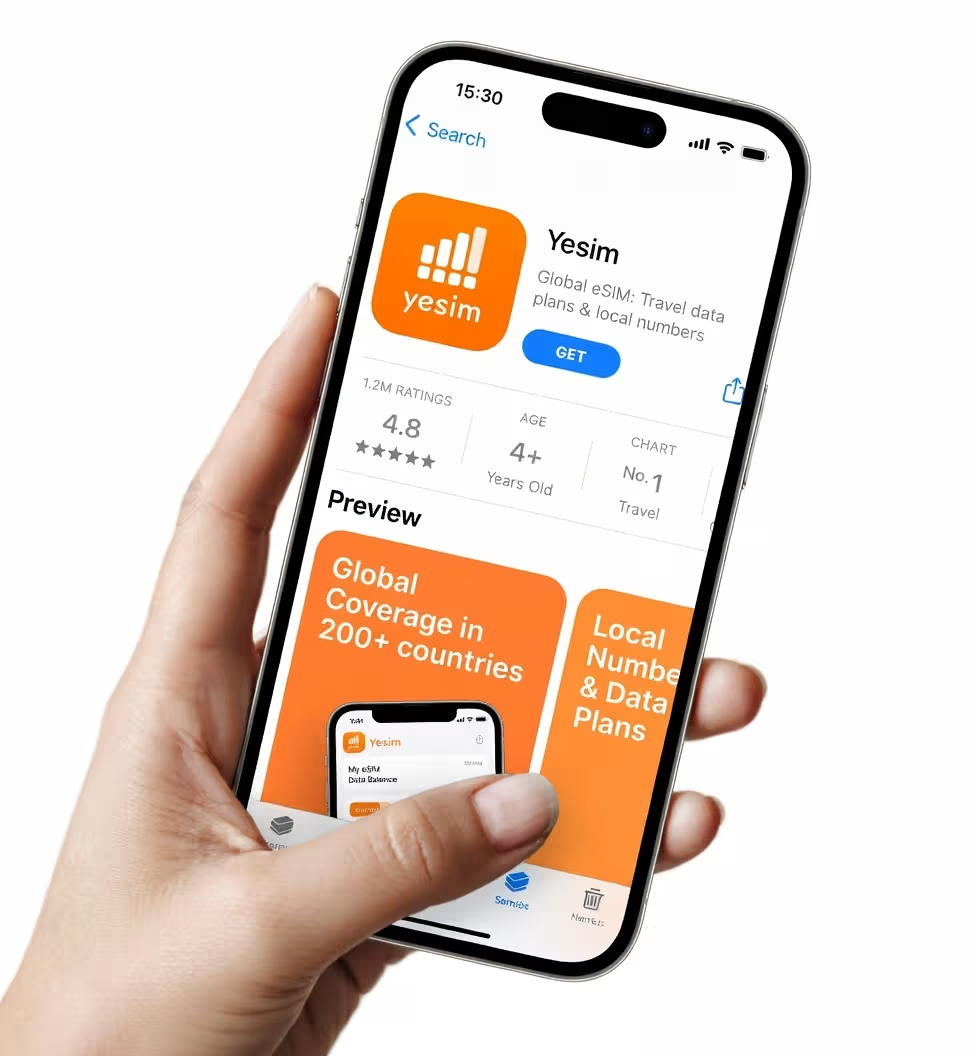
At first glance, Yesim looks like many travel eSIM apps. You open the platform, choose a destination, and buy a data package.
But the underlying logic is closer to programmable telecom.
Users install a digital SIM profile and manage connectivity directly inside the app. Plans can be activated instantly, usage is monitored in real time, and data packages can be added without touching the device hardware.
The entire experience is controlled by software.
Even features like Yesim’s Unlimited Day Pass depend on this digital architecture. Instead of relying on static bundles, the platform can dynamically manage data access across partner networks.
In other words, the product is not just connectivity.
The product is a connectivity platform.
That distinction matters because it reflects a broader transformation happening across telecom.

The industry is moving toward software connectivity
The shift toward software-driven connectivity is not limited to travel eSIM providers.
Across the telecom ecosystem, companies are experimenting with digital provisioning, embedded connectivity, and programmable telecom services.
Device manufacturers are shipping smartphones, tablets, and laptops with eSIM enabled by default. Car manufacturers are embedding connectivity directly into vehicles. IoT devices are increasingly managed through remote provisioning platforms.
The GSMA, which develops global telecom standards, designed the eSIM architecture specifically to support this future. Remote SIM provisioning allows operators to securely deliver and manage SIM profiles across devices worldwide without requiring physical distribution.
What started as a convenience feature is becoming a new infrastructure layer.
Connectivity is turning into software.
The next stage: invisible connectivity
If the trajectory continues, the next phase of telecom may look very different from today.
Users may stop thinking about SIM cards entirely.
Connectivity could become something that simply exists inside digital services. Travel platforms might bundle mobile data with flight bookings. Cars might activate connectivity automatically when crossing borders. Devices could dynamically choose the best available network without user input.
The network infrastructure will still exist. Towers, spectrum, and operators will remain essential.
But the user interface will move into software platforms.
Connectivity becomes invisible.
What this means for the travel connectivity market
The travel sector is a natural testing ground for this transformation.
International travelers constantly cross network boundaries. They need connectivity that activates instantly and works across multiple countries.
Traditional telecom models were not designed for that.
Travel eSIM providers filled the gap by building digital platforms that treat connectivity as a software service rather than a telecom contract.
Companies like Yesim, Airalo, Nomad, and others are effectively building new distribution layers for global connectivity.
The competition is no longer about who owns the most towers.
It is about who builds the best connectivity platform.
Conclusion
The telecom industry spent decades designing systems around plastic SIM cards.
That era is ending.
eSIM technology turned the subscriber identity into a downloadable software profile, enabling remote provisioning and digital connectivity management. What once required physical distribution can now happen instantly through apps and platforms.
This shift is quietly transforming telecom from a hardware-driven industry into a software-driven one.
Travel eSIM providers were among the first to build products around this new architecture. Platforms like Yesim demonstrate how connectivity can be delivered, managed, and monetized through software rather than physical infrastructure.
But the bigger change is still unfolding.
As APIs, embedded connectivity, and digital provisioning mature, mobile networks will increasingly behave like programmable infrastructure. Connectivity will move deeper into platforms, devices, and services, becoming a background layer that users rarely think about.
The real story of eSIM is not about replacing a plastic card.
It is about the moment telecom started behaving like software.