Delay eSIM Activation? Yesim Lets You Decide
If you’ve ever bought a travel eSIM too early and worried about “wasting days” before your trip even starts, you’re not alone. It’s one of the most common frustrations in the travel connectivity space.
The good news is that this is exactly where providers like Yesim are starting to differentiate. Instead of forcing you into rigid activation rules, they’re building flexibility directly into the buying experience.
Let’s break down how delayed activation actually works, and why it matters more than most travelers realize.
Why activation timing matters more than you think
Traditional roaming and even many eSIM providers still follow a simple rule: your plan starts the moment you install or purchase it. That sounds fine until you realize what it means in practice.
You land at your destination, turn on your phone, and suddenly your plan is already halfway used because you activated it days earlier. Or worse, you buy it in advance and lose validity before your trip even begins.
This is where activation control becomes a real value driver. Not just convenience, but cost efficiency.
How Yesim handles delayed activation
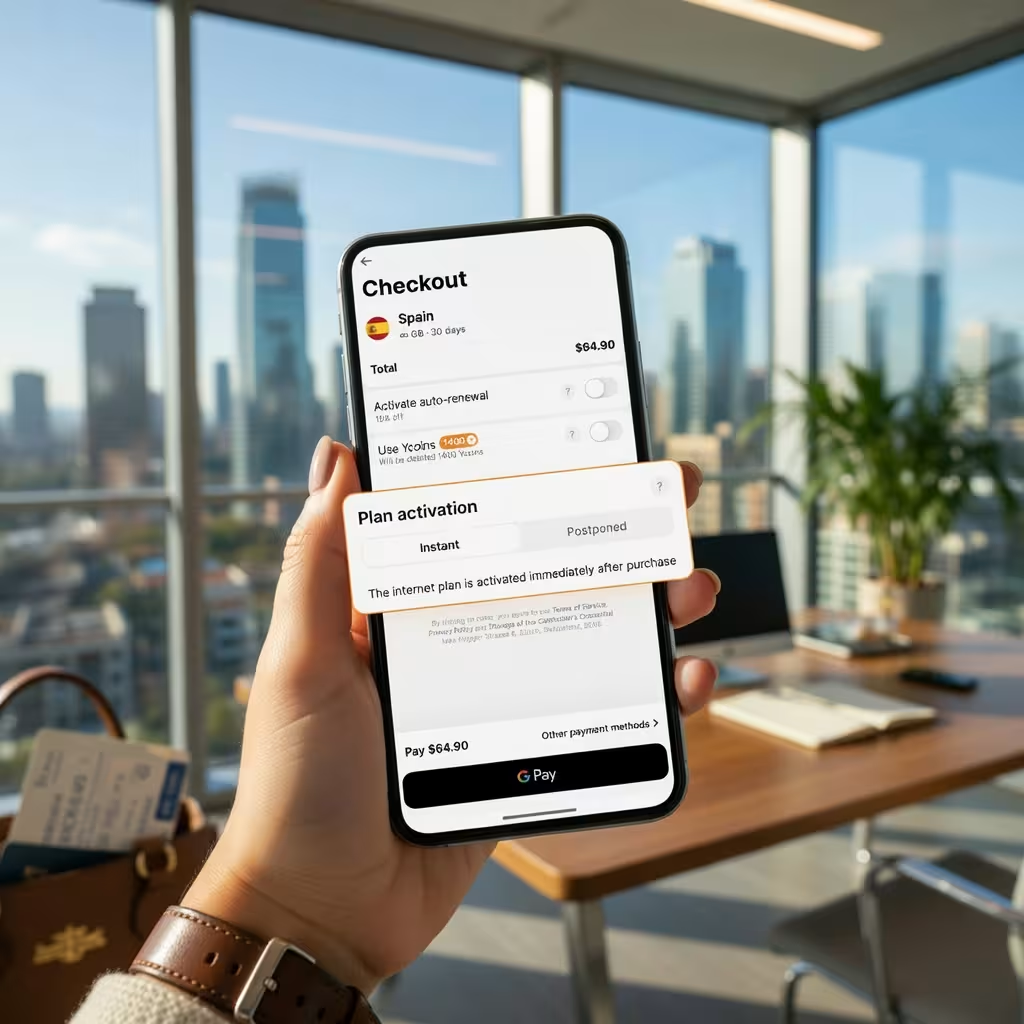
With Yesim, activation isn’t automatic unless you want it to be. During checkout, you get a clear choice:
- Activate instantly
- Or postpone activation
If you select the postponed option, your plan stays inactive until you decide to turn it on. And here’s the key detail that makes a difference: you have up to 365 days to activate it.
That’s not a small feature. It completely changes how you plan connectivity.
You can buy your eSIM weeks or even months in advance, lock in pricing or promotions, and activate only when your trip actually starts.
How to activate later (and when to do it)
Once you’ve chosen delayed activation, everything is managed inside the Yesim app. When you’re ready, you simply activate the plan manually and install the eSIM on your device.
The recommended timing is straightforward:
Activate and install your eSIM one to two days before departure.
This gives you enough time to:
- Make sure everything is working
- Avoid last-minute airport stress
- Fix any issues while still on Wi-Fi
It’s a small step, but it removes a lot of uncertainty from the travel experience.
One important limitation to keep in mind: you can only have one delayed plan at a time. That means you need to plan ahead if you’re stacking multiple trips.
Not just activation — the bigger Yesim ecosystem
Delayed activation is just one piece of the puzzle. What makes it more interesting is how it fits into Yesim’s broader product structure.
Instead of a one-size-fits-all approach, they’ve built multiple plan types depending on how you travel.
Unlimited Day Plans (for flexible usage)
This is one of the more unique models on the market.
You don’t buy a fixed data package. You buy days. Each day gives you unlimited data for 24 hours, starting from the moment you connect.
You can:
- Buy multiple days in advance
- Use them only when needed
- Keep them valid for 365 days
This works especially well for:
- Short trips
- Business travel bursts
- Weekend usage
It’s essentially “pay when you actually use connectivity,” not when you buy it.
Global Packages (for predictable travel)
If your travel is more structured, Yesim offers global prepaid packages:
- Global Package: 80+ countries, ideal for standard trips
- Global Plus Package: 140+ countries, designed for multi-stop or business travel
These plans focus on clarity. No hidden roaming charges, no surprises, just fixed pricing across regions.
Pay & Fly (for usage-based control)
For travelers who don’t want to commit to bundles, there’s Pay & Fly.
- Coverage in 170+ countries
- Pay only for what you use
- Provider-level pricing
This is closer to a telecom-native model, where usage defines cost instead of preloaded packages.
What makes this approach different
Most eSIM providers still optimize for simplicity. Yesim is moving toward something closer to infrastructure logic.
Instead of asking “what’s the cheapest plan,” they’re asking:
How do you actually use connectivity when you travel?
That’s why features like delayed activation, day-based usage, and flexible billing models exist together.
It’s also supported by a strong technical layer:
- Access to 800+ operators worldwide
- Automatic switching to the best available network (including 5G when possible)
- One eSIM for 200+ destinations
- 1-click installation
- 24/7 support with fast response times
- Hotspot support for multi-device usage
And increasingly, value-added services like VPN are being layered on top.
A small feature with big implications
At first glance, delayed activation might seem like a minor checkbox during checkout. But it actually reflects a broader shift in how travel connectivity is evolving.
We’re moving away from rigid telecom rules toward flexible, user-controlled models.
In that context, giving users 365 days to activate a plan isn’t just a convenience feature. It’s a signal.
It says: connectivity should adapt to your trip, not the other way around.
Timing your purchase smartly
If you’re planning to use Yesim, the best strategy is simple:
Buy early. Activate later.
This allows you to:
- Secure current pricing
- Take advantage of promotions
- Avoid last-minute decisions
For example, Yesim is currently offering a seasonal deal:
EGGSTRA15
Conclusion
Delayed activation is one of those features that quietly solves a real problem. No wasted days, no rushed setup, no guessing when your plan should start.
But more importantly, it reflects where the eSIM market is heading.
Flexibility is becoming the real differentiator. Not just in pricing, but in how plans are structured, activated, and used.
Yesim is clearly leaning into that shift. And if you travel even semi-regularly, that kind of control over your connectivity is no longer a nice-to-have.
It’s becoming essential.
For more on Yesim’s plans and how they’re building toward that future, visit https://yesim.app/.