Airbnb Adds Private Transfers in 125+ Cities
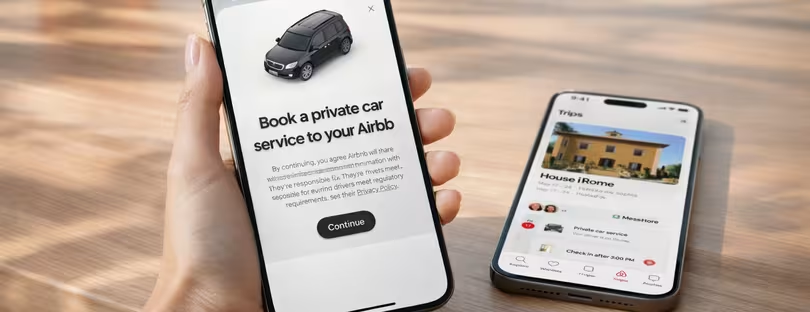
Airbnb is quietly taking another step toward becoming more than just a place to book accommodation. The company has partnered with Welcome Pickups to introduce private car transfers directly inside its app, giving travelers the ability to arrange transport from the moment they land.
At first glance, this might sound like a simple add-on. In reality, it signals something much bigger: Airbnb is steadily building a fully integrated travel experience, where the guest journey starts long before check-in and continues well beyond it.
The new service is already available in more than 125 cities across Asia, Europe, and Latin America, and it allows guests to pre-book a private ride between their accommodation and key transport hubs like airports or train stations. No third-party apps. No last-minute scrambling. Everything happens within the Airbnb ecosystem.
From Stay Platform to Travel Platform
This move didn’t come out of nowhere.
Back in May 2025, Airbnb introduced its “Services” category, expanding beyond listings into experiences that enhance the stay itself. The initial rollout included offerings like private chefs, fitness sessions, and spa treatments. Now, transportation is entering the mix.
And that’s a logical next step.
Transportation has always been one of the most stressful parts of travel. Flights are delayed. Taxi availability is unpredictable. Ride-hailing apps vary by market. Airbnb is positioning itself as the layer that removes that friction.
As Dave Stephenson, Airbnb’s chief business officer, put it, the goal is simple: reduce the hassle of arriving in a new city.
But the strategic intent is more ambitious. Airbnb doesn’t just want to host your stay. It wants to own the entire travel flow.
Why Transfers Matter More Than They Seem
Airport transfers might sound like a commodity product, but they play a critical role in shaping the first impression of a trip.
That first 30–60 minutes after landing is where travel anxiety peaks. You’re navigating a new environment, often tired, sometimes dealing with language barriers or connectivity issues.
By embedding transfers directly into the booking journey, Airbnb is solving a very real problem: uncertainty at arrival.
This is where Welcome Pickups comes in. The company has built its reputation around reliable, pre-arranged transfers with local drivers and a personalized meet-and-greet experience. It’s not just about getting from A to B, but about removing friction at a critical moment.
For Airbnb, that’s exactly the kind of partner that fits into its broader “experience-first” strategy.
The Super-App Play Is Becoming Obvious
If you zoom out, this isn’t just about transfers. It’s about platform consolidation.
Airbnb is increasingly moving toward a model that looks closer to a travel super app. Think:
- Book your accommodation
- Add services (chef, spa, fitness)
- Arrange your airport transfer
- Potentially layer in local experiences
All within one interface.
This approach mirrors what we’ve already seen from players like Booking.com, which has spent years bundling flights, hotels, taxis, and attractions into a single flow. Meanwhile, Uber has expanded beyond rides into travel planning features and even executive transport through partnerships and acquisitions.
The difference is that Airbnb is doing it from a hospitality-first angle. It owns the emotional core of the trip, the “stay”, and is now building outward from there.

What does this mean for Travelers?
From a user perspective, the benefits are obvious.
You book a stay, and instead of juggling multiple apps or searching for local transport options, you’re offered a ready-made solution inside the same environment.
That reduces:
- Decision fatigue
- Risk of unreliable providers
- Time spent researching
It also creates a more predictable experience. You know who’s picking you up, when, and at what cost.
For international travelers, especially those relying on eSIM connectivity or dealing with roaming constraints, this matters even more. The less you need to rely on real-time connectivity at arrival, the smoother the experience becomes.
What does this mean for the Industry?
This is where things get interesting.
Airbnb’s move into transportation puts additional pressure on both ride-hailing apps and traditional travel intermediaries. If users start booking transfers directly at the point of accommodation purchase, platforms like Uber or local taxi apps risk losing that first-touch interaction with the traveler.
It also challenges airport transfer marketplaces and smaller aggregators that depend heavily on direct user acquisition.
At the same time, it reinforces a broader industry trend: travel platforms are no longer competing on individual services, but on ecosystem completeness.
According to industry estimates from organizations like the World Travel & Tourism Council and Phocuswright, travelers increasingly prefer bundled and simplified booking journeys. The direction is clear: fewer apps, more integrated experiences.
The Bigger Picture: Travel Is Becoming Infrastructure
What Airbnb is building starts to resemble something closer to infrastructure than a marketplace.
Instead of being a place where you browse listings, it becomes the layer that organizes your entire trip:
- Accommodation
- Arrival logistics
- In-destination services
And potentially more in the near future.
We’ve already seen similar shifts in fintech, mobility, and telecom. Platforms that control the user journey tend to expand horizontally, absorbing adjacent services until they become the default interface.
Airbnb is now firmly on that path.
Conclusion
This partnership with Welcome Pickups may look like a small product update, but it reflects a much larger shift in how travel is being packaged and sold.
Airbnb is no longer just competing with accommodation platforms. It’s positioning itself against full-stack travel ecosystems like Booking.com, while indirectly challenging mobility players like Uber at key moments in the journey.
The strategic question is not whether Airbnb can offer transfers. It’s whether it can become the primary interface for the entire trip.
Right now, the direction suggests yes.
And if that happens, the winners in travel won’t just be the companies with the best individual services. They’ll be the ones who control the flow between them.
That’s where Airbnb is heading.