The summer of 2026 is shaping up to be a once-in-a-lifetime experience
The summer of 2026 is shaping up to be a once-in-a-lifetime experience for football fans and travellers alike. The FIFA World Cup, hosted across the United States, Canada, and Mexico from 11 June to 19 July, will be the biggest tournament ever held. With an expanded lineup of 48 teams and 16 host cities, it will set new standards not only in global sport but also in travel, cultural exchange, and international celebration. The scale alone makes this edition unprecedented, but it’s the travel experience around it that truly sets 2026 apart.
For travellers, this World Cup offers more than football. It’s an invitation to explore an entire continent, to move between countries with wildly different histories and landscapes, and to share moments with fans from around the world. Whether you’re chasing the matches or simply absorbing the energy in host cities, the journey becomes part of the story.
Why this tournament is unique for travellers
No World Cup has ever spanned three nations like this. The sheer geographical spread gives fans a level of choice that previous tournaments simply couldn’t. You might begin your trip surrounded by Mexican culture and cuisine, fly north to the West Coast for sun-soaked American stadium nights, and end your adventure in the skyscraper-lined energy of New York City. Every host location brings its own rhythm, architecture, food, and atmosphere.
The expanded 48-team format also means more games and more unpredictable storylines. There will be upsets, breakout stars, emotional wins, and heartbreaking exits. For travelling supporters, it’s an ideal setup: more matches to attend, more chances to follow your team further, and more time to explore places you might not otherwise visit. It becomes part sporting pilgrimage, part road trip of a lifetime.
Planning your journey: where to go and when
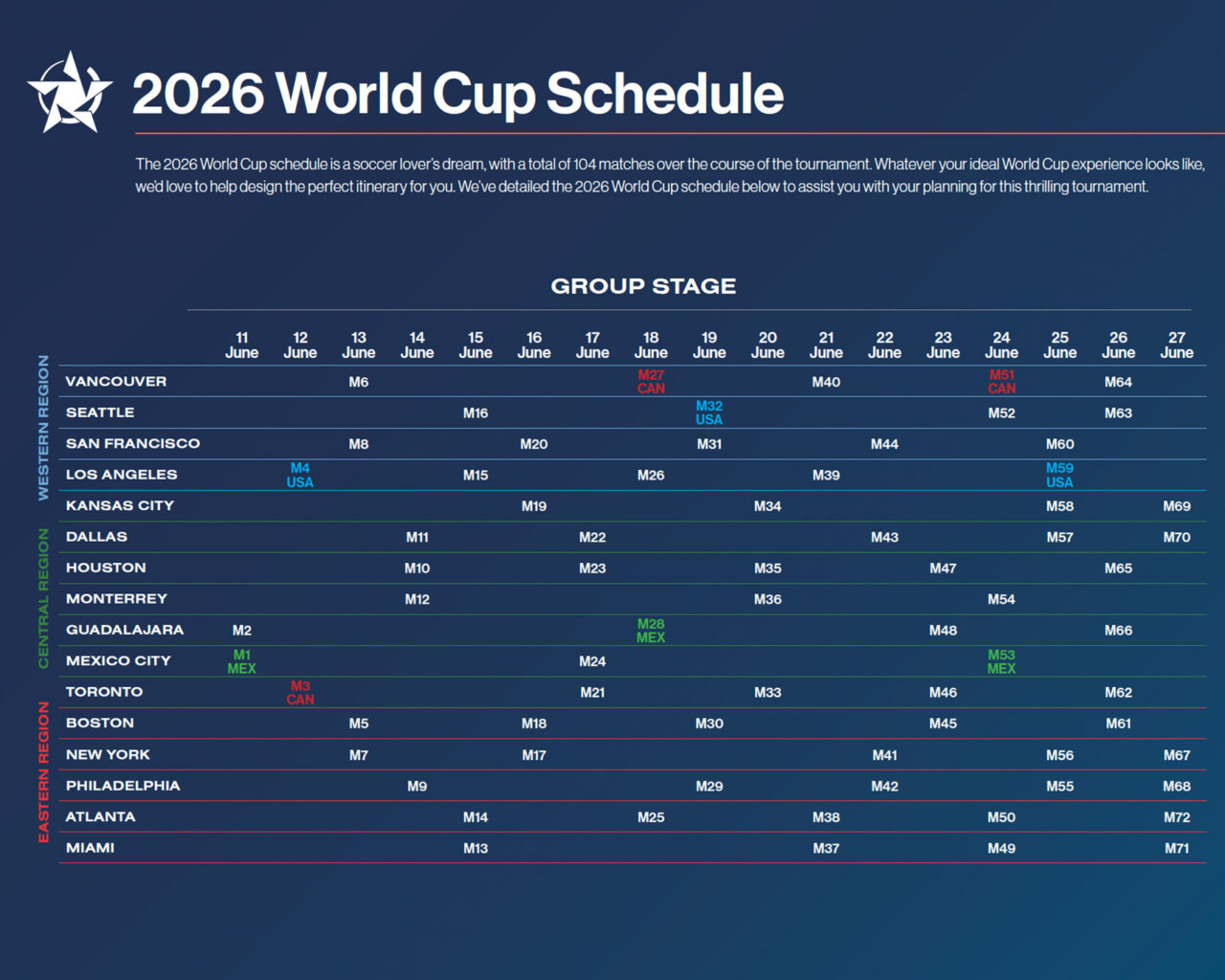
Because the 2026 World Cup spans an entire continent, most fans won’t be jumping from Vancouver to Miami to Guadalajara on a whim. The smarter approach is to build your trip around regional clusters, since the group-stage schedule keeps matches relatively concentrated.
The group stage takes place in June, spreading a festival-like atmosphere across all host cities. The knockout matches in July raise the intensity, but June is perfect for travellers who want to explore while also catching multiple games.
Western Region: Vancouver, Seattle, San Francisco, Los Angeles If you’re starting in the west, stick to the Pacific corridor. These cities are well connected, the stadiums host several early matches, and travel times are manageable. You can easily combine Vancouver–Seattle, or San Francisco–Los Angeles, without losing days in transit.
Central Region: Kansas City, Dallas, Houston, Monterrey, Guadalajara, Mexico City This is the most geographically balanced zone and perfect for travellers who want a mix of American and Mexican host cities. Mexico City’s opener makes it a major early stop, and cities like Dallas and Houston host multiple games in quick succession. Monterrey and Guadalajara are close enough for comfortable regional travel.
Eastern Region: Toronto, Boston, New York/New Jersey, Philadelphia, Atlanta, Miami This region will be incredibly active, especially toward the knockout rounds. If your goal is to follow the later stages or attend the final, basing yourself in the Northeast (NY/Philly/Boston/Toronto) makes the most sense. These cities are connected by quick flights and efficient rail in the U.S. northeast.
Travel becomes far more enjoyable and practical when you choose one region and treat it as your World Cup hub. Then, if your team advances or your plans shift, you can jump to another zone with a single flight—not a cross-continent scramble.
Each leg of this journey comes with its own cultural treasures, from architectural landmarks to neighborhood celebrations and late-night fan gatherings.
Essential tips for travelling fans
Book early because demand will be enormous for flights, hotels, and match tickets. Planning months ahead gives you better prices and better proximity to stadiums. Stay flexible in case your team changes location unexpectedly; one of the joys of this World Cup is the spontaneity of crossing borders to follow a match.
Check border requirements thoroughly. Three host countries mean three sets of rules, so make sure your passport validity, visa permissions, and travel insurance are fully aligned with your itinerary. Immerse yourself in fan zones, which will offer huge screens, concerts, and local flavour even if you don’t have match tickets. On rest days, resist the urge to overschedule. Some of the most memorable experiences will happen naturally as you explore new neighborhoods, cafes, beaches, or museums.
Match atmosphere: football on a grand scale
Expect stadiums operating at full intensity. Many U.S. venues were built for American football and can host some of the largest crowds in sports. The mix of state-of-the-art arenas and iconic grounds ensures every matchday will feel like an event in itself. Street parties, fan parades, and live music will extend the celebration well beyond the stadium walls. Travellers who have attended past World Cups often say that the magic lies in the energy surrounding the matches, and this edition will amplify that feeling.
The favourites and the football-betting angle
Speculation about possible winners is already stirring excitement. Analysts point to France, Brazil, England, and Spain as early favourites based on squad depth and recent performances. These teams consistently deliver strong tournament results, and their rosters remain packed with stars.
Football betting adds another dimension, especially for fans who enjoy guessing outcomes, tracking top scorers, or predicting surprise teams. While some supporters follow betting trends closely, it’s important to treat it as a side activity and keep it responsible. The real thrill comes from watching the matches unfold in unpredictable ways—something every World Cup delivers.
Must-see stadiums and city highlights
MetLife Stadium in New York/New Jersey will host the final. Visitors can pair matchdays with museums, skyline views, and ferry rides to the Statue of Liberty. SoFi Stadium in Los Angeles is a futuristic architectural marvel, ideally placed near beaches and entertainment districts. Estadio Azteca in Mexico City is steeped in history, having hosted World Cup finals before, and remains one of the sport’s sacred venues. BC Place in Vancouver offers a scenic, Pacific Northwest backdrop that’s perfect for travellers combining sport with outdoor exploration.
Every host city plans extensive cultural programming, including concerts, themed events, fan villages, and night markets. The World Cup becomes a cultural festival as much as a sporting one.
Budgeting and smart travel
Costs will rise as the tournament approaches, so travellers should prepare carefully. Consider staying outside major city centres where prices might remain more reasonable, especially in areas connected by trains or metro lines. Host cities are expected to strengthen public transport services, offering special passes ideal for fans. Pack for warm weather, secure digital backups of essential documents, and make sure your travel insurance covers multiple countries.
More than just football
Even if your primary motivation is to follow the matches, the real beauty of the 2026 World Cup lies in how it brings people together. Whether it’s sharing a drink with locals in Mexico, joining spontaneous celebrations in Toronto, or singing with thousands of strangers in a New York fan zone, every moment becomes part of a shared human story. For many travellers, these interactions become the memories they carry long after the final match.
Travel Tips Sidebar
Best hotels: Choose properties near metro lines or stadium shuttles for faster movement. In New York, areas around Jersey City offer better access and lower prices. In Los Angeles, downtown hotels near the Metro make stadium travel easier.
Transport: Buy multi-day city passes. Many host cities are preparing special World Cup mobility cards with unlimited travel.
Ticketing: Only use FIFA’s official ticketing and resale platforms to avoid scams.
Food: Mexico offers incredible street eats, the U.S. features strong regional cuisines, and Canada’s cities provide some of the best international dining options in the world. Let food be part of the adventure.
Final thoughts
As the world moves toward 2026, this World Cup is already signalling something bigger than a football tournament. It represents a new era of global travel, where major sporting events double as cultural journeys and multi-country exploration becomes part of the fan experience—not the exception. Other competitions are starting to follow similar models, but none match the sheer scale or diversity this three-nation format offers. Reports from UN Tourism and recent sports industry forecasts suggest that mega-events are increasingly designed to encourage longer trips, deeper cultural immersion, and more flexible movement between host regions. The 2026 edition is set to become the benchmark by which future tournaments are measured.
For travellers, this means one thing: the excitement won’t be limited to what happens on the pitch. The adventure lies in the movement, the people you meet, the food you try, the cities you explore, and the communities that welcome you along the way. The 2026 World Cup will be remembered not only for football but also for how it brought the world together across three countries—and how it inspired millions to see more of them.
Driven by wanderlust and a passion for tech, Sandra is the creative force behind Alertify. Love for exploration and discovery is what sparked the idea for Alertify, a product that likely combines Sandra’s technological expertise with the desire to simplify or enhance travel experiences in some way.