Nostalgia Travel Is Booming in 2026: Rise of Kidcations
Nostalgia is no longer just a feeling. It is fast becoming a travel strategy.
Fresh data suggests that nostalgia-driven travel experiences will be one of the most influential forces shaping how people plan trips in 2026. From campfires and arcade halls to roller skating rinks and treehouse stays, travellers are actively seeking experiences that reconnect them with simpler, emotionally charged moments from childhood.
And the growth is not subtle.
Global Google search data shows searches for “nostalgic travel” have surged by more than 3000 percent in the past 12 months. That kind of spike is rare in travel search behaviour and it signals a shift that goes beyond a passing trend.
This is not about adults acting like children. It is about travellers craving emotional safety, joy, and familiarity in a world that feels increasingly complex.
Nostalgia goes mainstream in travel
What is striking about the current wave of nostalgia-driven travel is how mainstream it has become. According to Bókun, a company owned by Tripadvisor, the industry is now seeing the rise of what it calls “Kidcations”.
These are trips and activities designed to help travellers reconnect with their inner child through playful, curiosity-led experiences. Think less about luxury and more about emotional reward. Less about ticking landmarks and more about shared moments, laughter, and immersion.
Nostalgic travel experiences often revolve around innocence, exploration, creativity, and freedom. In practical terms, this translates into hands-on activities, outdoor play, analogue entertainment, and spaces that encourage people to slow down and engage.
It also aligns perfectly with the broader move away from passive sightseeing toward experience-led travel.
Search data reveals what travellers really want
Search behaviour offers one of the clearest signals of where demand is heading. Over the past year, interest in a wide range of nostalgia-rooted activities has jumped sharply:
Experiences seeing the fastest growth
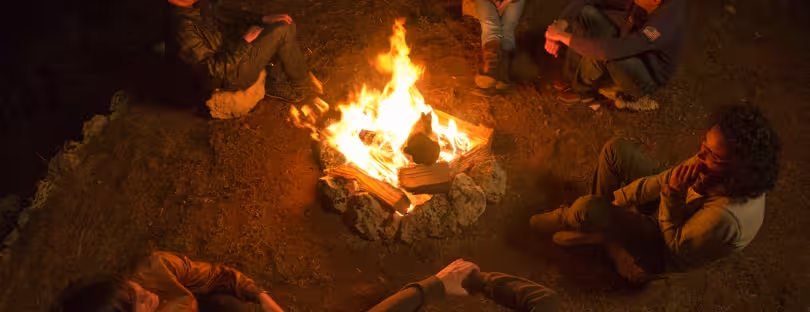
Campfire experiences are up 1100 percent
Roller skating classes have increased by 239 percent
Camping experiences have grown by 129 percent
Arcade experiences are up 111 percent
Theme park experiences have risen by 87 percent
Painting classes have grown by 84 percent
Farm experiences increased by 73 percent
Toy workshops are up 56 percent
Outdoor cinemas increased by 18 percent
Treehouse stays grew by 14 percent
What stands out here is the diversity. These are not niche experiences tied to one destination type or demographic. They cut across nature travel, urban experiences, creative tourism, and family-style accommodation.
The common thread is emotional familiarity.
The emotional well-being connection
Nostalgia-driven travel is not only about fun. It is also increasingly tied to emotional wellbeing.
Worldwide searches for “healing experiences” have grown by more than 200 percent year on year. Travellers are clearly linking travel with recovery, reflection, and mental reset.
In that context, “kidcations” make sense. They combine play with presence. Activities like painting, sitting around a fire, or skating are immersive but low-pressure. They allow adults to disengage from productivity, screens, and constant decision-making.
This is especially relevant for millennial and Gen Z travellers who are now travelling more independently but are also more vocal about burnout, anxiety, and emotional fatigue.
Nostalgia offers comfort without requiring explanation.
Disney adults and the visibility effect
Another factor accelerating the trend is the rise of so-called Disney adults. Google searches for the term have hit a five-year high, with more than 250,000 searches in the past month alone. That represents a 53 percent increase compared to last year.
More importantly, social media has amplified visibility. Content featuring adults enjoying theme parks, retro games, and childhood-inspired experiences performs exceptionally well across TikTok and Instagram.
As a result, nostalgia-driven travel no longer feels niche or embarrassing. It feels validated, aspirational, and socially acceptable.
Searches for “theme park experiences” alone grew by 87 percent in the past year, reinforcing how entertainment-led travel is gaining renewed momentum.

Why the timing makes sense
This surge is not happening in isolation.
Post-pandemic travel behaviour already showed a move toward meaning, flexibility, and emotional value. Rising costs have also pushed travellers to expect more from fewer trips. If people are travelling less frequently, they want those trips to feel memorable and emotionally rich.
Nostalgia delivers that efficiently.
It does not require extreme adventure or luxury spending. It relies on feelings, atmosphere, and participation. That makes it attractive both to travellers and to destinations or operators looking to differentiate without heavy infrastructure investment.
What this means for travel brands and destinations
For the travel industry, nostalgia-driven experiences open up new creative territory.
Destinations do not need to reinvent themselves entirely. They can reframe existing assets. Campsites become storytelling spaces. Museums introduce playful workshops. Hotels experiment with retro design, game rooms, or outdoor cinemas.
Tour and activity providers can also benefit. Experiences that once felt basic or outdated now feel intentional and emotionally relevant.
Importantly, this trend shifts the focus from where you go to how you feel while you are there.
Conclusion: Why nostalgia will shape 2026 travel planning
Nostalgia-driven travel is not competing with wellness tourism, adventure travel, or cultural exploration. It is blending with all of them.
Similar signals are already visible across platforms like Airbnb Experiences, GetYourGuide, and Viator, where hands-on, playful, and emotionally engaging activities continue to outperform traditional tours. Major theme park operators, boutique accommodation providers, and even rural destinations are leaning into storytelling and experiential design rather than pure attraction-based marketing.
What makes “kidcations” particularly powerful is their flexibility. They can be adapted to urban breaks, rural escapes, luxury travel, or budget trips. They resonate across age groups and cultures because nostalgia is universal, even if the memories differ.
Backed by search data from Google and industry insights from platforms like Tripadvisor and Bókun, the message is clear. Travellers are no longer chasing destinations alone. They are chasing feelings.
In 2026, the trips that win will be the ones that help people feel lighter, more connected, and a little more like themselves again.