Ljubljana Named Europe’s Best Creative City Destination for 2026
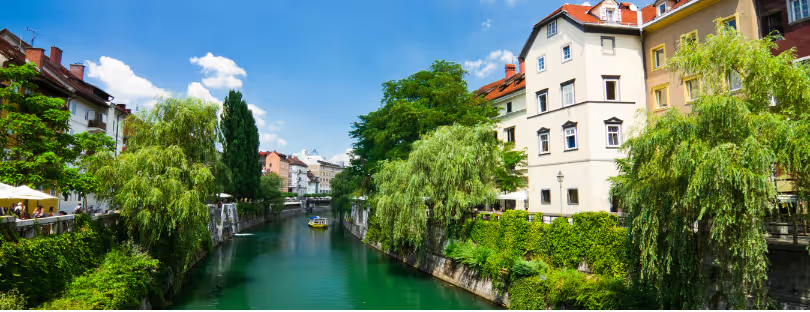
Ljubljana has quietly built a reputation as one of Europe’s most charming and livable capitals. Compact, green, and deeply cultural, the Slovenian capital blends medieval streets, riverside cafés, and a strong creative spirit that shapes everyday life in the city. Now that reputation has been officially recognised.
Ljubljana has been crowned Europe’s Best Creative City Destination for 2026 at the 13th Creative Tourism Awards, beating 223 cities from 28 countries. For many observers in the cultural tourism space, the recognition feels less like a surprise and more like an overdue acknowledgement of what the city has been doing for years.
The award highlights destinations that successfully integrate creativity into tourism experiences, urban development, and cultural identity. In Ljubljana’s case, the jury pointed to something quite distinctive: creativity is not treated as a tourist attraction alone. It is embedded into the city’s identity.
Artists, designers, architects, musicians, filmmakers, digital creators, and craftspeople are all part of Ljubljana’s everyday cultural landscape. That ecosystem shapes not only the visitor experience but also the quality of life for residents.
Creative Tourism Moves From Niche to Strategy
Creative tourism is a fast-growing segment within the travel industry. Instead of simply visiting landmarks, travelers increasingly want to participate in local culture through workshops, craft experiences, art events, and community activities.
According to UN Tourism and the Creative Tourism Network, creative tourism has expanded rapidly in the past decade as travelers seek deeper, more authentic experiences.
Ljubljana has leaned into this trend earlier than many other European cities. The city’s tourism strategy focuses on participation rather than passive sightseeing.
Visitors are encouraged to cook, craft, design, paint, perform, or collaborate with local artists instead of simply observing cultural heritage.
That philosophy is one of the key reasons the international jury highlighted Ljubljana’s model.
Centre Rog and Hands-On Creativity
One of the most visible examples of Ljubljana’s creative tourism strategy is Centre Rog, a major creative hub located in a former bicycle factory along the Ljubljanica river.
Rather than turning the building into a traditional museum, the city transformed it into a public production space for crafts and design.
Visitors can join hands-on workshops in ceramics, woodworking, textile design, metalwork, and other traditional crafts. Local masters share their skills directly with participants inside working studios.
These experiences turn tourists into temporary makers rather than spectators. That shift reflects a broader movement across Europe toward experience-based cultural tourism.
For travelers, the appeal is obvious. Instead of leaving with photos alone, they leave with something they created themselves.
LUV Fest Expands in 2026
Ljubljana’s creative momentum will be even more visible in 2026 as the city expands LUV Fest, one of its most distinctive cultural festivals.
LUV Fest combines art, love, wandering, and urban exploration into a multi-week celebration across the city. The festival transforms streets, squares, and public spaces into stages for artistic expression.
The 2026 programme will include:
- Concerts and live music
- Theatre and opera performances
- Dance shows
- Themed city tours
- Art exhibitions
- Creative workshops
- Social and cultural gatherings
Large-scale art installations are expected throughout the city, effectively turning Ljubljana into an open-air gallery.
Events will take place across multiple districts, encouraging visitors to explore neighborhoods beyond the historic center.
The Rise of Ljubljana’s Cultural Quarters
Another reason Ljubljana stood out in the Creative Tourism Awards is the development of distinct cultural quarters across the city.
There are currently five major creative districts:
- Šiška
- Soteska
- Križevniška
- Tabor
- Moste
Each area has developed its own artistic identity and event calendar. Some focus on contemporary art and galleries, while others highlight performance spaces, street culture, or community creativity.
For visitors, these districts offer something many European capitals struggle to maintain: authentic local culture rather than purely tourist zones.
Walking through these neighborhoods often means encountering pop-up exhibitions, small concerts, design studios, or collaborative art spaces.
This distributed creative ecosystem helps the city avoid the overtourism pressures seen in larger destinations.

A Recognition Many Say Was Overdue
For those familiar with Ljubljana’s cultural scene, the award confirms what many have observed for years.
The city consistently ranks highly in European quality-of-life indexes and sustainability rankings. It was named European Green Capital in 2016, thanks to its pedestrianized center, cycling infrastructure, and environmental policies.
That green philosophy overlaps naturally with creative tourism. Smaller crowds, walkable streets, and public spaces make the city an ideal canvas for art, festivals, and community events.
Simeon Gönc from Visit Ljubljana said, “ increase the visibility and sustainability of creative tourism in Ljubljana, and create culturally rich experiences for visitors.”
Europe’s Growing Competition in Creative Tourism
Ljubljana is not the only European city investing heavily in creativity as a tourism driver.
Cities like Valencia, Rotterdam, Lisbon, and Berlin have also positioned themselves as creative destinations. Many have launched maker districts, cultural incubators, or large urban festivals designed to attract creative travelers.
However, Ljubljana’s advantage lies in its scale and integration.
Larger cities often struggle to integrate creativity into everyday urban life. Festivals may be impressive but remain isolated events.
Ljubljana operates differently. Creativity flows through daily life, from small craft workshops to experimental design studios and community art projects.
That ecosystem approach is increasingly seen as the future of cultural tourism.
Tourism Shifts Toward Participation
Global tourism trends suggest that cities embracing creative participation will become more competitive in the coming years.
According to the World Tourism Organization, travelers are increasingly prioritizing experiential travel, particularly among younger and digitally connected audiences.
Rather than checking landmarks off a list, many travelers now seek learning experiences, cultural interaction, and personal engagement with destinations.
Cities able to offer these immersive experiences stand out in a crowded tourism market.
Ljubljana’s recognition reflects that shift.
Conclusion
Ljubljana’s win at the Creative Tourism Awards highlights an important transformation happening across Europe’s travel industry.
Tourism is moving beyond monuments and museums toward participation, creativity, and cultural interaction. Cities that treat creativity as infrastructure rather than entertainment are gaining an advantage.
Ljubljana’s approach offers a compelling model. Instead of building attractions solely for visitors, the city invested in spaces, communities, and creative networks that enrich everyday urban life. Tourism then becomes a natural extension of that ecosystem.
As destinations across Europe rethink their tourism strategies in the post-pandemic era, Ljubljana’s success may signal a broader shift. The cities that thrive will not necessarily be the largest or most famous. They will be the ones where culture is not staged for tourists but genuinely lived.
In that sense, Ljubljana’s recognition is not just an award. It is a glimpse into where urban tourism may be heading next.