KLM Rolls Out Free WiFi on European Flights
When KLM quietly confirmed that free WiFi would start rolling out on its European flights from January 22, it marked a bigger shift than it might first appear. Complimentary internet on short haul routes is still surprisingly rare in Europe, despite being one of the most consistently requested features by passengers. With this move, KLM is stepping into a space many airlines have hesitated to occupy.
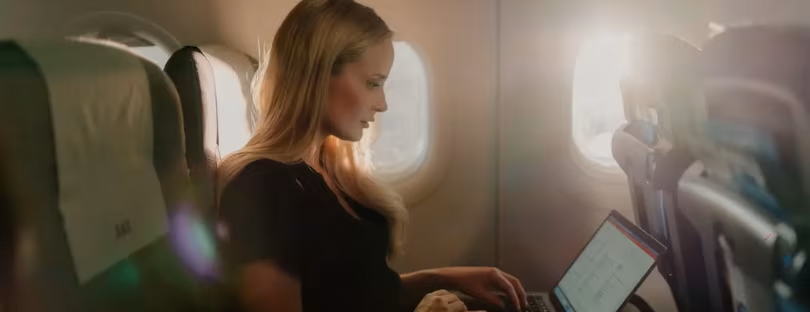
From now on, passengers on selected European flights can stay online from gate to gate. That means browsing the web, sending emails, streaming music, playing games, or watching movies and TV series on personal devices, without pulling out a credit card mid flight.
A phased rollout with a clear signal
The rollout is gradual, but meaningful. As of launch week, around half of KLM’s European fleet already offers free onboard internet. Over the coming years, WiFi will be installed across all A321neo and Embraer 195-E2 aircraft, as well as part of the Boeing 737-800 fleet.
That detail matters. European short haul flying relies heavily on a small group of aircraft types that operate multiple rotations per day. By targeting these workhorses, KLM is effectively building free connectivity into the backbone of its European network rather than treating it as a niche perk.
It also signals intent. This is not a short term experiment or a limited promotional feature. KLM is positioning free WiFi as a standard part of the onboard experience.
Why free WiFi matters more on short haul
Unlike long haul aircraft, most European planes do not have seatback entertainment screens. Passengers already rely on their phones, tablets, and laptops to work or relax in the air. Without connectivity, that experience is half finished.
Free WiFi changes how time in the air feels. A one hour hop no longer has to be dead time. You can reply to messages, check hotel details, book ground transport, or simply stay entertained without pre downloading content.
After logging in or registering as a Flying Blue member, passengers get unlimited access for the duration of the flight. There are no tiers, no messaging only restrictions, and no pressure to upgrade. KLM says the idea is simple: let travellers decide how they want to use their time.
“We listen carefully to what our passengers value and free internet has been on their wish list for some time,” said Stephanie Putzeist, responsible for customer experience at KLM. “Through this step, we are making travel within Europe more personal and comfortable: everyone can plan their flight in their own way and stay connected. We are delighted to realize this now for our passengers.’’
New aircraft, new expectations
The timing is not accidental. Since August last year, KLM has introduced 12 new A321neo aircraft dedicated exclusively to European routes. These aircraft come with WiFi as standard and refreshed cabin interiors designed for short haul comfort.
More legroom, modern seating, quieter cabins, and now free connectivity all point to a broader rethink of what European flights should feel like. For journeys of one to three hours, small upgrades have outsized impact.
This is especially relevant as competition intensifies on Europe’s busiest routes. Low cost carriers dominate on price. Network airlines increasingly have to win on experience, reliability, and brand trust. Free WiFi fits neatly into that strategy.
 Business travellers notice, leisure travellers remember

For business travellers, uninterrupted connectivity means work continues. Emails go out. Documents get reviewed. Slack messages still land. The flight becomes an extension of the workday rather than a pause.
For leisure travellers, the value is more emotional. Being reachable. Sharing photos. Reassuring family. Streaming something familiar. These details shape how passengers remember an airline long after landing.
Free WiFi used to be associated with premium cabins or long haul business class. That perception is changing fast. On short haul flights, where margins are tight and ticket prices are visible down to the euro, connectivity is becoming a quiet differentiator.
Not every flight yet, but a clear direction
KLM is upfront that not all European flights will offer free WiFi immediately. Coverage depends on aircraft type, and the retrofit process takes time. Still, the direction is clear. New aircraft first, core fleet next, and steady expansion rather than sporadic availability.
That consistency matters. Passengers adapt expectations quickly. Once free WiFi becomes normal on certain routes, the absence becomes noticeable elsewhere.
How KLM compares to the wider market
Across Europe, airlines have taken very different approaches. Some offer messaging only packages. Others charge per flight segment. A few bundle WiFi with higher fare families or elite status.
Outside Europe, the picture is already shifting. Several US carriers now offer free WiFi on domestic routes, often sponsored by telecom partners. In Asia and the Middle East, connectivity is increasingly positioned as standard rather than premium.
European airlines have been slower, partly due to cost, partly due to older fleets. KLM’s move puts pressure on competitors to justify paid models, especially on routes where passengers directly compare experiences.
Industry data from bodies like the International Air Transport Association and aircraft manufacturers consistently shows connectivity ranking among the top passenger priorities, even above food or cabin aesthetics. The trend is not subtle. It is structural.
Conclusion: connectivity is becoming table stakes
KLM’s decision to offer free WiFi on European flights is less about generosity and more about alignment with how people actually travel today. Passengers expect to be online everywhere else. The aircraft cabin is one of the last disconnected spaces.
As newer aircraft enter fleets and satellite connectivity costs continue to fall, free onboard internet is likely to become standard rather than exceptional. Airlines that move early shape expectations. Those that wait may find themselves explaining why a basic digital need still costs extra.
For Alertify readers watching the intersection of travel, technology, and passenger experience, this rollout is a strong signal. European short haul flying is finally catching up with the connected reality travellers already live in.