Corporate Travel Trends: Where Business Trips Cost Most
Corporate travel never truly disappeared. It paused, adapted, and then came back with a slightly different logic. Corporate travel spending
New data from Hickory Global Partners, a global corporate travel consortium, shows just how strong the sector remains. Based on booking data from 2025 across its platform, used by travel agencies, corporate travel departments, and multinational companies, Hickory has identified the most popular and most expensive cities for business travel.
The analysis focuses on Average Daily Rate (ADR) per city. In simple terms, this measures the average hotel cost corporations pay per night when sending employees to conferences, meetings, and business events.
That metric reveals two things at the same time.
First, which cities do companies travel to most often?
Second, where the corporate travel budget stretches the furthest.
The results also support a broader industry trend. Business travel spending globally is expected to reach around €1.7 trillion in 2026, representing an 8 percent increase compared to 2025. Despite economic uncertainty and digital alternatives like video conferencing, companies continue to invest heavily in face-to-face interaction.
And increasingly, they are willing to pay more for the right location.
The most popular U.S. business travel cities
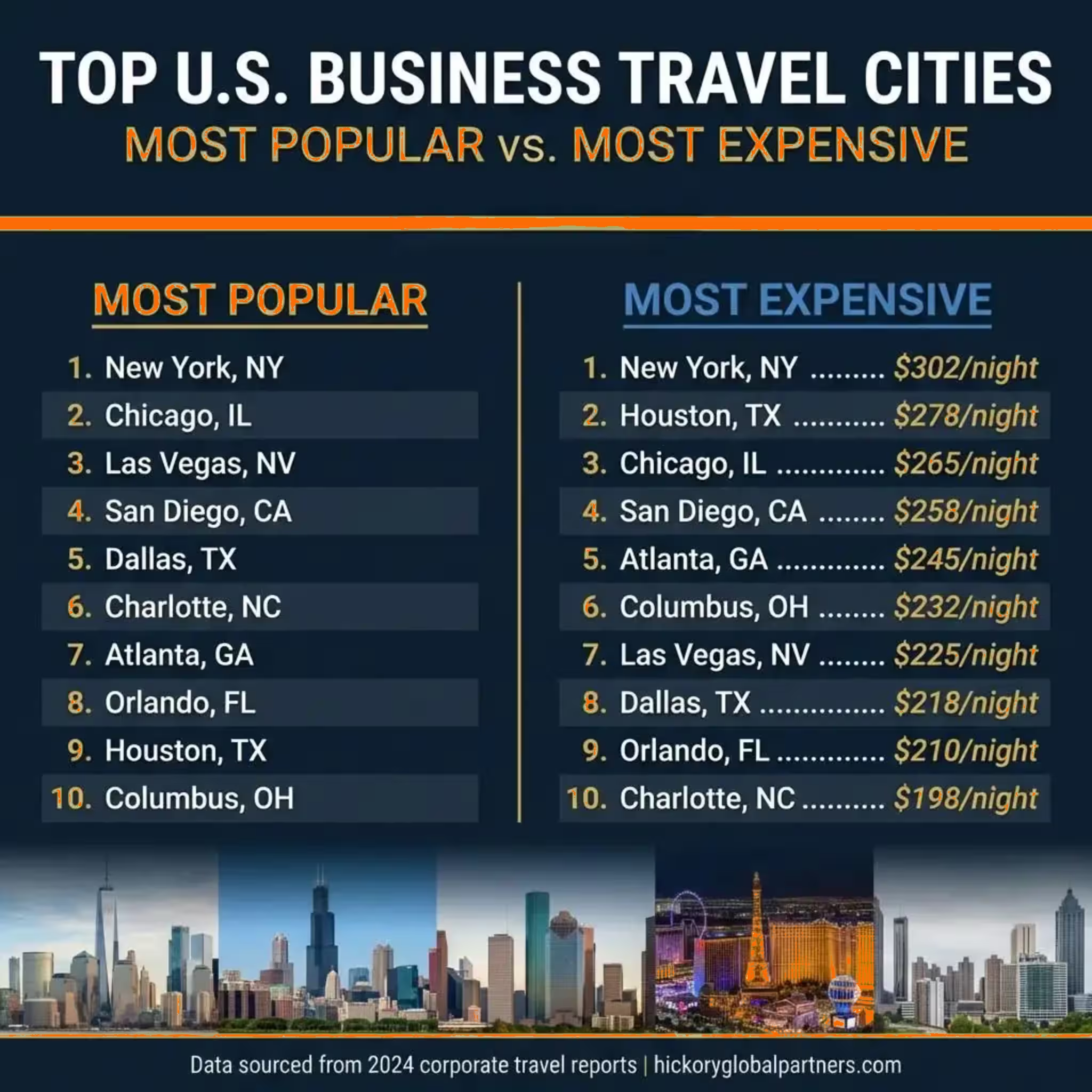
In the United States, the list of top business destinations still revolves around traditional corporate powerhouses.
Cities like New York City, Chicago, Dallas, San Diego, Houston, and Las Vegas dominate corporate bookings according to Hickory’s data.
This is not surprising. These cities combine three ingredients that corporate travel planners care about:
- strong business ecosystems
- large hotel capacity
- major convention and meeting infrastructure
New York and Chicago remain especially dominant. Both cities host headquarters for global companies, financial institutions, and consulting firms while also offering enormous convention spaces and international flight connectivity.
Even when hotel prices rise, demand rarely drops.
For corporations organizing seminars, executive meetings, or industry conferences, these cities offer something difficult to replicate elsewhere: density. Thousands of hotel rooms, meeting venues, and service providers exist within a few square kilometers.
But something else is happening beneath the surface.
The rise of “second cities”
While traditional corporate hubs remain dominant, secondary cities are quietly gaining ground.
Dallas and San Diego are two examples highlighted in the Hickory data. Their Average Daily Rates have increased as more companies choose them for conferences and internal corporate events.
There are several reasons behind this shift.
First, companies increasingly want less congested destinations where logistics are easier and travel experiences feel more relaxed. Large metropolitan centers are efficient, but they can also feel overwhelming and expensive for multi-day corporate gatherings.
Second, these cities often provide strong industry clusters that make them strategically relevant.
Columbus, Ohio, for example, has become a major hub for both finance and fashion. The city hosts the headquarters of brands such as Abercrombie & Fitch, DSW, and Bread Financial, attracting regular corporate visits.
Charlotte offers a similar dynamic. The city is home to major companies in the energy and life sciences sectors, including Duke Energy and GeneType, which drives a steady flow of corporate travelers.
In other words, the growth of these so-called “second cities” reflects the way modern industries organize themselves geographically.
Business travel follows the industries.
Global corporate travel hubs remain expensive
When the lens moves beyond the United States, the pattern becomes even clearer.
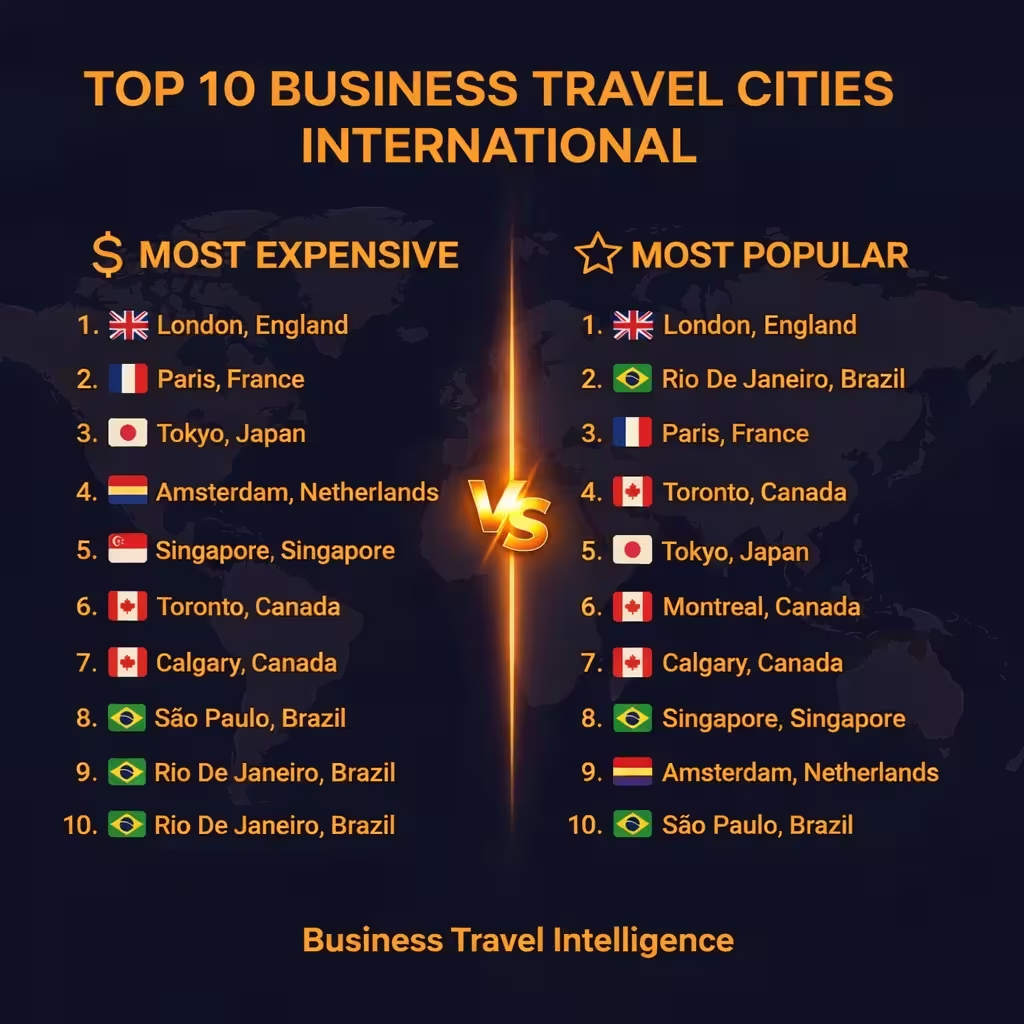
Cities like London, Paris, and Tokyo remain among the most expensive destinations for corporate travel globally. Their high Average Daily Rates reflect the realities of operating in some of the world’s most influential economic centers.
These cities combine:
- global financial markets
- massive international airport connectivity
- world-class conference infrastructure
- high hotel demand
For global corporations, they are simply unavoidable.
London alone hosts thousands of international business meetings every year, from fintech summits to pharmaceutical conventions. Paris offers a similar appeal, particularly in industries like luxury goods, aviation, and energy.
Tokyo remains the gateway to Japan’s corporate ecosystem and a critical hub for global technology and manufacturing partnerships.
Even at premium prices, these cities continue to attract business travelers because the value of being there outweighs the cost.
The economics behind corporate travel locations
Other destinations on Hickory’s list offer an interesting contrast.
Cities like Amsterdam, Singapore, and Toronto also show high Average Daily Rates, but their appeal lies in something slightly different.
These cities combine strong corporate sectors with excellent international accessibility and vibrant urban environments. For many companies, that creates an opportunity to blend work and leisure.
The industry increasingly refers to this trend as “bleisure” travel.
Executives attend meetings or conferences, then extend their stay by a few days for personal travel. Cities that offer both business infrastructure and tourism appeal benefit the most from this behavior.
Amsterdam’s design, walkability, and cultural scene make it a favorite for extended stays. Singapore combines global finance with culinary tourism and shopping. Toronto attracts business travelers with its technology sector while also offering easy access to natural destinations across Canada.
In other words, companies are no longer choosing destinations purely based on price or meeting space.
Experience matters.
Not every popular destination is expensive
One of the most interesting insights in the Hickory data comes from an unexpected city: Rio de Janeiro.
Despite having an Average Daily Rate of just $71, Rio ranks as the second most popular international business travel destination by volume of corporate hotel bookings.
That combination is unusual. In most cases, high demand drives prices upward.
Rio’s affordability relative to global financial centers makes it attractive for corporate meetings, regional conferences, and international events. Companies can host large gatherings while keeping accommodation costs manageable.
Meanwhile, cities like New York and London occupy the opposite end of the spectrum.
They are both the most expensive and the most popular destinations for corporate travel in their respective regions.
The message is simple. When the right economic ecosystem exists, price becomes a secondary consideration.
Why companies still prioritize in-person meetings
The persistence of business travel ultimately reflects a deeper truth about corporate culture.
Digital communication tools are efficient. But they rarely replace the impact of face-to-face interaction.
As Hickory Global Partners notes, companies are increasingly willing to invest in travel experiences that justify the cost.
“Building relationships in person is still a major priority for most corporations, and many are aiming to do so in more interesting locations when possible,” said Chris Dane, president and managing partner of Hickory Global Partners. “As business travel continues to grow, companies across various sectors are looking to make business trips and conferences feel more luxurious and immersive in an effort to make the experience worthwhile. While this comes with a higher price tag at times, many are finding the cost to be worthwhile.”
This shift is visible across the entire travel industry.
Hotels are investing heavily in premium meeting spaces. Airlines continue expanding corporate travel programs. And cities around the world are competing aggressively to attract international conferences.

The bigger shift in business travel strategy
Looking at the broader market, Hickory’s findings align with forecasts from organizations such as the Global Business Travel Association (GBTA) and the World Travel & Tourism Council (WTTC).
Both groups expect corporate travel spending to continue rising over the next several years as global economies stabilize and international business networks deepen.
But the way companies approach travel is changing.
Three trends are becoming especially clear.
Experience over efficiency
Corporate travel is increasingly designed to be memorable rather than purely functional. Companies want employees to return from conferences energized, not exhausted.
Strategic destination choices
Businesses are choosing cities that align with their industry ecosystems rather than defaulting to traditional corporate capitals.
Bleisure integration
Many corporate travelers now extend business trips into personal travel experiences, particularly in globally connected cities.
Together, these trends are reshaping the geography of corporate travel.
The classic business hubs remain dominant, but they are now sharing the spotlight with emerging destinations that combine economic relevance with lifestyle appeal.
The real takeaway
Corporate travel is not disappearing. If anything, it is becoming more intentional.
The pandemic accelerated digital communication, but it also reminded companies how important human connection remains. Deals close faster when people meet. Partnerships form more naturally over shared experiences.
That is why the global business travel market continues to expand despite rising costs.
Cities that combine strong industries, global connectivity, and compelling travel experiences will continue to attract corporate visitors.
And for the travel industry, that means one thing.
Business travel is no longer just about meetings.
It is about creating environments where business relationships can actually grow.