Stop Comparing eSIM Prices — Start Comparing Who Actually Picks Up When Things Break
If you’ve shopped for an eSIM recently, chances are you did the same thing most people do: open up a dozen tabs, scroll straight to the price column, and start comparing who’s cheapest.
It makes sense. We’ve been trained to think of mobile data like gas stations — the one across the street is two cents cheaper, so why not fill up there?
But here’s the dirty little secret of the eSIM market: the price you see on the landing page tells you almost nothing about the actual value of that eSIM once you’re abroad. The number that matters isn’t €5.99 or €7.49 for a gigabyte — it’s whether anyone picks up when your phone shows “No Service” and you’re standing in the middle of an airport with no Wi-Fi.
Why support is the new battleground
The eSIM business has exploded in the last three years. Providers have mushroomed everywhere — from global players with slick apps to two-person startups selling prepaid data packs via Stripe checkout.
The competition is fierce, and margins are thin. So most of these providers fight on price. Cheaper plan, more data, flashier discount. You know the drill.
But here’s the thing: you’re not just buying data. You’re buying the ability to stay connected when you really need it. And that means the real differentiator isn’t cents per megabyte — it’s support.
Because let’s be honest: eSIMs break. Profiles don’t install correctly. Phones throw weird errors. Some carriers throttle or drop connections. And it usually happens at the worst possible moment: when you’ve just landed, when you’re trying to order a ride, or when you need to show a QR code for boarding.
That’s when you find out if your bargain eSIM provider is actually worth the €2 you saved — or if you’ve basically lit that money on fire.
The painful truth about eSIM “support”
Here’s what most providers don’t tell you: support is usually an afterthought.
- Some don’t even have live chat, just a contact form buried in the footer.
- Others outsource to bots that give you generic “restart your phone” replies.
- Many operate in time zones that leave you waiting eight hours for a human response.
I’ve heard stories from travelers who filed a support ticket in Paris and got a reply two days later — when they were already back home. Others were told to “reinstall the eSIM” when the real issue was the provider’s wholesale carrier being down.
And guess what? Refunds are rare. Credits are even rarer. For a lot of small providers, once your QR code is delivered, your money is gone.
So while you were patting yourself on the back for saving €3 at checkout, you ended up burning hours of your trip scrambling for café Wi-Fi and searching for a local SIM shop. Not exactly the experience you signed up for.
Price vs. peace of mind
Here’s where the conversation needs to shift.
Yes, price matters. Nobody wants to overpay for data. But we need to weigh cost against peace of mind.
Think about it like travel insurance. Do you buy the cheapest plan that only covers lost luggage? Or do you sometimes pay a bit more for coverage that actually helps when you need medical care abroad?
An eSIM is no different. The cheapest option only looks good if everything works flawlessly. But when it doesn’t — and it often doesn’t — you’ll wish you’d picked the provider that had humans on standby 24/7.
What good eSIM support actually looks like
So, how do you tell if an eSIM provider takes support seriously? A few signs to watch for:
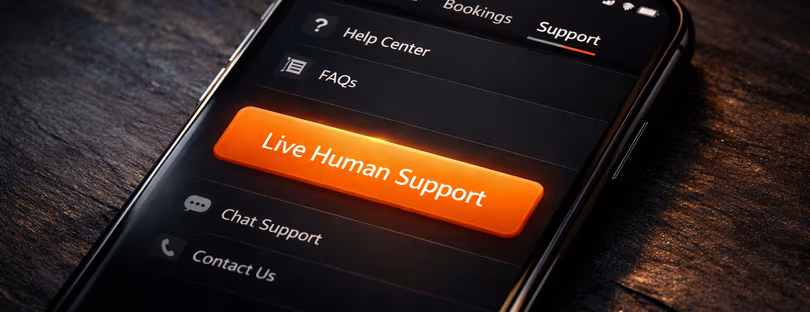
- 24/7 live chat with humans. Not bots, not ticket forms, but actual people who can guide you step by step.
- Clear documentation. Installation guides, troubleshooting tips, compatibility lists. Not just a one-page FAQ.
- Refund or credit policies. If they don’t offer them, it’s a red flag. Real providers back their product.
- Transparency about carriers. If they tell you which local network you’ll be on, that’s a good sign. If they hide it, chances are they don’t want you to know.
- Customer stories. Look at Trustpilot or Reddit. Real travelers will tell you if support was fast or nonexistent.
The human test
One trick I recommend: test their support before you buy. Send them a question about compatibility or coverage. How fast do they reply? How useful is the answer? That 60-second test tells you more about the provider than any price chart.
If they take six hours to answer a basic question, what happens when you’re stranded in Tokyo with no data?
The irony of the “cheapest” eSIM
Here’s the irony: the cheapest eSIM often becomes the most expensive. Not in euros, but in wasted time, stress, and sometimes extra costs when you’re forced to buy a backup SIM at the airport.
Meanwhile, paying a couple of euros more for a provider that answers in minutes and fixes your problem? That’s priceless. That’s the provider you’ll recommend to friends. That’s the one you’ll actually stick with.

Shifting your mindset as a traveler
So the next time you’re shopping for an eSIM, ask yourself:
- Am I just comparing numbers on a page?
- Or am I comparing the real experience I’ll have when I land?
Because in travel, connectivity isn’t a luxury anymore. It’s how you get directions, order food, check into hotels, and keep in touch with family. If that’s important — and for most of us, it is — then maybe the question isn’t “Who’s cheapest?” but “Who’s there for me when things break?” eSIM support comparison
Providers need to hear this, too
And if you run an eSIM business, here’s a challenge: stop obsessing over undercutting the competition by 50 cents. Anyone can slash prices. Not everyone can build trust.
The providers who will actually win long-term aren’t the cheapest ones. They’re the ones who treat support as their product. Because when a traveler feels taken care of, they don’t just buy once — they come back, and they tell everyone they know.
Final thoughts about eSIM support comparison
The race to the bottom on eSIM pricing is a distraction. The real battleground is service. The real value isn’t in who sells you a QR code for €1 less — it’s in who makes sure you’re online when you need it most.
So stop comparing eSIM prices. Start comparing support. That’s where the true difference lies. And that’s what makes the difference between a smooth trip and a nightmare.