Best eSIM Setups for Frequent Flyers Using One Phone
If you fly often, you already know the feeling. One phone. Ten countries. Way too many connectivity decisions.

Before every trip, you tell yourself this time will be different. This time, you will not land half-asleep at an airport, desperately searching for Wi-Fi just to order a ride. This time, you will not pay €18 for a plastic SIM you will throw away four days later. This time, you will not discover a surprise roaming bill that makes you question every life choice you have ever made.
And yet, here we are.
The good news is that frequent flyers finally have the tools to make connectivity boring. Predictable. Invisible. The kind of thing you never think about again. The secret is not just choosing an eSIM, but choosing the right setup.
Let’s break down the best eSIM setups for frequent flyers who live out of carry-ons, airport lounges, and passport stamps.
Why frequent flyers need a smarter eSIM setup
If you fly once or twice a year, almost any eSIM will work. Buy one, install it, forget about it.
Frequent flyers are different.
You might cross three borders in one week. You might land in Tokyo on Monday, Berlin on Thursday, and New York the following weekend. You probably juggle airline apps, hotel bookings, banking apps, and work calls while switching time zones.
That means your connectivity setup needs to be:
- Reliable, not just cheap
- Flexible across regions
- Easy to manage without reinstalling profiles every trip
- Predictable in cost and performance
This is where most eSIMs quietly fail. The market is crowded, prices look similar, and differentiation is often thin. Many options work great for one country and fall apart when you start hopping borders.
Setup 1: One global eSIM for everything
This is the cleanest setup and, honestly, the one most frequent flyers end up loving once they find the right provider.
A single global eSIM installed once, covering dozens or even hundreds of countries, ready to activate whenever you land.
- No swapping profiles
- No reinstalling apps
- No last-minute panic
This setup is ideal if you travel across multiple regions regularly and want a “set it and forget it” experience.
The trade-off is that global eSIMs are not always the absolute cheapest per gigabyte in a single country. But for frequent flyers, reliability and convenience usually beat chasing the lowest possible price.
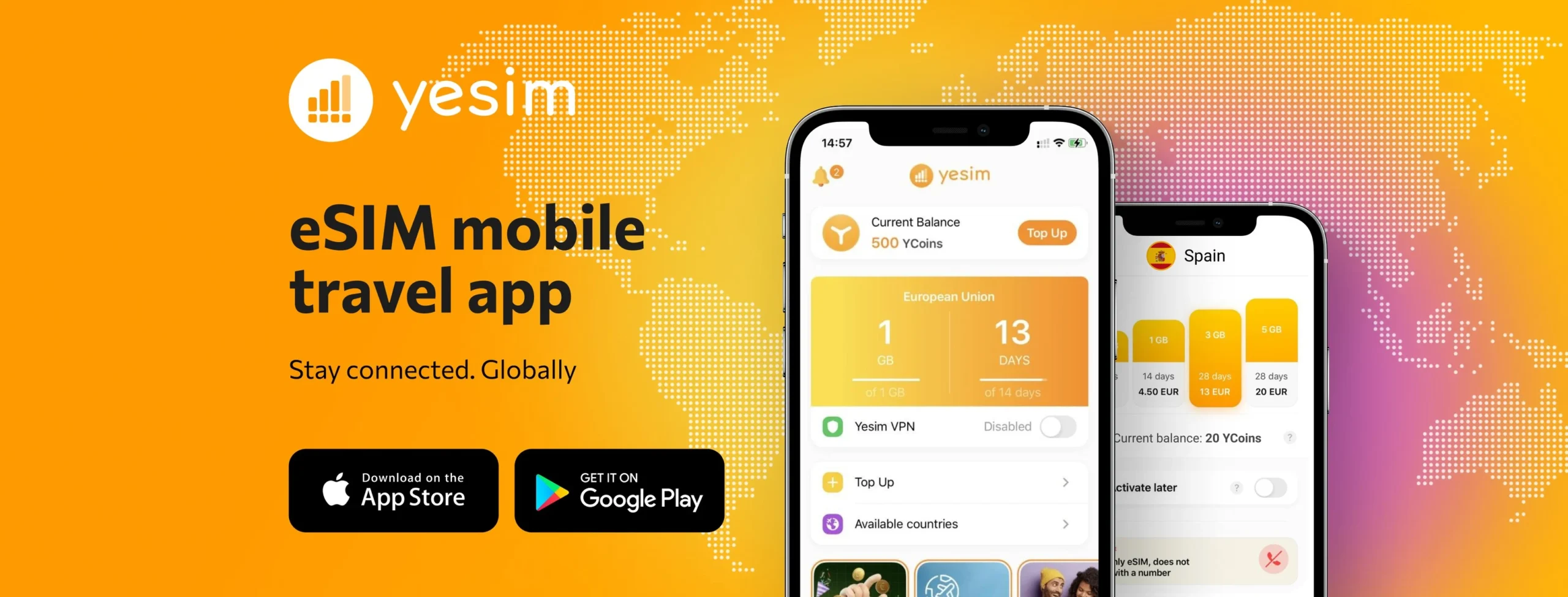
This is where premium providers stand out. For example, Yesim positions itself clearly in this category. Instead of competing on being the cheapest, it focuses on stability, broad coverage, and a smoother user experience across borders. For people who travel often, that premium positioning actually makes sense.
Setup 2: Regional eSIMs for predictable routes
If your travel patterns are consistent, think Europe every month, Asia twice a year, and the US occasionally, a regional setup can be very smart.
You install two or three regional eSIMs:
One for Europe
One for Asia-Pacific
One for North America
You activate the one you need and pause the others.
This setup works well for business travelers with fixed routes or digital nomads who rotate between regions. It gives you better local performance than some global plans, while still avoiding physical SIM cards.
The downside is management. You need to remember which eSIM is active, keep track of balances, and occasionally top up different plans. It is still far better than buying local SIMs, but it requires a bit more attention.

Setup 3: Primary physical SIM plus travel eSIM
Some frequent flyers are not ready to fully let go of their physical SIM. And that is fine.
In this setup, your physical SIM stays in your phone for calls, banking, and two-factor authentication. Your eSIM handles data abroad.
This is especially useful if you rely heavily on SMS verification or want to keep your home number reachable.
Modern phones make this setup surprisingly smooth. You can keep your physical SIM active for calls only, while routing all data through your eSIM. No roaming data surprises, no missed messages.
This is also where premium eSIMs shine. You want data that works the moment you land, without fiddling with APNs or manual network selection.
What actually matters when choosing an eSIM for frequent flying
Here is the honest part that rarely gets talked about.
Most eSIM comparison pages obsess over price per gigabyte. Frequent flyers care about different things.
- Network quality across countries
- Consistency when crossing borders
- Customer support that actually responds
- Clear apps that show usage in real time
If you are landing in a new country every few days, a dropped connection or a network mismatch is not a small inconvenience. It is missed rides, delayed check-ins, and unnecessary stress.
This is why authority content matters so much in the eSIM space. Native reviews, real comparisons, and honest explainers help travelers separate marketing noise from actual reliability. Providers that invest in this kind of transparency tend to attract more experienced travelers, not just bargain hunters.
Why Yesim fits frequent flyer setups
In a crowded eSIM market, standing out is hard. Many providers look identical at first glance. Same promises. Same coverage maps. Same buzzwords.
What makes Yesim interesting for frequent flyers is not one single feature, but the overall positioning.
It is built for people who travel often, not occasionally. Coverage is broad, activation is straightforward, and the experience feels designed for repeat use rather than one-off trips. That premium and reliable angle resonates with travelers who are tired of experimenting with a new eSIM every trip.
From a content perspective, this is also where Yesim plays smart. Instead of shouting discounts, it leans into explainers, comparisons, and lifestyle-driven storytelling that actually matches how frequent flyers think and travel.
This kind of SEO-driven evergreen content builds trust over time. You may not convert on the first read, but when you are standing in an airport at 6 a.m. with five countries ahead of you, you remember the provider that felt solid, not gimmicky.

Common mistakes frequent flyers still make
Even experienced travelers fall into these traps.
- Installing a new eSIM for every trip and cluttering their phone
- Choosing the cheapest plan without checking network partners
- Forgetting to test the eSIM before departure
- Not monitoring data usage across countries
The best setup is boring. It works quietly in the background. If you are constantly thinking about your connectivity, something is wrong.
Your phone, many countries, zero stress
At some point, frequent flyers stop chasing deals and start building systems. Connectivity becomes part of that system, just like lounge access, fast-track security, or a trusted suitcase.
Whether you choose one global eSIM, a regional mix, or a dual SIM setup, the goal is the same. One phone. Many countries. No drama.
The eSIM market will keep getting noisier. More providers. More promises. More confusing comparisons. The winners for frequent flyers will always be the ones that feel reliable, transparent, and built for real travel, not just marketing slides.
If you fly often, your eSIM should feel like muscle memory. You land, you connect, you move on. Everything else is just background noise.