Xiaomi Watch 5 Launch: ECG, eSIM & Gesture Controls Explained
Xiaomi is closing the year with a very clear message: wearables are no longer just fitness accessories; they are becoming serious health and interaction devices. Alongside the Xiaomi 17 Ultra smartphone lineup, the company has quietly introduced the Xiaomi Watch 5 in China, and it might be one of the most ambitious smartwatches Xiaomi has ever built.
This is not just another incremental update. With ECG and EMG sensors, gesture-based controls, an optional eSIM version, and even a 3D-printed titanium band, Xiaomi is clearly aiming higher, both in terms of technology and positioning. For anyone watching the smartwatch market closely, this launch says a lot about where wearables are heading next.
Xiaomi Watch 5 arrives with premium ambitions
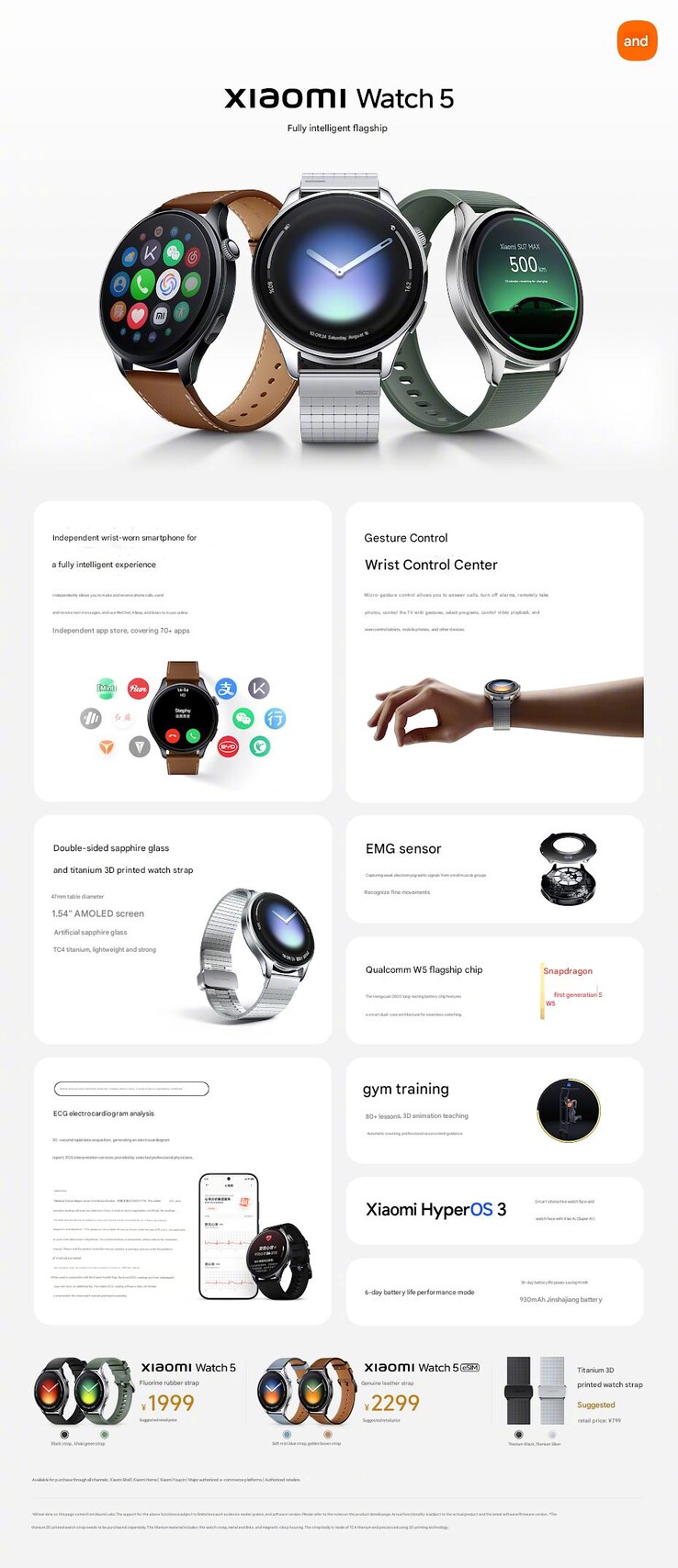
The Xiaomi Watch 5 sits firmly in the flagship category. In China, it launches at around €260 for the standard version with a rubber strap, while the eSIM model paired with a leather band comes in at roughly €300. Those who want to push the premium angle even further can opt for a 3D-printed titanium band, priced at around €100 extra.
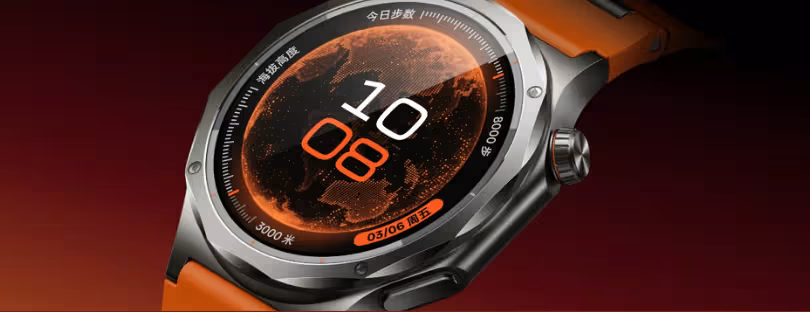
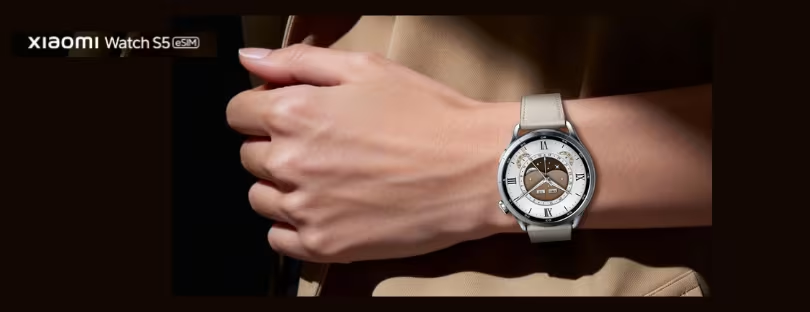
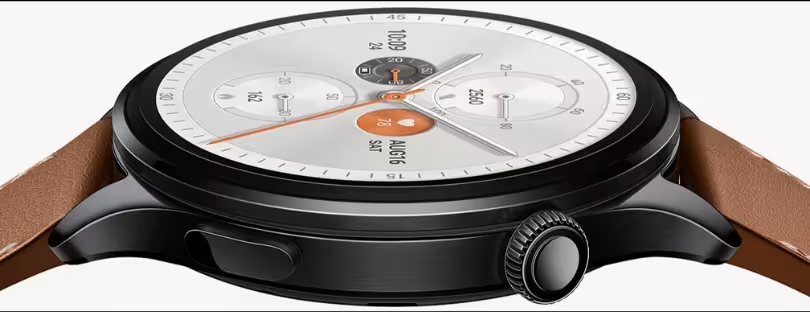
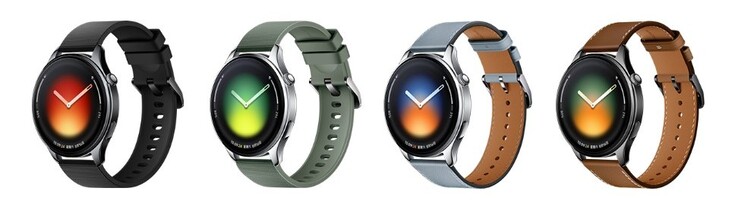
Design-wise, Xiaomi is offering four color combinations: black or silver cases paired with black or green rubber straps, and more classic light blue or brown leather options for the eSIM version. It is a clear attempt to appeal both to sporty users and to those who want something that looks at home with formal wear.
What stands out is how Xiaomi is blurring the line between “tech gadget” and “luxury accessory” without going fully into luxury pricing territory. That balance has been one of Xiaomi’s strengths in phones, and now it is making a serious push in wearables.
3D-printed titanium band
The optional titanium band is more than just a marketing gimmick. Xiaomi says it is 3D-printed, which allows for a lightweight yet rigid structure that would be difficult.
lt to achieve with traditional manufacturing methods.
Titanium bands are usually reserved for much more expensive smartwatches, especially in the Android ecosystem. By offering it as an optional add-on instead of a default bundle, Xiaomi gives buyers flexibility while still signaling that the Watch 5 is meant to compete with higher-end devices from brands like Samsung and Huawei.
It also reflects a broader trend in wearables: customization and modular premium upgrades. Users no longer want a single “one-size-fits-all” smartwatch. They want to choose how sporty, how elegant, or how connected their device should be.
ECG, EMG and gesture controls
This is where the Xiaomi Watch 5 really differentiates itself.
ECG sensors are no longer new in flagship smartwatches, but the addition of an EMG sensor is far more unusual. EMG measures muscle activity, and in this case, Xiaomi uses it to detect subtle hand and finger movements.
In practice, this enables gesture-based controls such as pinching two fingers together, rubbing fingers, or clenching a fist. According to Xiaomi, these gestures can be used to answer calls, dismiss alarms, or trigger actions like taking a photo on a connected smartphone.
This is an important step toward more natural interaction with wearables. Touchscreens on watches are inherently limited by size, and voice commands are not always practical or socially comfortable. Gesture control, if implemented well, could become one of the most important interface trends in the next generation of smartwatches.
Of course, the real test will be reliability. Gesture-based features often sound great on paper but struggle in everyday use. Still, Xiaomi deserves credit for experimenting beyond the usual heart rate and step-counting features.
Display, performance and battery
From a hardware perspective, the Xiaomi Watch 5 checks all the expected flagship boxes.
It features a 47 mm case with a 1.54-inch
AMOLED display, offering a resolution of 480 x 480 pixels and brightness up to 1,500 nits. That should make it easily readable outdoors, even in direct sunlight.
Powering the watch is the Qualcomm W5 chipset, paired with a 930 mAh battery. Xiaomi claims up to six days of battery life in performance mode, which would place it comfortably ahead of many Wear OS-based competitors when it comes to endurance.
The watch runs HyperOS 3, Xiaomi’s latest operating system, and is water-resistant up to 5 ATM, making it suitable for swimming and everyday exposure to water. Standard health tracking features like heart rate monitoring and blood oxygen measurement are, of course, included.
eSIM support and connectivity ambitions
The availability of an eSIM version is another important signal. Xiaomi is clearly positioning the Watch 5 as a more independent device, not just an accessory tethered to a smartphone.
With eSIM, users can take calls, receive messages, and stay connected without carrying their phone everywhere. This is especially relevant for runners, travelers, and business users who want lighter pockets but full connectivity.
From a broader travel tech perspective, this aligns well with the growing demand for always-connected devices, whether through eSIM smartphones, tablets, or now wearables. Xiaomi is tapping into that same connectivity-first mindset.
China first, Europe maybe, US unlikely
For now, the Xiaomi Watch 5 is officially a China-only product. However, there is a strong possibility that it could make its European debut around Mobile World Congress in March, following Xiaomi’s usual international rollout pattern.
A US launch, on the other hand, appears very unlikely. Regulatory hurdles around ECG features and Xiaomi’s limited smartwatch presence in the US market make that scenario difficult.
For European users, though, the Watch 5 could become one of the most interesting Android-compatible alternatives to Samsung’s Galaxy Watch series and Huawei’s Watch GT line.
How it compares to the competition
In terms of features, the Xiaomi Watch 5 sits in an interesting middle ground.
Compared to Samsung’s Galaxy Watch lineup, Xiaomi offers better battery life and more experimental interaction features like EMG-based gestures. Samsung, however, still has an advantage in ecosystem integration and software maturity.
Against Huawei’s premium watches, Xiaomi competes strongly on display quality and connectivity options, especially with eSIM. Huawei often leads in battery life, but Xiaomi is closing that gap quickly.
Where Xiaomi really differentiates itself is pricing. Offering ECG, eSIM, premium materials, and advanced sensors at around €300 undercuts many rivals while still feeling genuinely high-end.
Conclusion: What the Xiaomi Watch 5 tells us about smartwatch trends
The Xiaomi Watch 5 is not just another product launch. It is a clear signal of where the smartwatch market is heading.
Health tracking is moving beyond passive monitoring into more advanced sensing, interaction is shifting toward gestures and contextual controls, and connectivity is becoming a baseline expectation rather than a premium bonus. Xiaomi is aligning itself with all of these trends at once.
If Xiaomi can deliver reliable gesture controls and maintain its promised battery life in real-world use, the Watch 5 could become one of the most compelling smartwatches in its price range. More importantly, it shows that innovation in wearables is far from slowing down. It is simply becoming more subtle, more personal, and more integrated into how we move, work, and travel.
For readers tracking wearable tech developments through reliable industry coverage and hands-on reviews from outlets like Notebookcheck and other established tech publications, the Xiaomi Watch 5 is one to watch closely in 2026.