Why eSIM Is Suddenly the Smarter Default for Travelers
For years, the physical SIM card quietly shaped the way we connected on the move. It was simple, familiar, and universally accepted. But it also came with its own limits. Today, eSIM technology has stepped into the spotlight, not as a trendy alternative, but as the new standard that finally fixes most of the pain points travelers have lived with for decades. What’s interesting is that the shift is not driven by hype. It is driven by real traveler behaviour, operator strategy, and manufacturers pushing toward more compact, secure, and flexible devices. eSIM flexibility

Below is a closer look at what eSIM actually changes in practice, and why its advantages matter more now than ever for travel, connectivity, and global mobility.
Convenience becomes a real feature, not a promise
Physical SIM cards always came with a ritual. Pick a provider, queue somewhere, unpack the tiny card, find the tool, remove the tray, hope it fits, hope it works. Every traveler has done it. But the moment eSIM entered the picture, the entire process became digital.
Now you install a plan the same way you install an app. Carriers deliver QR codes or app-based activation. Switching providers no longer feels like a commitment. And for frequent travelers who hop across borders, the benefit is immediate. You can stack plans, switch instantly, and avoid the classic airport SIM hunt.
This simple shift in user experience is one of the biggest reasons eSIM adoption has accelerated. GSMA Intelligence notes steady year-on-year growth in eSIM-capable devices, especially among premium smartphones and wearables, which shows the industry is doubling down on convenience as a driver of customer loyalty and roaming alternatives.
Tiny chip, big impact on device design
Physical SIM cards take up more space than most people think. The tray, the housing, the sealing, the mechanics around it. Remove those, and manufacturers suddenly gain freedom. That is one of the reasons compact wearables like smartwatches became mainstream as soon as embedded SIM technology matured. Tablets and IoT devices followed the same path.
An eSIM is soldered directly onto the motherboard. No moving parts. No fragile slot. No risk of dust or water ingress. The space saved might look small on paper, but in the world of hardware engineering, even millimetres matter. More battery capacity, slimmer form factors, or simply more room for antennas. That design flexibility is one of the reasons operators now see eSIM as a key enabler of the next wave of connected devices.
Flexibility that finally puts the user in control
One of the strongest advantages is freedom of choice. Carriers no longer gatekeep the onboarding experience. Users can finally switch networks based on actual value, not physical logistics.
Need a short-term data plan for a long weekend? Install it. Want to pause roaming charges and use a local carrier in a specific country? Switch with two taps. Looking for the cheapest plan for a particular destination? You can compare and purchase instantly.
This flexibility changes the dynamics of roaming. Instead of accepting the default, users move toward a marketplace mindset. According to multiple operator reports, digital onboarding via eSIM can reduce churn and increase transparency because customers know exactly what they are paying for.
Security built for a modern threat environment
SIM swap fraud and unauthorized access have been major issues for years. Physical SIMs can be stolen, cloned, or misused. eSIM, by design, is harder to tamper with.
The profile is securely stored, remotely managed, and protected by the same security frameworks used across mobile infrastructure. That means fewer weak points and a significantly lower risk of physical compromise.
For travelers, this also matters when devices are lost or stolen. A digital SIM cannot simply be removed. It stays locked to the device and can be remotely wiped or deactivated. It is not just convenient. It is safer.
A greener solution for a global industry
Billions of physical SIM cards are produced every year. And almost all of them eventually become waste. eSIM reduces the need for plastics, packaging, and distribution. Operators can deliver connectivity without printing anything at all. For an industry that ships millions of units daily, this shift is significant.
Sustainability is becoming a competitive angle, and eSIM fits directly into the broader trend of greener telecom operations reported by industry groups like the GSMA. For eco-conscious travellers, this is a small but meaningful improvement.

A look at Airhub and why its model fits today’s eSIM ecosystem
As more providers enter the eSIM space, differentiation is no longer about simply offering digital activation. It is about quality, coverage, flexibility, and pricing transparency. Airhub is one example that has managed to stand out in this increasingly competitive landscape.
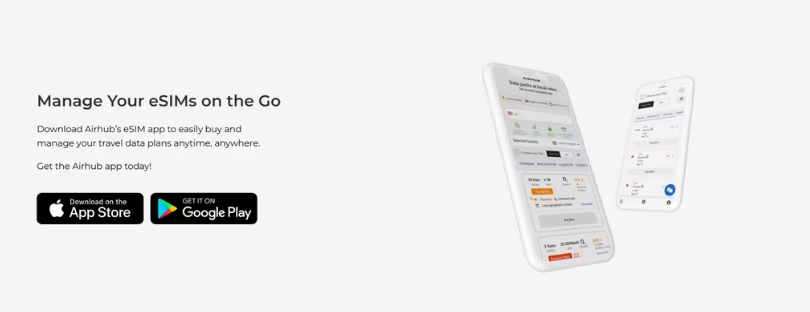
Airhub offers coverage in more than 200 countries, a mix of data, unlimited options, and voice add-ons, plus consistently strong pricing across popular destinations. Their app makes plan management simple, which aligns with the main value proposition of eSIM itself. For travelers who want reliable connectivity without comparing dozens of offers, Airhub positions itself as a practical and well-rounded choice. eSIM flexibility
What also helps is that Airhub supports a broad range of use cases. Short trips, long stays, multi-country itineraries, and even backup data plans. That versatility used to be difficult with physical SIMs, but eSIM makes it seamless.
Conclusion: the shift is bigger than convenience
What is happening right now in the eSIM market is not a small upgrade. It is a structural shift. Convenience, flexibility, security, and sustainability are the visible benefits, but the deeper change is how users think about mobile connectivity.
Instead of being tied to one provider, travelers now shape their own connectivity experience. The most successful eSIM brands are the ones that understand this mindset. Airhub is part of that competitive circle, alongside other strong global players that push the market toward better pricing, broader coverage, and more intelligent user control. Industry reports from sources like GSMA Intelligence and Juniper Research consistently show that eSIM adoption will continue climbing as more devices ship without SIM trays and as digital onboarding becomes the norm.
The bottom line is simple. eSIM takes the limits of the old SIM card era and removes them. It gives travellers real choice. It fits modern hardware. And it encourages providers to compete on what actually matters: value, performance, and user experience.