These Are the Cities Where Tourists Report the Most Pickpocketing
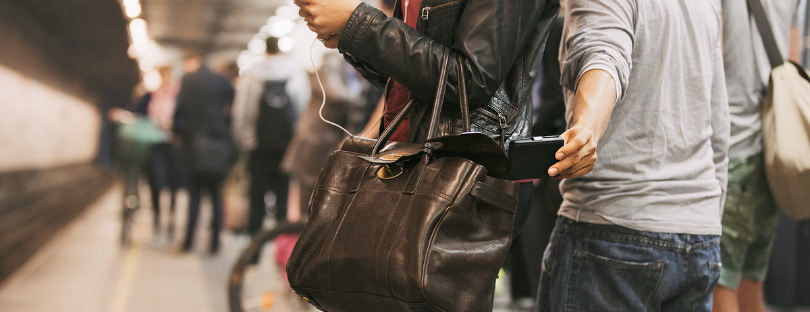
When we plan trips, we obsess over food, landmarks, and where to stay. Safety usually sits somewhere in the background, assumed rather than examined. Until something goes wrong. A stolen phone, a wallet gone on the metro, a moment of distraction that turns into a ruined afternoon. pickpocketing in Europe

New research by Radical Storage brings that uncomfortable reality to the surface. By analysing more than 13,000 Google reviews from travellers worldwide, the study reveals which global cities tourists most often associate with pickpocketing, scams, robbery, and fraud. Not based on police data, but on real traveller experiences.
That distinction matters. For travellers, perception is often more powerful than statistics.
How the ranking was built and why travellers should care
The methodology is simple and telling. Reviews published between October 2024 and November 2025 were analysed across 100 cities from Euromonitor’s Top 100 City Destinations Index. Each review was scanned for theft-related keywords such as “pickpocket”, “robbery”, “scam”, “con”, and “fraud”.
Cities were then ranked based on the proportion of reviews mentioning these issues.
This does not mean a city is unsafe overall. It means tourists repeatedly feel targeted there. And in a travel world shaped by Google Maps reviews, TikTok warnings, and Reddit threads, that perception directly influences booking decisions, behaviour on the ground, and whether travellers recommend a destination at all.
Popular European destinations top the pickpocket capitals list
|
World’s Top 10 Pickpocket Capitals |
|||
|
Rank |
City |
Country |
% of theft-related reviews |
|
1 |
Paris |
France |
16.5% |
|
2 |
Rome |
Italy |
10.7% |
|
3 |
Barcelona |
Spain |
5.3% |
|
4 |
Bangkok |
Thailand |
4.4% |
|
=5 |
Orlando |
USA |
4.3% |
|
=5 |
Istanbul |
Turkey |
4.3% |
|
7 |
New York City |
USA |
3.5% |
|
8 |
Milan |
Italy |
3.0% |
|
9 |
Las Vegas |
USA |
2.2% |
|
10 |
Delhi |
India |
1.9% |
Paris leads the world’s pickpocket conversation
At the top of the list sits Paris, by a wide margin. Around 16.5 percent of all theft-related reviews analysed referenced incidents in the French capital.
Tourist-heavy zones such as the Eiffel Tower area, Montmartre, and busy metro lines appear repeatedly in reviews. The scams themselves are well known. Friendship bracelets tied around wrists, fake charity petitions, distraction techniques involving dropped objects.
What stands out is not creativity, but consistency. These tactics continue to work because Paris concentrates enormous numbers of visitors into dense, walkable spaces where attention is already stretched thin.
Paris remains one of the world’s most visited cities. But the data shows that for many travellers, vigilance is now considered part of the experience.

Rome and Barcelona follow a familiar pattern
Rome ranks second, with 10.7 percent of theft-related mentions. Reviews frequently point to historic areas, buses, trams, and major transport hubs. Many visitors describe incidents not as shocking, but as frustratingly predictable.
Barcelona takes third place. Despite years of public discussion and increased awareness, pickpocketing remains deeply embedded in the city’s tourist narrative, particularly in central areas like Las Ramblas.
These cities are not losing visitors. But they are accumulating warnings, and warnings shape behaviour.
Global tourism hubs are not immune
Europe does not dominate the list alone.
Bangkok ranks high, reflecting the risks created by crowded transport systems and intense tourist flows.
Orlando appears for a different reason. While not a classic pickpocket hotspot, it leads robbery-related mentions. This challenges the assumption that family-focused destinations are automatically low-risk. Large crowds, predictable visitor movement, and distraction-heavy environments still create opportunity.
Istanbul and New York City reflect the realities of megacities where tourists blend into everyday urban life, often becoming easy targets in busy spaces.
Delhi stands out for fraud-related complaints. Reviews often reference overcharging, fake guides, and misleading services rather than classic pickpocketing. Risk looks different depending on the destination context.
What tourists complain about most
Common issues mentioned in reviews
Pickpocketing dominates complaints, especially in crowded areas and public transport.
Distraction scams are frequently cited, often involving unsolicited help or staged situations.
Fraud and overcharging appear most often in cities with dense markets and high numbers of first-time visitors.
Robbery is less common but carries a stronger emotional impact, shaping destination perception disproportionately.
The research also shows how safety complaints overlap with broader frustrations. Cleanliness, crowding, and poor signage amplify negative experiences when theft occurs.

Cities where travellers consistently feel safer
Not every destination tells the same story.
Cities in Turkey, China, and Vietnam dominate the lowest-risk rankings. Destinations such as Muğla, Shanghai, and Hanoi register just 0.1 percent theft-related mentions in reviews.
This does not mean petty crime does not exist. It means travellers do not feel targeted. That distinction is increasingly important.
For tourism boards and hospitality brands, perceived safety is becoming a competitive advantage, especially for attracting repeat visitors and higher-spending travellers.
|
World’s Lowest Pickpocket-Risk Cities |
||
|
City |
Country |
% of theft related reviews |
|
Muğla |
Turkey |
0.1% |
|
Shanghai |
China |
0.1% |
|
Hanoi |
Vietnam |
0.1% |
|
Santiago |
Chile |
0.1% |
|
Doha |
Qatar |
0.1% |
|
Warsaw |
Poland |
0.1% |
|
Lima |
Peru |
0.1% |
|
Zurich |
Switzerland |
0.1% |
|
Nice |
France |
0.1% |
|
Heraklion |
Greece |
0.1% |
Why perception is now a core travel metric
This research highlights a broader shift in travel behaviour. Safety is no longer assessed only through official advisories. It is crowdsourced, shared, and amplified online.
A handful of highly visible stories can shape perception faster than any marketing campaign. Destinations cannot simply promote their way out of perceived risk. Crowd management, prevention, and honest communication now matter as much as attractions.
This is also why services like secure luggage storage, digital payments, and travel insurance are increasingly positioned as essentials rather than add-ons.
Conclusion: what this ranking really tells us about modern travel
This list is not about labelling cities as dangerous. Paris, Rome, and Barcelona will remain global icons. But it does reveal something fundamental about how travel works today.
High-volume tourism concentrates opportunities for petty crime. Travellers are more vocal than ever about negative experiences. And cities that quietly deliver smooth, low-friction visits are gaining reputational ground, even without headline attractions.
Compared with broader safety indexes from sources such as Numbeo, Euromonitor, and UNWTO-backed research, Radical Storage’s analysis stands out because it reflects lived experience rather than abstract crime data. That makes it subjective, imperfect, and highly relevant.
For travellers, the takeaway is not avoidance, but awareness. For destinations and the wider travel industry, the message is sharper. Safety perception is no longer a background issue. It is part of the product.
And in a travel economy driven by reviews rather than brochures, that reality is only going to matter more.