World Cup 2026: Ranking the Most Iconic Stadiums
With just a few months to go until the 2026 FIFA World Cup kicks off across the United States, Mexico, and Canada, the global hype curve is already steep. Search interest for “When is the World Cup 2026” has surged by more than 5,000 percent in the past month alone, a clear signal that fans are not just planning trips but imagining the experience. And while teams and players will always dominate the headlines, World Cups are just as much about places. Stadiums shape memories, influence atmosphere, and often become symbols of entire tournaments.
This matters more than ever in 2026. For the first time, the World Cup will span three countries and 16 different venues. That scale raises an obvious question. Which of these stadiums will fans remember decades from now?
To answer that, LiveFootballTickets analysed all 16 host venues using a mix of hard data and modern fan signals. Capacity, visitor ratings, social media visibility, and even architectural symmetry measured through Golden Ratio scoring were combined into an overall iconic status score. The result is not a list based on nostalgia alone, but a snapshot of how stadiums perform in today’s attention economy.
How iconic status was measured
Before diving into the rankings, it is worth understanding why these metrics matter. Stadium capacity still plays a major role because scale amplifies atmosphere. A full 90,000-seat stadium feels different from a full 45,000-seat one, even if both are sold out.
Fan ratings bring in lived experience. These scores reflect comfort, accessibility, sightlines, and overall enjoyment. Social media hashtags on platforms like Instagram and TikTok reveal cultural relevance and global visibility, especially among younger fans. Finally, the Golden Ratio score adds a design lens, measuring symmetry and visual balance, which increasingly influences how stadiums photograph, film, and circulate online.
Taken together, these elements paint a picture of prestige that goes beyond football tradition alone.
The most iconic World Cup 2026 stadiums
|
Stadium |
Country |
Stadium capacity |
Stadium rating (/5) |
TikTok hashtags |
Instagram hashtags |
Golden Ratio score (/100) |
Iconic status score (/10) |
|
|
1 |
US |
94,000 |
4.7 |
23,100 |
153,000 |
98 |
8.64 |
|
|
2 |
MetLife |
US |
82,500 |
4.5 |
118,700 |
330,000 |
99 |
8.54 |
|
3 |
Estadio Azteca |
Mexico |
83,000 |
4.5 |
97,300 |
250,000 |
87 |
8.19 |
|
4 |
Mercedes‑Benz |
US |
75,000 |
4.7 |
26,000 |
147,000 |
72 |
8.01 |
|
5 |
SoFi |
US |
70,000 |
4.6 |
140,000 |
218,000 |
93 |
7.90 |
|
6 |
NRG |
US |
72,000 |
4.6 |
24,800 |
87,900 |
91 |
7.15 |
|
7 |
Gillette |
US |
65,000 |
4.6 |
38,500 |
244,000 |
75 |
7.11 |
|
8 |
Levi’s |
US |
71,000 |
4.4 |
22,600 |
220,000 |
96 |
7.03 |
|
9 |
Hard Rock |
US |
65,000 |
4.6 |
39,500 |
144,000 |
93 |
6.94 |
|
10 |
Estadio Akron |
Mexico |
48,000 |
4.7 |
35,100 |
63,800 |
75 |
6.37 |
|
11 |
Arrowhead |
US |
73,000 |
4.5 |
14,700 |
63,800 |
93 |
6.28 |
|
12 |
Lumen Field |
US |
69,000 |
4.6 |
20,100 |
35,700 |
97 |
6.04 |
|
13 |
Estadio BBVA |
Mexico |
53,500 |
4.7 |
20,600 |
35,500 |
64 |
5.53 |
|
14 |
Lincoln Financial Field |
US |
69,000 |
4.6 |
11,400 |
61,800 |
50 |
5.42 |
|
15 |
BC Place |
Canada |
54,000 |
4.5 |
2,092 |
105,000 |
63 |
4.73 |
|
16 |
BMO Field |
Canada |
45,000 |
4.5 |
1,138 |
44,400 |
98 |
4.13 |
AT&T Stadium leads the pack
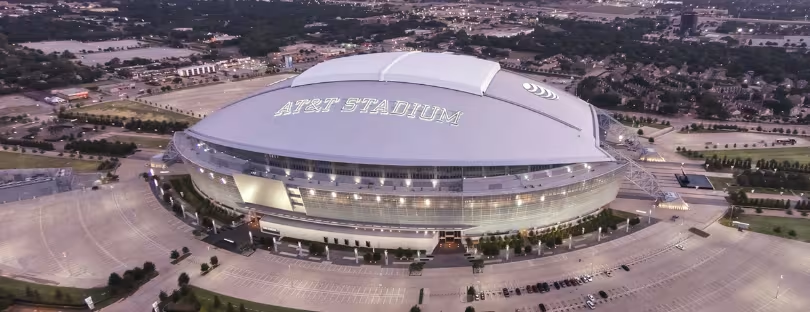
At the top of the ranking sits AT&T Stadium, crowned as the most iconic stadium hosting the 2026 World Cup with a score of 8.64 out of 10. With a staggering capacity of 94,000, it is the largest venue in the tournament and one of the most recognisable stadiums in global sport.
Home to the Dallas Cowboys, AT&T Stadium is less a traditional arena and more a multi-purpose spectacle. Its retractable roof, massive glass doors, and record-breaking HD video board have made it a reference point for modern stadium design. The numbers support this status. Over 153,000 Instagram hashtags highlight its popularity, while a 4.7 out of 5 fan rating confirms that scale has not come at the expense of experience. A Golden Ratio score of 98 out of 100 places it among the most visually balanced venues in the world.
For many international fans, this stadium will be their first real encounter with American-style mega venues, and it sets the bar extremely high.
MetLife Stadium and the weight of the final
Close behind in second place is MetLife Stadium, the stadium selected to host the 2026 World Cup Final. With an iconic score of 8.54 out of 10, it narrowly misses the top spot despite excelling in almost every other category.
MetLife boasts the highest social media presence of all 16 venues, with more than 330,000 Instagram hashtags. Its Golden Ratio score of 99 out of 100 is the highest in the ranking, underlining its clean, symmetrical design. With a capacity of 82,500, it remains massive by global standards, but it falls short of AT&T Stadium’s sheer scale, which ultimately keeps it in second place.
The final itself will almost certainly elevate MetLife’s legacy, much like the Stade de France in 1998 or Lusail Stadium in 2022. Iconicity, however, is built over time, and this ranking reflects where things stand today.
Estadio Azteca and unmatched football history
Third place belongs to Estadio Azteca, with an iconic score of 8.19 out of 10. No stadium on the list can rival its historical significance. Estadio Azteca will become the first stadium ever to host matches at three different FIFA World Cups, in 1970, 1986, and now 2026.
With a capacity of 83,000 and over 250,000 Instagram hashtags, its relevance is both historical and contemporary. Moments like Pelé lifting the trophy in 1970 and Diego Maradona’s Hand of God in 1986 are woven into football mythology. Its Golden Ratio score of 87 reflects a more traditional design, but that classic structure is part of its identity.
In a tournament filled with futuristic venues, Estadio Azteca stands as a reminder that history still carries enormous weight.

Modern icons shaping the middle of the ranking
Innovation over nostalgia
Stadiums like SoFi Stadium and Mercedes-Benz Stadium dominate the middle of the table, reflecting a broader trend in global stadium development. These venues score highly on design, technology, and fan comfort, with strong Golden Ratio scores and excellent visitor ratings.
SoFi Stadium’s sunken design and transparent roof have made it a visual standout, while Mercedes-Benz Stadium’s retractable roof and halo video board have turned it into a regular feature in major sporting events beyond football. Their iconic status is still growing, but 2026 will likely accelerate that process dramatically.

Canada’s challenge in a mega stadium tournament
BMO Field at the bottom of the ranking
At the other end of the list sits BMO Field, ranked as the least iconic of the 16 stadiums with a score of 4.13 out of 10. This result may surprise some, especially given its impressive Golden Ratio score of 98 out of 100, which points to strong architectural balance.
The issue is not design but scale and visibility. With a capacity of 45,000, including around 17,000 temporary seats for the World Cup, BMO Field is significantly smaller than most other venues. Its social media presence is also modest, with far fewer hashtags than US and Mexican counterparts.
This highlights a structural challenge for Canadian venues. While modern and well-designed, they are competing in a tournament dominated by mega stadiums built for NFL-level audiences.
Conclusion: What makes a World Cup stadium truly iconic
Looking across the ranking, one pattern is clear. Iconic status in 2026 is no longer defined by history alone, nor purely by design. It sits at the intersection of scale, experience, digital presence, and visual impact. AT&T Stadium’s top position reflects how modern stadiums are increasingly engineered not just for fans in seats, but for millions watching, sharing, and engaging online.
Compared with previous World Cups, especially those in Brazil and Russia, the North American model leans heavily toward multifunctional, entertainment-first venues. This aligns with broader trends seen in leagues like the NFL and NBA, where stadiums double as year-round destinations. FIFA itself has acknowledged this shift in recent infrastructure and sustainability reports, while research from organisations like Deloitte and Statista consistently shows that fan engagement now extends far beyond matchday attendance.
For fans planning trips, this means the 2026 World Cup will feel different. Bigger, more digital, more immersive. For football purists, venues like Estadio Azteca provide continuity and emotional grounding. Together, these stadiums tell a story about where global football is heading, and how the World Cup continues to evolve as both a sporting and cultural event.