Why Starlink and eSIM Are About to Collide — And What That Means for How Travelers Connect
If you’ve been paying attention to how travelers stay online, you’ve probably noticed two stories running in parallel. On one side, you have eSIM—the little digital marvel that lets you switch between carriers without touching a plastic SIM card. On the other side, you’ve got Starlink—SpaceX’s bold satellite internet network that’s already connecting cruise ships, airplanes, remote cabins, and even RVs parked in the middle of nowhere.

For now, these two worlds have lived in different universes: eSIM is all about tapping into local cellular networks, while Starlink beams internet directly from space. But here’s the thing: the lines are about to blur. And when they do, the way travelers connect could change forever.
Let’s break down what’s happening, why these two technologies are on a collision course, and what it might mean for your next trip.
The eSIM Revolution: Local Connections Without the Hassle
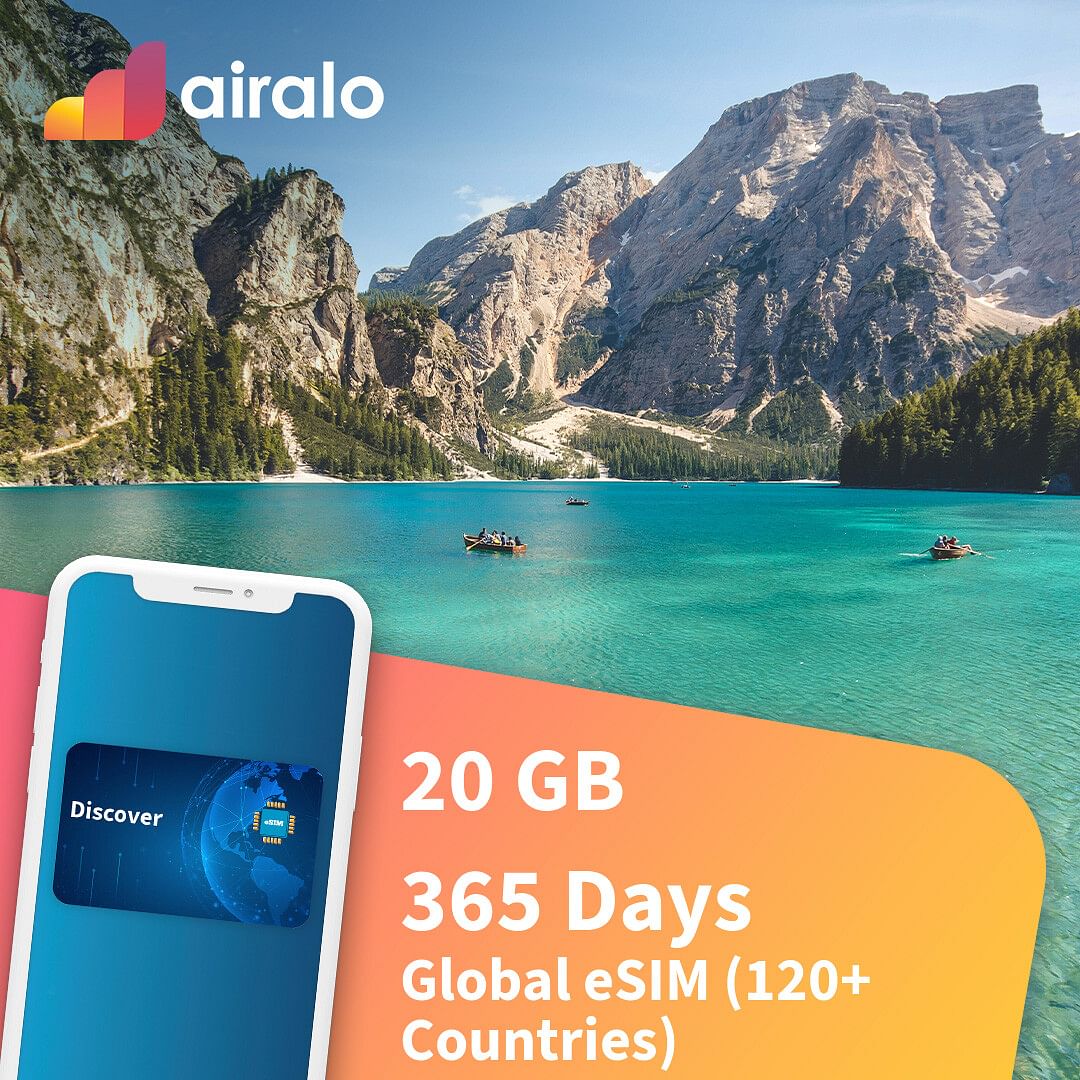
If you’re a frequent traveler, eSIM has probably already saved you time, money, and a fair amount of frustration. Instead of landing in Paris, fumbling around for a local SIM card, or paying eye-watering roaming fees, you just scan a QR code and—boom—you’re online with a local carrier.
The beauty of eSIM is its flexibility. You can have multiple profiles stored in your phone, switch between them instantly, and shop around for the best data package before your plane even takes off.
For travelers, this is huge. It solves one of the biggest pain points in international travel: staying connected affordably. And because every major smartphone now comes eSIM-ready, adoption is only accelerating.
But eSIM, as amazing as it is, still relies on one fundamental thing: cell towers. If you’re somewhere too remote, too mountainous, or too far out at sea, no local network means no connection—no matter how many eSIM options you’ve installed.
That’s where Starlink enters the story.
The Starlink Factor: Internet From Orbit
Starlink has been the darling of the satellite internet conversation for a reason. Unlike traditional satellite providers that orbit way out in space (and deliver clunky, high-latency connections), Starlink operates thousands of low-earth orbit satellites. That means faster speeds, lower lag, and coverage that keeps expanding every single month.
Already, we’re seeing Starlink rolled out in aviation, maritime, and rural broadband. Cruise lines are advertising Starlink-powered Wi-Fi that’s fast enough to stream movies at sea. Airlines are bragging about offering gate-to-gate internet connectivity powered by Starlink. Adventurers are setting up Starlink dishes in deserts, mountains, and forests and live-streaming their expeditions.
For travelers, this is a game-changer in places where cellular networks simply don’t reach. Imagine road-tripping across Iceland’s highlands or hiking deep into Patagonia and still being able to send photos, check maps, or even join a video call. That’s the kind of power Starlink puts on the table.
But here’s the catch: right now, Starlink feels more like a destination service than a personal one. You don’t just “add Starlink” to your iPhone the way you add an eSIM. You need hardware—a dish, a modem, sometimes a roof mount. It’s amazing for cruise ships or planes, but not exactly something you throw into your backpack for city-hopping through Europe.
And that’s exactly why a collision with eSIM is inevitable.

The Collision Course: Starlink Meets eSIM
Here’s where things get really interesting. Both Starlink and eSIM represent the same ultimate goal: seamless, borderless connectivity for travelers. They’re just coming at it from opposite directions.
- eSIM solves the problem of switching between local carriers.
- Starlink solves the problem of being outside of carrier coverage altogether.
But what happens when these two start working together—or competing directly?
Imagine opening your phone’s eSIM marketplace and, alongside Vodafone France or T-Mobile USA, you see an option that says “Starlink Data Package.” You tap, pay for a bundle, and suddenly your phone connects directly to satellites overhead—no dish required.
That’s not sci-fi anymore. Smartphone manufacturers are already experimenting with direct-to-satellite connectivity. Apple’s Emergency SOS feature uses Globalstar satellites. Android is rolling out satellite texting features. Qualcomm and Iridium tried pushing satellite messaging chips into new phones (though that partnership stalled). And companies like AST SpaceMobile and Lynk Global are literally testing direct-to-phone satellite broadband.
Now layer in eSIM. The technology is already set up as a universal marketplace for connectivity. It’s the digital wallet for your mobile identity. Instead of carrying different SIMs for different carriers, you carry none—and download what you need, when you need it.
So, if Starlink (or any satellite operator) wants to reach travelers directly, eSIM is the perfect gateway. It’s not hard to picture: in a few years, you land in Nairobi, flip open your eSIM app, and choose between:
- A local Safaricom plan,
- A regional Africa eSIM, or
- A Starlink “everywhere” package that works in the city, on safari, and on the flight home.
That’s the collision. And it’s coming.

Why This Matters for Travelers
If you’ve ever struggled with patchy coverage, overpriced roaming, or unreliable hotel Wi-Fi, you can already see why this matters. A Starlink-eSIM convergence would mean:
- One device, everywhere internet. You wouldn’t need to juggle physical SIMs, rent portable hotspots, or wonder if your Airbnb’s Wi-Fi will actually work.
- New pricing models. Instead of country-based data packages, we may see “global flat-rate” satellite plans layered into eSIM marketplaces.
- Resiliency. For business travelers, journalists, or digital nomads, having Starlink in your eSIM arsenal means you’re never completely offline—even when local networks fail.
- Pressure on carriers. If satellite internet becomes just another option in the eSIM menu, local carriers will need to rethink their pricing and coverage strategies. Competition will heat up fast.
What Could Hold It Back
Of course, it’s not all smooth sailing. There are some big obstacles before Starlink and eSIM truly converge:
- Hardware limits. Phones today aren’t built to handle full Starlink broadband directly. Antenna design, power demands, and chip integration are still hurdles.
- Regulation. Governments tightly regulate spectrum and satellite services. Some countries may resist letting Starlink operate freely.
- Pricing. Starlink isn’t exactly cheap right now. Until costs come down, it’ll be more of a premium option than a mainstream one.
- Business incentives. Local carriers won’t want to give up market share without a fight. Expect lobbying, partnerships, and plenty of competition before this gets consumer-friendly.
But then again, five years ago, eSIM felt “niche.” Today, it’s baked into every new iPhone and Android flagship. Technology adoption has a way of sneaking up on us.
So, What’s Next?
If you’re a traveler, the takeaway is simple: the future of connectivity is going to be hybrid. You’ll use eSIM for affordable, high-speed local data where networks are strong. You’ll lean on satellite (Starlink or otherwise) when you’re off-grid, on the move, or in places local carriers can’t touch.
And eventually, you won’t even think about the distinction. You’ll just open your phone, pick a plan, and stay connected—whether it’s a tower or a satellite delivering your data won’t matter.
The collision of Starlink and eSIM isn’t about one replacing the other. It’s about both filling the gaps in each other’s worlds. And for travelers, that means something we’ve all been dreaming about for years: true global, seamless connectivity.
So next time you’re staring at your phone in some far-flung corner of the world, wondering if you’ll have signal, just remember: the sky isn’t the limit—it’s the network.