Saudi Travelers Hit by Roaming Fees — eSIMs Offer Relief
If there’s one region where travellers are hyper-aware of roaming prices, it’s the Gulf. GCC residents travel frequently, book last-minute, and expect seamless digital services wherever they go. Yet despite this tech-forward mindset, roaming charges remain one of the region’s biggest travel pain points — especially for Saudi travellers.

The Gulf has some of the world’s most active mobile users, but also some of the steepest roaming tariffs. Operators do offer travel bundles, yes, but they often come with limitations: small data allowances, unclear fair-use policies, unexpected overage fees, and plans that don’t always match real travel patterns. A quick weekend in London or Istanbul can easily turn into a €100+ surprise if a traveller forgets to switch off roaming.
Saudi Arabia stands out because outbound travel is booming. The Kingdom’s travellers are now exploring Europe, Asia, and the Middle East in record numbers, which means millions of people are exposed to roaming rules they don’t fully understand — or assume won’t apply to them. That gap between expectation and reality is exactly where things go wrong.
Why Traditional Roaming Still Catches Travellers Off Guard
Roaming costs feel outdated in a world where streaming video and cloud messaging are just part of normal life. But the structure behind roaming hasn’t evolved at the same speed.
Here’s why it still bites people:
Operators charge per megabyte behind the scenes
Even if a traveller buys a bundle, their usage may spill outside the package. Apps update in the background. Social media auto-plays videos. Maps refresh. It adds up quickly.
Pricing is hard to compare
Every operator has multiple tiers, zones, and exceptions. Travellers often assume “Roaming is included” when it may only be partially included — or only in specific countries.
Plans are designed around revenue protection, not customer needs
It’s not personal; it’s just how roaming was built. But the result is the same: travellers often only understand their real costs after returning home.
And that’s where eSIMs have quietly become the preferred alternative across the GCC.
Why eSIM Adoption Is Growing So Fast in the Gulf
Saudi Arabia, the UAE, Qatar, and Bahrain are among the most tech-savvy mobile markets globally. Device compatibility is extremely high, and consumers are used to digital-first services. That’s why eSIM makes sense here: it feels like a natural extension of how people already use their phones.
What Gulf travellers appreciate most about eSIMs is simplicity — and the feeling of control.
Clear, upfront pricing
You choose a plan, see the data allowance and validity, and you know exactly what you’re paying.
No surprises after the trip
A prepaid eSIM can’t generate hidden charges. It ends when it ends.
Ideal for multi-country travel
A single eSIM can cover Europe, Asia, or GCC-wide travel, depending on the plan.
No need to remove a physical SIM
Saudi travellers often keep their primary number active for OTPs, banking apps, or work calls. eSIM lets them keep that SIM untouched.
Instant activation before takeoff
This is especially useful in Riyadh, Jeddah, and Dammam, where travellers often fly long-haul and want connectivity the moment they land.
All this makes eSIMs a natural fit for the region — and the latest data confirms why travellers are turning to them in the first place.
New Research Shows How Serious the Roaming Problem Still Is for Saudis
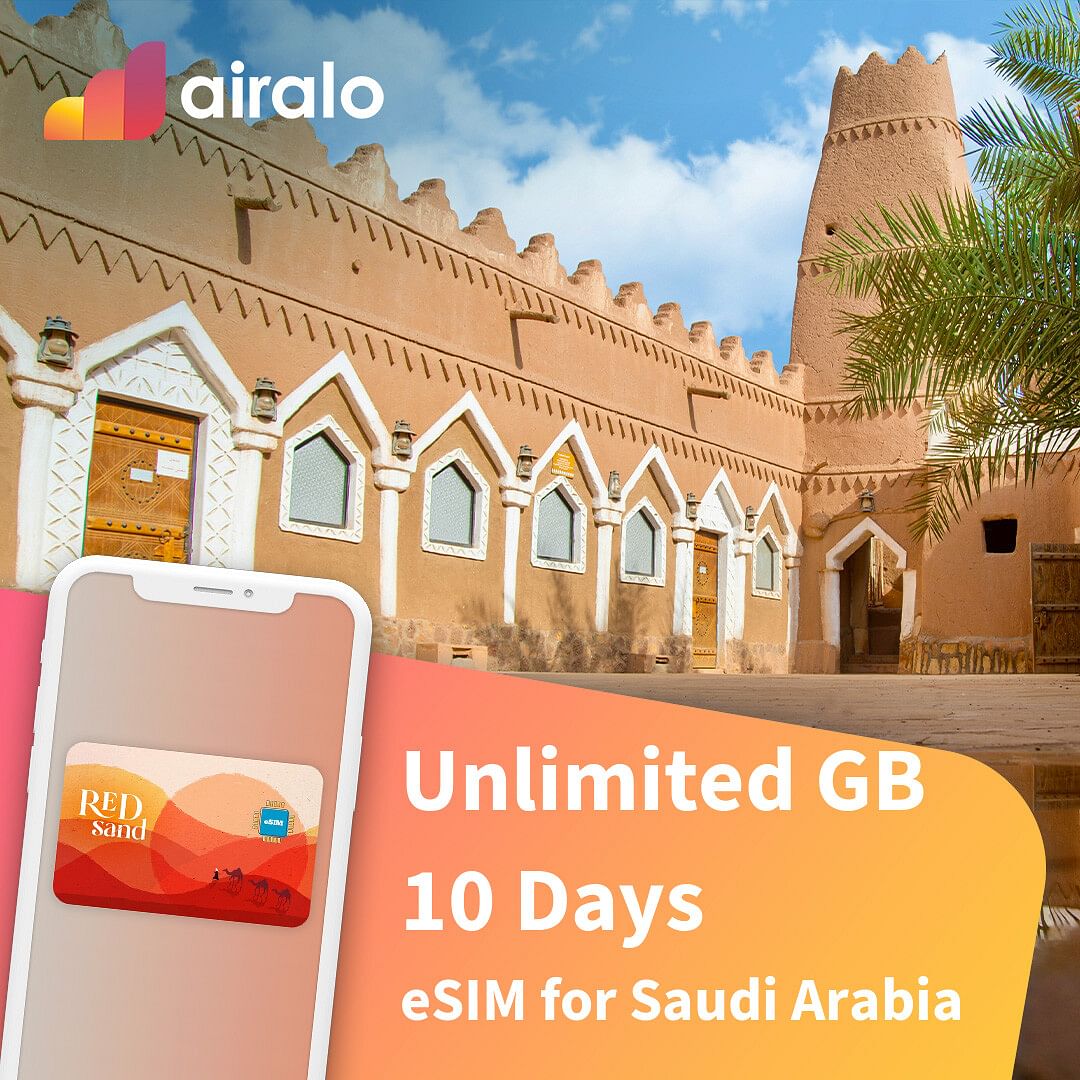
A recent survey conducted by Airalo, an eSIM platform, revealed that 30 per cent of Saudi travellers were hit with unexpected roaming charges after their international trips last year.
Travellers expressed frustration over surprise fees, unclear terms, and the feeling that roaming remains unnecessarily complicated — something many assumed had improved in recent years.
As Saudi outbound travel continues to surge, these findings highlight how roaming costs remain one of the most overlooked travel expenses. Families, young travellers, and even business passengers said the same thing: these charges stretched their budgets and created unnecessary stress during and after travel.
To help address this issue, Airalo says it is empowering travellers to take control of their connectivity with greater transparency and affordability — part of a broader shift happening across the global travel telecom market.
How Airalo’s Findings Fit into the GCC’s Broader eSIM Trend
The insights from Saudi travellers echo what we’re seeing across the Gulf and internationally: roaming is no longer considered an acceptable “hidden cost” of travel. GSMA research shows rising dissatisfaction with operator roaming fees, especially in regions with high digital adoption.
Platforms like Airalo, Airhub, Nomad, Yesim Holafly or Ubigi are capitalizing on that shift by offering prepaid data that feels predictable, modern, and fair — something operators have struggled to match at scale.
Airalo’s decision to release Saudi-specific data is interesting for two reasons:
- It shows the GCC is becoming a strategic market for travel eSIM providers.
Competition is heating up, and transparency is emerging as a key differentiator. - It positions eSIM providers not just as sellers but as consumer advocates.
That narrative resonates strongly in markets where travellers feel their needs aren’t fully addressed by traditional roaming models.
In other words, the problem is bigger than just one provider; it reflects a structural industry shift.
Conclusion
Saudi travellers are experiencing exactly what global surveys have already documented: traditional roaming is confusing by design, unpredictable in practice, and increasingly incompatible with modern travel habits. As more travellers from the Kingdom explore multiple destinations per year, the gap between their expectations and the old roaming system becomes even more visible.
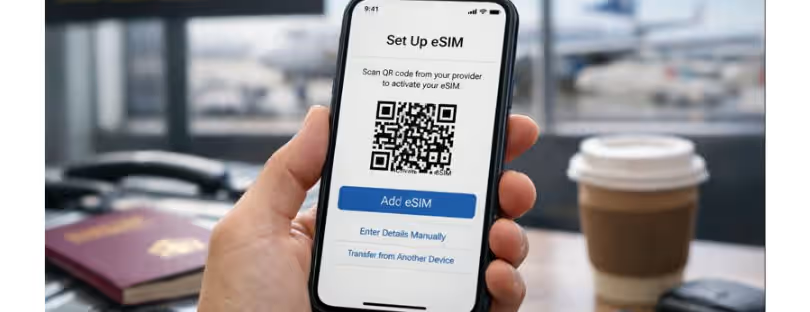
eSIM platforms — whether Airalo, Airhub, Nomad, or any other — succeed because they offer what travellers have been asking for all along: clarity, control, and cost certainty. The GCC is perfectly positioned for rapid eSIM adoption, given its high smartphone penetration and digital-first mindset. If anything, Airalo’s findings serve as a wake-up call for operators in the region: travellers will no longer tolerate avoidable roaming shocks when far more transparent alternatives are just a QR code away.