Samsung Wallet Turns Galaxy Phones Into Toyota Car Keys
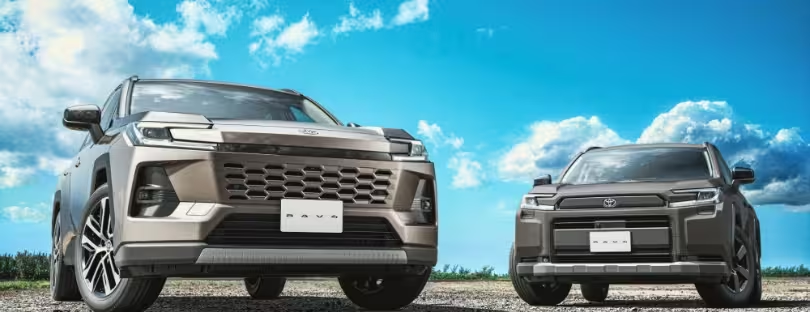
Starting January 2026, your car key might officially become optional. Samsung Electronics has confirmed that Samsung Wallet will support Digital Key functionality for select Toyota vehicles, beginning with the 2026 Toyota RAV4. For Samsung Galaxy users, this means unlocking, locking, and starting their car directly from their phone, without digging through pockets or bags. Samsung Wallet Toyota Digital Key
This is not just another convenience update. It is a clear signal of where automotive access, mobile security, and digital identity are heading. For drivers, it removes friction. For the industry, it reinforces that smartphones are becoming the primary interface for mobility.
What Samsung Wallet actually does in your car
Samsung Wallet has quietly evolved into more than a place for payment cards and boarding passes. It now acts as a secure container for digital identity and access credentials, including car keys. Once a compatible Toyota vehicle is paired with Samsung Wallet, the phone effectively replaces the physical key fob.
Depending on the Galaxy device, access works in two ways. Ultra-Wideband technology enables true hands-free entry. Walk up to the car, and it unlocks automatically. Near Field Communication acts as a fallback or alternative, letting users tap their phone to the door or start button. Both methods are designed to be fast, intuitive, and secure.
The UWB implementation follows standards set by the Car Connectivity Consortium, which is important. This is not a proprietary shortcut. It is part of a broader industry effort to standardize digital car keys across brands and devices.
Sharing your car without sharing your keys
One of the more practical features is key sharing. Samsung Wallet allows users to securely share their Digital Key with trusted contacts. This is ideal for families, multi-driver households, or short-term access, like lending your car for the weekend.
Permissions can be adjusted or revoked at any time, which is a major upgrade from traditional spare keys. Instead of physical handovers or expensive replacements, access becomes flexible and fully controlled from the phone.
This approach mirrors how people already think about access in other parts of their digital lives, from shared calendars to smart home locks.

Security is not an afterthought here
Any conversation about digital car keys has to start with security. Samsung is leaning heavily on its existing mobile security stack, especially Samsung Knox.
Digital Keys are stored directly on the device, protected at the hardware and software level. Knox meets EAL6+ certification standards, which places it among the highest security assurances used in government and enterprise environments. This is not marketing fluff. EAL6+ involves protection against advanced attack methods, including side-channel attacks.
If a phone is lost or stolen, the Digital Key can be remotely locked or wiped using Samsung Find. Access also requires biometric or PIN authentication, adding another barrier against misuse.
From a travel tech and mobility perspective, this matters. Trust is the biggest obstacle to digital access replacing physical objects. Samsung’s approach shows it understands that.
Where and when this actually rolls out
The first supported vehicle is the 2026 Toyota RAV4, one of Toyota’s best-selling global models. Rollout begins in the United States, Canada, and Mexico, with Europe following in line with Toyota’s regional launch schedule.
The European rollout starts in markets including Germany, France, the UK, Italy, Spain, the Nordics, and most of Central and Eastern Europe. This broad coverage suggests Toyota and Samsung see real demand, not just a pilot program.
On the device side, UWB support is available on recent Galaxy S Ultra models, Fold devices, and newer premium hardware. NFC-based access expands compatibility further, covering a much wider range of Galaxy smartphones later this year.
In short, this is not limited to a niche group of users with the latest flagship only.

How does this fit into the wider digital key race?
Samsung and Toyota are not operating in a vacuum. Apple has been pushing Car Key in Apple Wallet for several years, working with BMW, Hyundai, Kia, and others. Google has also expanded Android Digital Key support through Android Auto and Wallet integrations.
What makes Samsung’s move notable is scale. Samsung controls both the device ecosystem and the wallet layer, and Toyota brings massive global vehicle volume. The RAV4 alone sells in the millions annually.
We are clearly moving toward a future where car access works like boarding passes or hotel room keys. Stored securely, shared digitally, and revoked instantly when needed.
Reliable industry sources like the Car Connectivity Consortium, OEM announcements from Apple and Google, and automotive security analyses from firms such as NXP and Thales all point to the same trend. Physical keys are becoming a backup, not the default.
Conclusion: digital keys are no longer a luxury feature
Samsung bringing Digital Key support to Toyota vehicles marks a shift from early adoption to mainstream expectation. This is no longer about tech demos or premium-only perks. It is about redefining everyday mobility.
Compared to Apple Wallet’s car key rollout, Samsung’s approach feels more ecosystem-driven and hardware-secure, especially with Knox and UWB working together. Against Google’s broader Android strategy, Samsung benefits from tighter control and deeper device integration.
For drivers, the benefit is simple. Less friction, fewer objects, and more control. For the industry, the message is clear. Digital access is becoming a standard feature, not an experiment.
As more automakers align with CCC standards and more smartphones ship with UWB and secure elements, the question will not be whether your phone can unlock your car. It will be why your car ever needed a physical key in the first place.