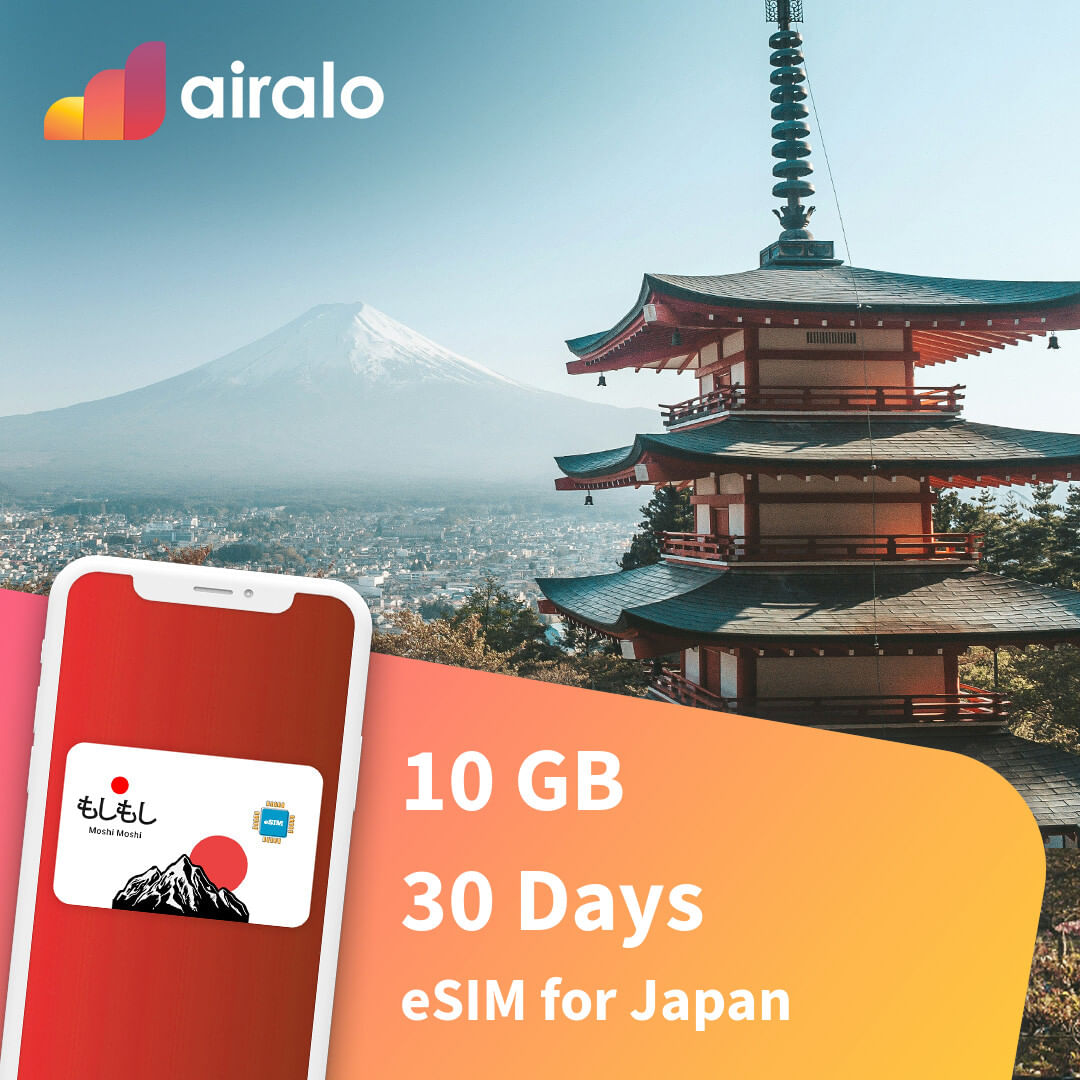
Western Japan Teams Up With Airalo to Make Connectivity Part of the Journey
Western Japan has been quietly rewriting the travel playbook for visitors who want more than the Tokyo–Kyoto–Mount Fuji loop. Now, that shift just got a digital upgrade. The Golden Route to WEST JAPAN, a tourism initiative led by Fukuoka City, has launched a new partnership with Airalo, one of the world’s largest and most widely used eSIM platforms. Golden Route West Japan Airalo eSIM

For travelers, the headline is simple. If you are exploring western Japan or Kyushu, you can now get 10 to 15 percent off Airalo eSIMs through the Golden Route platform. No SIM swapping, no airport counters, no surprise roaming charges. Just data that works from the moment you land.
For the travel tech and tourism industries, though, this collaboration says something much bigger about where destination marketing is heading.
What the Golden Route to WEST JAPAN is really about
Golden Route to WEST JAPAN is not a single itinerary or a campaign slogan. It is a curated digital platform designed to guide international visitors through the cultural, historical, and natural highlights of western Japan and Kyushu.
The route connects destinations like Osaka, Hiroshima, Fukuoka, Kumamoto, and Nagasaki into a coherent travel story. Think UNESCO World Heritage Sites, volcanic landscapes, historic port cities, hot springs, regional food cultures, and neighborhoods that still feel deeply local even as tourism rebounds.
The idea is to encourage travelers to slow down, travel wider, and discover regions that often get overshadowed by eastern Jaan. And importantly, the platform is built for modern travelers. It assumes people plan digitally, navigate with maps, book experiences online, and share their journeys in real time.
That is where connectivity stops being a nice-to-have and becomes essential.
Why connectivity has become core to destination marketing
Ten years ago, tourism platforms talked about Wi-Fi availability as a practical detail. Today, connectivity shapes the entire travel experience.
Navigation, translation, mobile payments, ride-hailing, digital tickets, restaurant discovery, and even emergency information all depend on reliable mobile data. For international travelers, especially first-time visitors to Japan, losing connectivity can instantly turn excitement into stress.
eSIM adoption has accelerated this shift. According to GSMA data, eSIM-compatible smartphones now account for a majority of new premium and mid-range devices globally. Travelers increasingly expect to activate connectivity before they board a plane, not after they land.
Golden Route to WEST JAPAN clearly understands this. By integrating an eSIM offer directly into its platform, it is not just promoting destinations. It is actively removing one of the biggest friction points in international travel.
Why Airalo is a logical partner for this campaign
Airalo has built its reputation on simplicity and scale. The company offers eSIMs covering hundreds of destinations and supports users in 53 languages, which matters when you are marketing Japan to a truly global audience.
For travelers heading to western Japan, the appeal is straightforward. You download the app, choose your plan, install the eSIM, and you are connected. No physical SIM cards, no language barriers at telecom counters, and no need to rely on public Wi-Fi networks.
From Airalo’s perspective, this partnership is also a milestone. It is the company’s first collaboration with a regional tourism initiative in Japan. That signals growing trust between tourism authorities and global eSIM providers, and it shows how eSIMs are moving from a traveler workaround to an officially endorsed solution.
How the discount campaign works in practice
The mechanics are refreshingly simple. Travelers visit the official Golden Route to WEST JAPAN website and access the campaign page titled Experience West Japan Without Limits: Golden Route to WEST JAPAN × Airalo.
There, they receive a special discount code. When applied during checkout on Airalo, the code instantly reduces the price of selected eSIM plans by 10 to 15 percent.
There are no complicated bundles or hidden conditions. The goal is clearly to encourage travelers to sort out connectivity before arrival, so they can focus on exploring rather than troubleshooting mobile data in a foreign country.


A smart move for Western Japan as a destination
Western Japan is positioning itself as an alternative for travelers who want depth rather than density. Regions like Kyushu have been gaining attention for wellness travel, food tourism, and nature-based experiences, especially among repeat visitors to Japan.
This campaign aligns perfectly with that positioning. It supports independent travel, regional exploration, and longer stays. It also reflects a broader trend where destinations are expected to offer digital readiness, not just physical attractions.
Japan’s national tourism strategy has emphasized smart tourism, open data, and digital tools for years. What is notable here is the regional execution. Instead of building a proprietary connectivity solution, Golden Route to WEST JAPAN partnered with a global specialist that travelers already trust.
How does this compare to other players and markets
Globally, tourism boards have experimented with connectivity in different ways. Some airports still push physical SIM kiosks. Others promote local telecom operators through bundled tourist SIMs. A few destinations in Europe and Southeast Asia have tested Wi-Fi voucher schemes.
What makes the Golden Route to WEST JAPAN approach stand out is its alignment with traveler behavior. Independent eSIM providers like Airalo, Nomad, and GigSky have become familiar names among frequent travelers. Partnering with an established platform reduces friction and avoids forcing visitors into unfamiliar systems.
Industry research from sources like Statista and GSMA Intelligence shows that eSIM usage in travel is growing faster than any other connectivity segment. Travelers want flexibility, transparent pricing, and instant activation. This campaign delivers exactly that.
What does this mean for the future of travel in Japan
Japan is often seen as technologically advanced, but tourism infrastructure has not always matched that reputation. Language barriers, cash dependence, and fragmented digital services have historically created challenges for visitors.
Partnerships like this suggest a shift. Regional tourism bodies are starting to think like product designers. They are looking at the entire traveler journey, from planning to arrival to daily movement, and asking where friction can be removed.
Connectivity is one of the easiest and most impactful places to start.
Conclusion
This partnership between Golden Route to WEST JAPAN and Airalo is not just a discount campaign. It is a signal of how destination marketing is evolving in a post-pandemic, mobile-first travel world.
Compared to traditional tourist SIM programs or airport-based solutions, eSIM partnerships offer scalability, familiarity, and immediate value to travelers. They also align with broader industry trends highlighted by organizations like GSMA and the World Tourism Organization, which increasingly emphasize digital readiness and seamless mobility as pillars of sustainable tourism growth.
For travelers, the benefit is obvious. You arrive connected, confident, and free to explore regions that reward curiosity. For western Japan, this move strengthens its positioning as a smart, accessible, and globally minded destination.
If this model proves successful, do not be surprised to see more regional tourism boards follow suit. Connectivity is no longer a background utility. It is part of the travel experience itself, and western Japan is clearly embracing that reality.