The eSIM Shift Is Bigger Than Travel — Here’s Why
eSIM is often introduced as a “nice travel upgrade.” Something convenient. Something optional. A way to avoid SIM card kiosks at airports. esim shift

That framing undersells what is actually happening.
eSIM is not just replacing plastic SIM cards. It is quietly rewriting how connectivity works across travel, business, privacy, devices, and even sustainability. And the speed at which this shift is happening is faster than almost any previous telecom transition.
If you still think eSIM is just for holidays, this is where things get interesting.
eSIM did not appear overnight. It has been building for years.
It feels like eSIM suddenly exploded, but the groundwork was laid long before consumers noticed. The earliest versions were never meant for travelers. They were designed for machines, logistics, industrial systems, and connected devices that could not afford physical SIM swaps.
Factories, shipping containers, smart meters, and fleet vehicles needed something better than plastic chips. That is where remote provisioning came in. By the time smartphones caught up, the infrastructure was already tested at global scale.
That long, quiet development phase is why eSIM now works surprisingly well across borders, networks, and devices. What looks new to users is already mature behind the scenes.
International travel changed the moment connectivity went fully digital.
Travel is where most people feel the impact first. And honestly, once you experience it, going back feels absurd.
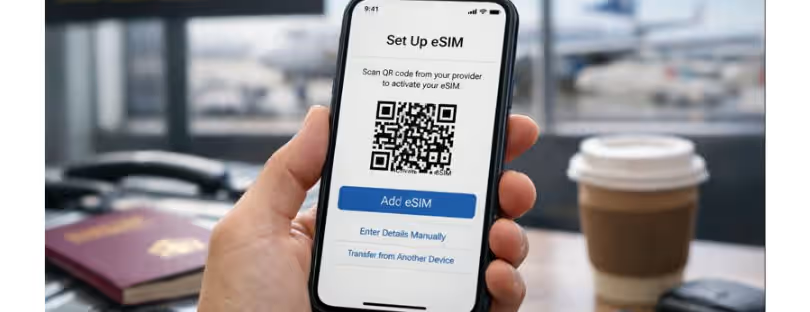
Instead of landing, finding Wi-Fi, searching for a SIM shop, dealing with language barriers, and swapping tiny cards, you download a plan, scan a QR code, and you are online before baggage claim.
More importantly, eSIM allows something that physical SIMs never did well. You keep your primary number active while using local or regional data plans. That single change removes a huge amount of friction for business travelers, remote workers, journalists, and digital nomads.
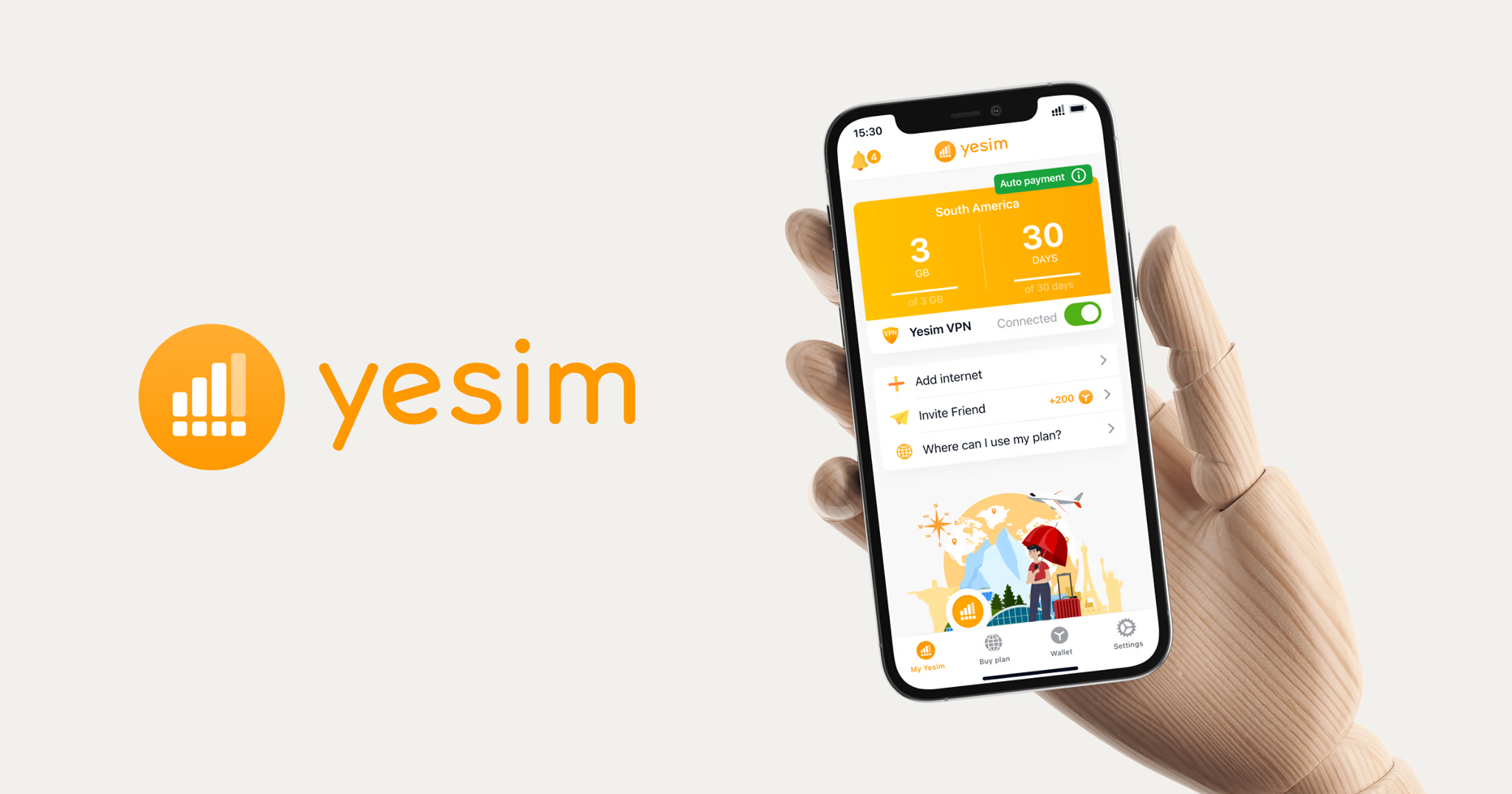
Providers like Yesim, Airhub, Nomad, and GigSky (among many others) helped normalize this idea. The competition between them pushed pricing down and usability up. That competitive pressure is a big reason eSIM adoption accelerated so quickly.
Removing plastic SIM cards is a quiet sustainability win.
No one talks enough about how wasteful SIM cards are.
Billions of tiny plastic products, each packaged, shipped, replaced, and discarded. Multiply that by decades and global scale, and it adds up to a massive environmental footprint for something that exists solely to store data.
eSIM eliminates that entire chain. No plastic. No packaging. No shipping. No physical inventory.
From a sustainability perspective, this is one of the simplest upgrades telecom has ever had. No lifestyle change required. No trade-offs for users. Just better technology replacing worse technology.
Security improves when the SIM cannot be removed.
It feels counterintuitive, but physical SIM cards are a security weakness.
If someone steals your phone, the first thing they can do is remove the SIM. That instantly cuts off tracking, authentication messages, and recovery options.
eSIM changes that. Because it is embedded, it cannot be physically removed. Profiles are encrypted. Remote management is built in. Carriers can disable access instantly. Users can lock or wipe profiles without touching the device.
For frequent travelers, journalists, executives, and anyone handling sensitive data, this is not a small improvement. It fundamentally reduces a whole category of risk.
One device, multiple identities. This changes how numbers work.
Most modern phones can store multiple eSIM profiles at the same time. That sounds technical, but the real impact is personal.
You can have a home number, a work number, and a travel data plan living on the same device without swapping anything. You can activate temporary profiles, then delete them when you are done. No physical trace. No drawer full of old SIM cards.
This flexibility changes how people think about mobile identity. Your phone number no longer has to be permanent, singular, or tied to one country forever.
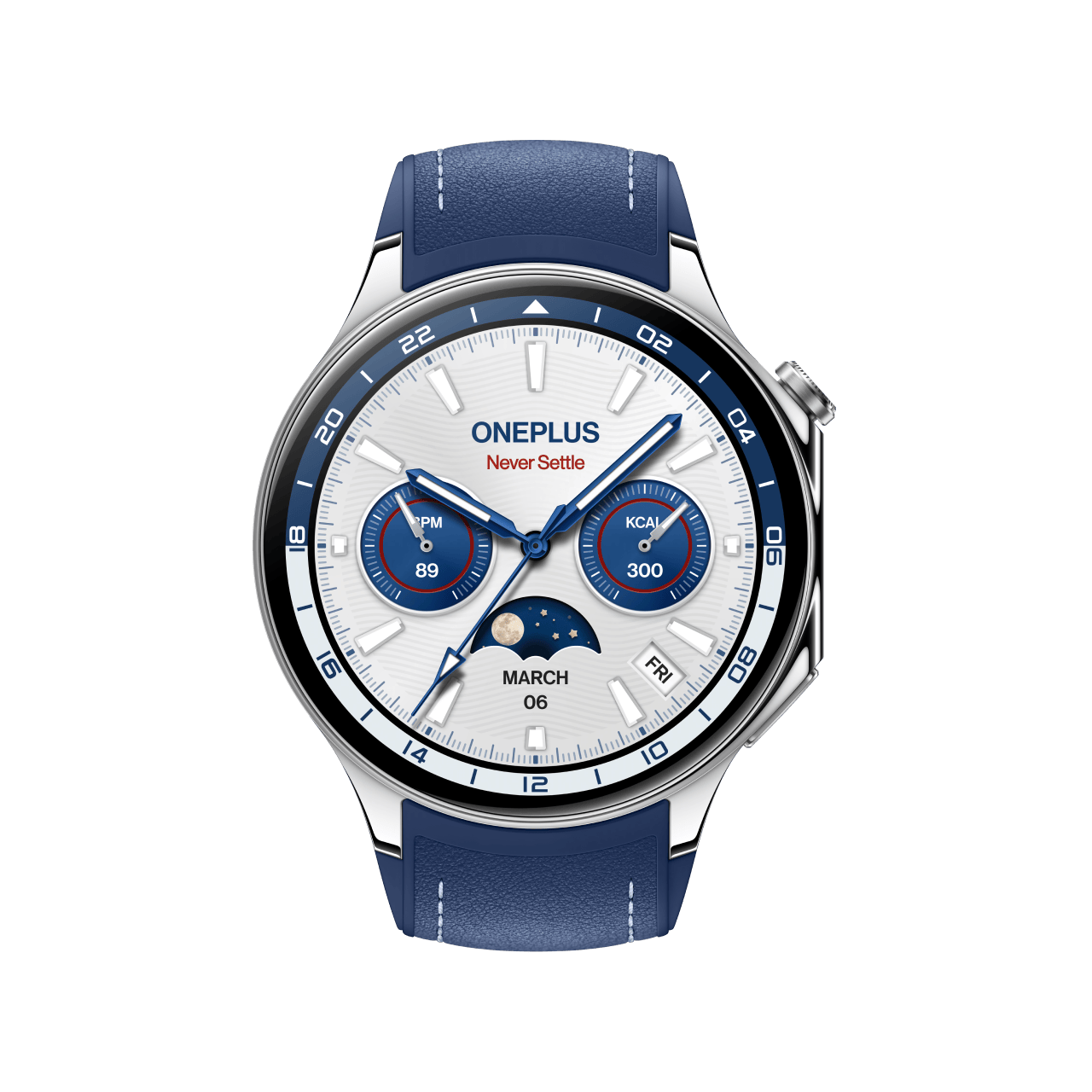
Wearables became independent devices because of eSIM.
Smartwatches did not become truly useful until eSIM arrived.
Once connectivity moved into the device itself, watches stopped being accessories and started becoming standalone communication tools. Calls, messages, navigation, emergency access, fitness tracking, all without carrying a phone.
For runners, cyclists, hikers, and travelers who value light setups, this was a turning point. eSIM is the reason wearables crossed that line.
The real eSIM revolution is happening in the background.
While consumers notice travel benefits, the largest eSIM transformation is invisible.
Connected cars. Smart factories. Medical devices. Sensors. Shipping fleets. Agriculture. Energy infrastructure.
Physical SIM cards were always a bottleneck. They required manual replacement, local contracts, and physical access. eSIM removed all of that.
Devices can now switch networks remotely, adapt data plans dynamically, and be managed globally from one platform. That flexibility is why IoT growth exploded alongside eSIM adoption.
Privacy becomes easier when connectivity is disposable.
eSIM makes it easier to separate contexts.
Work and personal life. Travel and home. Public and private activity.
You can create profiles for specific purposes, then remove them entirely. No physical card left behind. No permanent identifier tied to every activity.
For travelers who want less tracking, creators who manage multiple identities, or users who simply value control, this is a meaningful shift.

Lost SIM cards stopped being a thing.
Anyone who has ever swapped SIMs while traveling knows how easy it is to lose one. They are tiny, fragile, and incredibly annoying to replace.
eSIM eliminates that category of problem entirely.
If your phone breaks, you log in, re-download your profile, and continue. No store visits. No waiting. No paperwork.
That alone converts many first-time users into permanent eSIM believers.
Adoption is accelerating faster than people realize.
Some phones already ship without SIM trays. Regulators are adapting. Carriers are investing heavily. Travelers are switching by default.
This is not a slow transition. It is a fast one.
eSIM will not remain an alternative. In many markets, it will become the standard sooner than expected.
This is not the end state. It is the starting point.
What we are seeing now is phase one.
eSIM enables smarter pricing, flexible global plans, better user control, and entirely new business models around connectivity. Once software fully replaces hardware in telecom, innovation speeds up.
The plastic SIM card ruled mobile connectivity for decades because there was nothing better. Now there is.
And once you experience a fully digital, flexible, borderless connection, going back feels unnecessary.
If you travel, work remotely, manage multiple numbers, or simply care about control, eSIM is no longer optional technology. It is the direction everything is moving.
And this time, the shift actually makes life simpler.