Bari and Brindisi Airports Upgrade to 5G
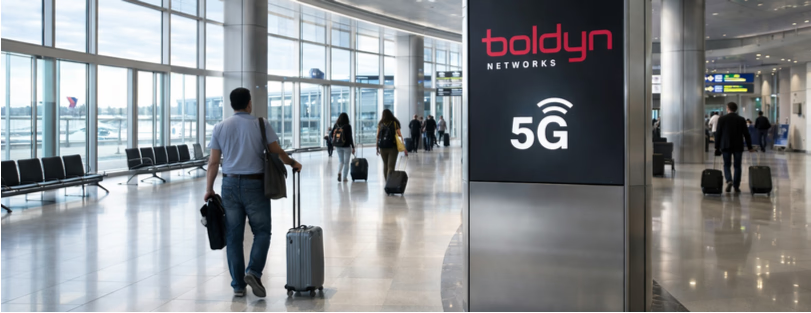
Boldyn Networks has finalised the installation of a 5G system at Bari Karol Wojtyła Airport and has already started preparing similar infrastructure at Brindisi. It sits inside a broader push to modernise Puglia’s regional airports, which are managed as a network by Aeroporti di Puglia.
If your first reaction is “cool, faster Instagram at the gate,” you’re not wrong. But airport connectivity upgrades are rarely about passengers alone. They are about turning an airport into a functioning digital environment where operations, safety, and passenger experience can scale without the usual connectivity bottlenecks.
What Boldyn Is Actually Installing
The phrase “a 5G system” can sound vague, so let’s make it concrete.
In airports, the hard part is not outdoor coverage. It’s dense indoor spaces, lots of metal, lots of glass, thick walls, multiple levels, and thousands of devices all competing for signal at the same time. That’s why airport deployments often rely on neutral-host infrastructure such as a distributed antenna system (DAS), designed to improve coverage and capacity throughout the building for multiple mobile operators.
This kind of setup matters even more with 5G because higher-band spectrum tends to struggle indoors. The physics is annoying, but real: modern buildings can heavily limit signal penetration, which is exactly why “deep indoor 5G” typically needs dedicated in-building solutions rather than hoping outdoor macro sites will do the job.
So yes, it’s about faster speeds. It’s also about predictable performance inside terminals, not just “maybe you’ll get a bar near the window.”
Why Airports Keep Paying for This
Airports are no longer just “transport infrastructure.” They’re high-throughput digital environments.
Better cellular inside the terminal supports:
- Passenger services: smoother airline apps, mobile boarding flows, real-time updates, digital wayfinding, and fewer moments where everything times out right when you need it.
- Staff and operations: reliable connectivity for ground handlers, turnaround coordination, logistics, and communications that cannot collapse during peak loads.
- The messy reality of modern travel: everyone is multi-device now, plus IoT, plus security systems, plus vendors running cloud tools from inside the terminal.
Puglia’s airport network includes Bari and Brindisi as the main passenger hubs, so upgrading those first is the obvious move if your goal is network-wide digital transformation.
Also worth saying: airports already offer Wi-Fi (Aeroporti di Puglia has free Wi-Fi across multiple terminals). But Wi-Fi is not a full replacement for robust mobile coverage, especially when you need consistent performance, seamless handoffs, and operator-grade reliability.

The Bigger Trend: Neutral Host and “Connectivity as Infrastructure”
This Bari and Brindisi move fits a global pattern: airports increasingly work with specialist infrastructure providers to build shared connectivity layers that mobile operators can plug into, instead of each operator building separate indoor networks.
Boldyn is doing this in other airports too. For example, Seattle-Tacoma International Airport selected Boldyn to build and manage a 5G DAS across major airport areas, explicitly aiming for high-capacity coverage that supports modern passenger and operational needs.
That’s the point of the neutral-host model: one well-designed system, multiple operators, less duplication, faster rollout, and a cleaner upgrade path over time.
If you track the airport tech storyline, you’ll recognise the shift:
Airports used to talk about “adding Wi-Fi.”
Now they talk about “modern connectivity infrastructure” because everything else depends on it.
What This Means for Travelers (Including eSIM Users)
For travelers, the immediate win is simple: fewer dead zones, faster uploads, better video calls, and less friction when you land and need to do something urgent on your phone.
For eSIM users specifically, stronger in-terminal mobile performance reduces the classic pain points:
- Activating an eSIM after landing without praying the QR flow won’t stall
- Switching plans and profiles quickly while you’re still in transit
- Using travel apps that assume “always-on connectivity” is real life, not a marketing slogan
It also reduces the awkward dependency on airport Wi-Fi portals when you just want your data session to work.
Conclusion
This Bari deployment is not just a “5G headline.” It’s a signal that regional airports are treating connectivity like a core utility, similar to power, security, and baggage systems, not a nice-to-have add-on.
What’s interesting is how consistent the playbook has become across markets: neutral-host indoor infrastructure, designed for multi-operator performance, built to carry the passenger experience and the operational stack at the same time. Boldyn’s work in Italy lines up with what we’re seeing in larger hubs like Seattle, and with the broader industry logic that indoor 5G needs dedicated in-building systems to be reliable at scale.
If Puglia gets this right across Bari and Brindisi, it’s not just “better signal.” It’s a regional airport network that can compete on digital readiness, which is quietly becoming part of how airports win routes, passengers, and partnerships in the next phase of travel infrastructure.