Travel in 2026: Trendification, Cheap Flights & Premium Boom
If 2025 felt strangely steady in the world of travel—cheap flights, soft TSA numbers, and an atypically calm summer—Going’s 2026 State of Travel and Flight Deals report suggests that calm was the pause before a shift. Beneath the surface, mistake fares surged, last-minute summer prices dipped to levels that felt like a throwback to 2019, and airlines poured energy (and budget) into premium cabins rather than expanding economy. Travelers, meanwhile, quietly began redefining what a “good trip” looks like.

Put all that together, and 2026 enters with a new energy: more strategic, more selective, and more shaped by digital culture than ever before.
Trendification: when virality dictates the destination board
We’re now firmly in the era of “trendification”—where destinations go from niche to viral to crowded, sometimes within a matter of days. Going’s travel expert Katy Nastro captures the shift perfectly: inspiration used to spark a someday-trip; now it can be booked before the scroll ends.
Trending hotspots create predictable patterns. Flights get cheaper as airlines add capacity, but prices on the ground move in the opposite direction. Lodging tightens, restaurants struggle with demand, and local experiences get reshaped for crowds rather than culture.
What’s new in 2026 is how deeply these trends influence the entire travel ecosystem. Social media now shapes decisions for one in four travelers—and nearly half of Gen Z. Friends and family are now the #1 influence on trip decisions, surpassing affordability. Even AI is joining the mix as 6% of travelers say machine-generated suggestions will guide where they go next year.
Trendification isn’t necessarily bad. It widens access to places that once felt aspirational. But like any force that concentrates demand quickly, it creates uneven pressure. The savviest flyers are leaning into trending destinations for airfare savings—but not letting the algorithm decide their entire shortlist.

The rise of the “one big trip” mindset
One of the clearest signals in Going’s report is the shift toward fewer, more intentional trips. For the first time since 2023, international travel has dipped below two annual trips per traveler. It’s not that wanderlust is fading—it’s that trips are taking on more weight.
Political and safety concerns, previously a footnote for under 2% of travelers, have spiked to more than 15% as a top barrier for 2026. And when uncertainty rises, people plan bigger, less frequent, more meaningful travel instead of multiple short hops.
This doesn’t stop the appetite for travel—it simply changes its rhythm.
Gen Z: still going everywhere, spending differently
Gen Z continues to be the demographic rewriting travel logic. Almost half took more trips than expected in 2025, even with budgets tightening and workloads rising. For 2026, 23% plan to spend less overall—but paradoxically want to travel more often and farther.
Their preferences stand out:
- higher interest in Asia, South America, Central America
- increased demand for Australia/New Zealand and the Middle East
- stronger tilt toward culture-first travel instead of checklist tourism
They are also the most influence-driven generation—friends, creators, viral content, and AI all meaningfully guide their choices. But unlike older generations, Gen Z treats inspiration less as aspiration and more as action.
Premium cabins rise as loyalty programs quietly devalue
While the number of trips may be shrinking, spend per trip is rising—and it’s flowinghttps://going.sjv.io/dOX3gQ straight into comfort. In 2026, travelers say their top splurges will be better accommodations (71%), premium cabins (59%), and upgraded experiences (52%). Premium economy is the standout winner, jumping from 16% to 20% adoption.
Legacy carriers are responding in force: new long-haul routes, more premium cabin inventory, upgraded seats, better lounges, and more polished onboard service.
But there’s a trade-off: loyalty points simply don’t stretch as far. Major programs including Flying Blue, KrisFlyer, and Avios increased award prices by 5–20% in 2025. Dynamic pricing continues to dilute value. Saver seats shrink every year.
Nastro’s advice is blunt and accurate: points melt like ice. The best time to use them is now—especially for travelers wanting to experience the premium boom before it becomes truly out of reach.
Where cheap flight hunters should look in 2026
Despite all the volatility, airfare is still in what Going calls its “golden age.” Inflation-adjusted pricing placed June 2025 as the second-cheapest month for airfare ever recorded. Unless major disruptions hit, 2026 is primed to continue delivering exceptional deals.
Going’s Where to Go in 2026 list zeroes in on destinations where structural change—not hype—is lowering prices:
What drives these drops?
- new long-haul routes
- competitive low-cost carrier expansion
- upgraded airports with more capacity
- relaxed visa policies
- airlines chasing new demand patterns
It’s a reminder that deals aren’t magic—they’re infrastructure. And 2026 has the infrastructure.
About Going
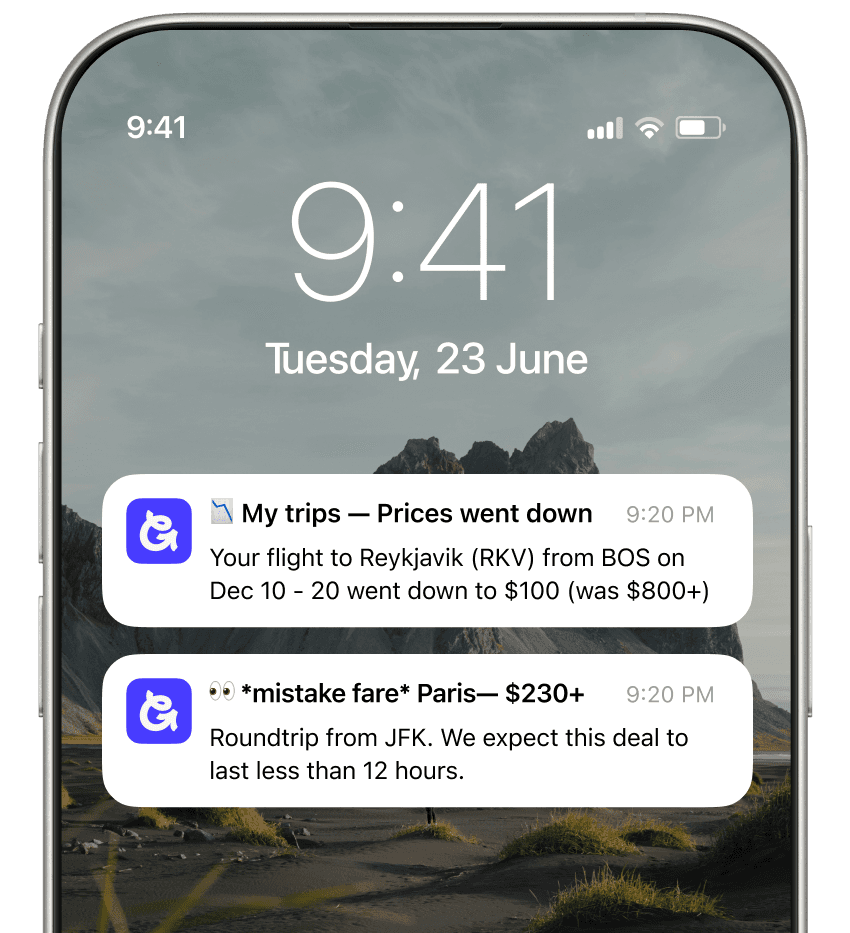
Since 2015, Going’s hybrid model—software + human flight experts—has made it a favorite among deal hunters, consistently surfacing mistake fares and deep discounts that automated fare alerts often miss. With 2 million members and a quality-first approach to alerts, it has cemented itself as a reliable voice in the deal-discovery space.
Conclusion: 2026 rewards strategy, not spontaneity
Going’s report paints a travel landscape moving from post-pandemic overdrive into something more refined and strategic. Selectiveness is the new normal. Travelers are no longer chasing volume—they’re chasing value, meaning, comfort, and cultural depth.
Compared with other travel intelligence players—Hopper’s price-prediction algorithms, Skyscanner’s massive inventory, Google Flights’ transparency tools—Going’s strength remains its human-curated deal engine. And in a year where mistake fares, structural shifts, and targeted capacity increases matter more than ever, human expertise becomes a competitive advantage.
Independent analyses from sources like IATA, ForwardKeys, and OAG align with many of Going’s findings: steady airfare, surging premium demand, younger travelers diversifying destinations, and social platforms shifting where demand goes.
2026 won’t be chaotic—but it won’t be static either. It will reward travelers who understand the trends but don’t blindly follow them; those who plan ahead but stay flexible; those who know that the best deal isn’t always the cheapest fare, but the smartest strategy.