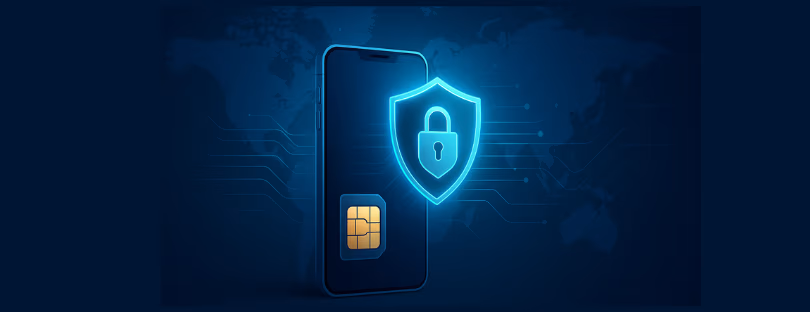
SLC Digital Boosts eSIM Identity with GSMA Device Check
SLC Digital, a U.S.-based pioneer in SIM-based identity, has just announced a major upgrade to its security platform. The company has integrated the GSMA’s Device Check™ service into its eSIM identity framework, creating a new layer of assurance that verifies both who is connecting and what device they’re using.

By combining eSIM-based cryptography with GSMA’s global device intelligence, SLC Digital is setting a new benchmark for hardware-rooted digital trust—a concept that’s rapidly becoming central to fintech, IoT, and telecom security.
A Two-Layer Approach to Verification
SLC Digital’s platform already uses the embedded SIM (eSIM) as a cryptographic anchor—essentially a tamper-proof component that can store secure keys and verify user identity. With GSMA Device Check now integrated, the platform can query the GSMA Device Registry, the telecom industry’s central database that tracks phones and IoT devices reported as lost, stolen, or fraudulent.
Every time a user or IoT endpoint authenticates, the system performs a real-time check. If the device’s IMEI—its unique identifier—appears on GSMA’s blocklist, access can be denied instantly. That’s an important shift from traditional methods that only verify credentials.
As Travis McGregor, CEO of SLC Digital, put it:
“This integration creates a trusted foundation for secure communication, financial transactions, and digital identity at scale. We’re combining deterministic eSIM attestation with GSMA’s trusted device intelligence to deliver tamper-proof assurance in real time.”
Tyler Smith, Head of Managed Services at the GSMA, described the collaboration as “adding another layer of trust” and said it shows how telecom and fintech can work together to “provide additional security for consumers.”
Why This Matters in Today’s Fraud Landscape
Modern fraud often doesn’t start with a fake person—it starts with a fake device. Cybercriminals increasingly use cloned or compromised hardware to bypass identity checks. Even valid SIM credentials can be exploited if they’re used on rogue devices.
By combining SIM-level cryptography with GSMA’s device verification, SLC’s system effectively ties human identity to physical hardware. If credentials are used on a cloned or blacklisted handset, the platform can flag or block it in real time.
That makes it especially valuable in high-risk verticals such as:
- Fintech and digital banking, where device takeovers can trigger massive losses.
- IoT ecosystems, where cloned sensors or gateways can disrupt entire networks.
- Digital asset platforms, where trust at the device level is essential for compliance.
Building on Global Standards
Technically, SLC Digital’s platform aligns with the FIDO, NIST SP 800-63-4, and GDPR frameworks. That ensures the technology fits into existing enterprise ecosystems while maintaining privacy-by-design principles.
The GSMA’s Device Check™ service, operated by GSMA Ltd., provides global device reputation data to mobile operators, financial institutions, and government agencies. It’s separate from Apple’s “DeviceCheck” API—an important distinction—and relies on GSMA’s authoritative IMEI database, updated by network operators around the world.
When combined, these systems create a telecom-grade identity framework that provides cryptographically signed proof of both user and device integrity.
The Bigger Picture: Telecom and Identity Are Converging
This announcement fits into a larger trend: telecom operators and identity providers are beginning to merge capabilities. As part of the GSMA Open Gateway initiative, mobile networks are exposing APIs that allow developers and enterprises to use network-level trust signals—such as SIM swap status, number verification, or device location—to improve digital authentication.
SLC’s integration is a prime example of this convergence in action. Fusing telecom infrastructure with digital identity frameworks it enables security checks that happen before a password or app login even occurs.
At the same time, European programs such as the EUDI Wallet are promoting verified, portable digital identities—and they, too, rely on hardware-based roots of trust. The eSIM is rapidly emerging as one of the most reliable hardware anchors available, already embedded in billions of mobile and IoT devices worldwide.

How SLC Differs from Other Players
Companies like Thales, IDEMIA, and Giesecke+Devrient (G+D) have been championing SIM-based security for years. All of them leverage the eSIM or SIM card as a secure element to validate devices or users.
Where SLC Digital stands out is in its real-time integration with GSMA’s Device Check. This gives it a direct pipeline to live device reputation data, allowing faster and more reliable fraud prevention decisions—especially for consumer-facing sectors like fintech and mobile banking.
Instead of adding another authentication app or behavioral analysis tool, SLC’s model builds trust directly into the connectivity layer. It’s efficient, scalable, and aligned with where telecom and identity standards are heading.
From Connectivity to Trust Infrastructure
If eSIMs once symbolized convenience, they’re now becoming a backbone of digital assurance. As devices, payments, and identities increasingly converge, having a hardware-rooted trust mechanism that’s globally recognized could transform how security is managed.
For enterprises, it simplifies compliance and fraud prevention. For users, it means seamless protection that doesn’t require extra steps or apps. And for the telecom sector, it represents a way to stay central in the growing identity economy.
Conclusion: A Defining Step in eSIM Security
SLC Digital’s integration of GSMA Device Check is more than just a technical upgrade—it’s a sign that the SIM is evolving into a trust credential. In an era of borderless connectivity and rising digital threats, verifying both who and what connects to a network is essential.
Compared to traditional identity solutions that rely on cloud databases or behavioral analytics, SLC’s approach operates at the telecom layer—where authenticity is grounded in hardware and cryptography, not assumptions.
While major security players like Thales and G+D continue to explore similar paths, SLC’s real-time access to GSMA’s global registry gives it a practical, deployable edge. As more digital ecosystems adopt eSIM-first architectures, this kind of two-tier identity check could become the gold standard for trust in mobile, IoT, and fintech environments.
The message is clear: the future of digital identity isn’t in passwords or apps—it’s in the SIM itself.